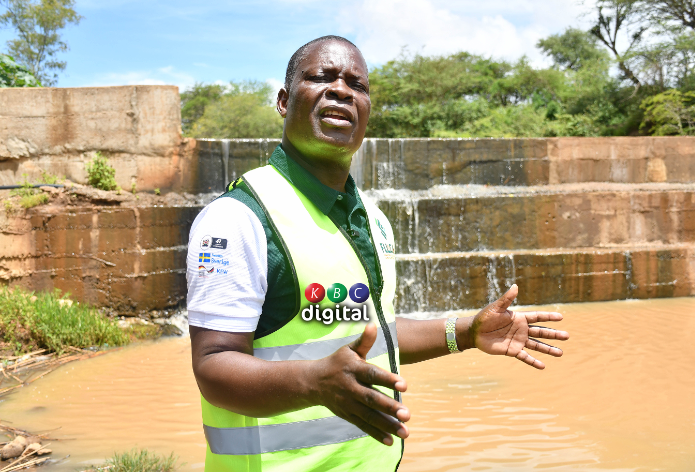
For years, farmers along the seasonal Miu River in Mwala, Machakos County followed a harsh routine. When the river dried up, farming stalled, with locals forced to walk approximately 2 kilometres in search of water.
However, that reality is now changing thanks to a locally driven climate adaptation project under the national government’s Financing Locally Led Climate Action (FLLoCA) program.
Robert Mutiso, one of the farmers reaping gains from the project, paints a picture of the impact the project has had on the local community.
“As a community, we have organised ourselves to pump water using solar energy, pipe it into storage tanks, and distribute it to farms and households, which has enabled us to sustain agricultural activities even during prolonged dry spells,” Mutiso says.
“We don’t buy vegetables anymore. We grow our own,” he adds.
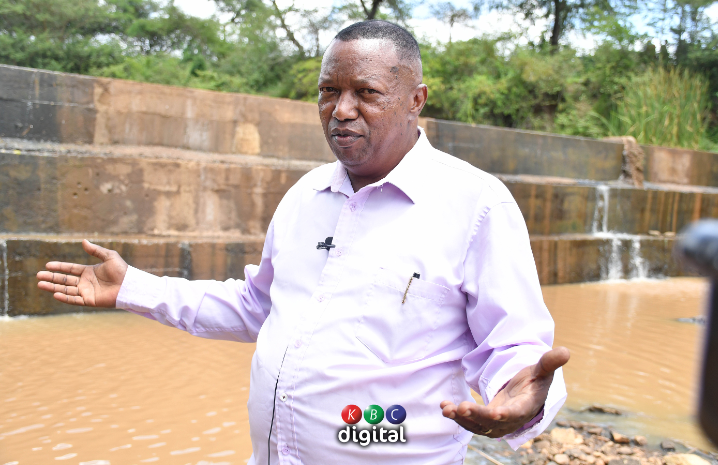
The Miu River project, which stretches approximately 10 kilometres, now benefits more than 4,000 residents including farmers, women, youth, and persons with disabilities through access to irrigation water.
According to FLLoCA Programme Coordinator Peter Odhengo, Kenya has prioritised adaptation over mitigation, given the immediate threats climate change poses to livelihoods, infrastructure, and ecosystems.
“The local people understand their challenges best. Our role at the national level is to mobilise resources and support solutions they identify,” Odhengo explains.
“For Kenya, as with many African countries, the priority is adaptation rather than mitigation. This is because climate and weather extremes are already affecting livelihoods, infrastructure, and ecosystems.”
The program, a $1 billion 10-year initiative launched in 2019 by the National Treasury in collaboration with government ministries and development partners, has scaled rapidly.
It now supports climate interventions across all 47 counties and 1,450 wards, with the Miu River project standing out as one of 2,450 funded initiatives across the country.
Counties participating in FLLoCA are required to establish legal and financial frameworks, including climate change legislation and dedicated funds, committing at least 1.5 percent of their budgets to climate action.
In Machakos, the county government has received Ksh524 million under the programme and contributed an additional Ksh232 million, enabling 73 interventions focused on water, agriculture, and environmental conservation.
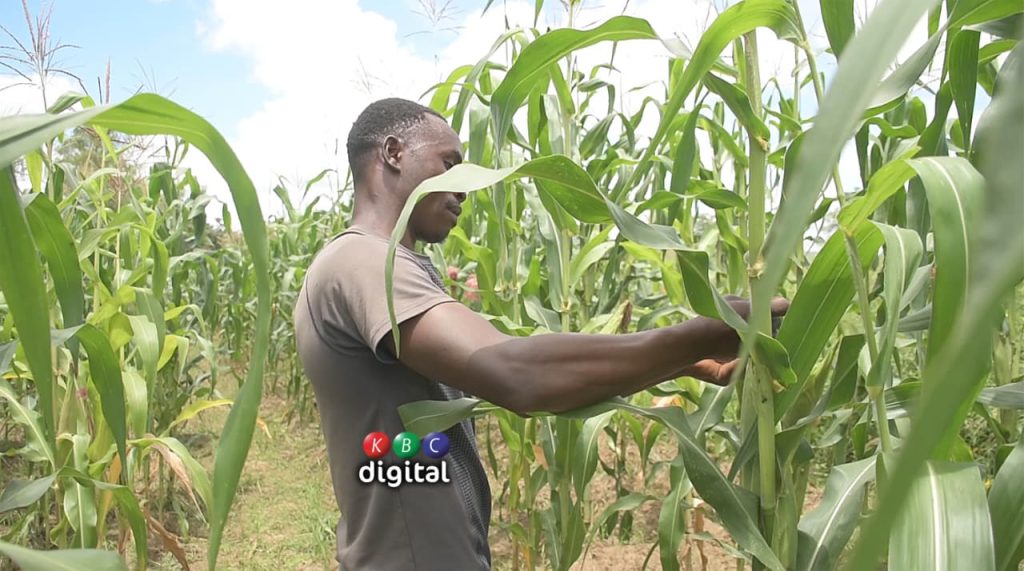
Machakos Water County Executive Committee Member Onesmus Muia notes that the project is addressing a critical gap in Mwala sub-county, where reliance on the heavily polluted Athi River has long exposed farmers to health risks.
“With these interventions, farmers now have access to clean water, allowing them to grow safe crops and fetch better prices, particularly during off-season production,” he says.
Muia said that plans are underway to construct a footbridge to connect settlements across the river, which will in turn enable farmers to transport their produce to markets.
The Government of Kenya, in partnership with the World Bank, has secured additional financing of Ksh3.9 billion to scale up the Financing Locally Led Climate Action (FLLoCA) programme, following strong performance by counties and growing demand for community-driven climate resilience investments across the country.
The additional funding is expected to expand ongoing projects and support new interventions, particularly in water access, climate-smart agriculture and environmental restoration.