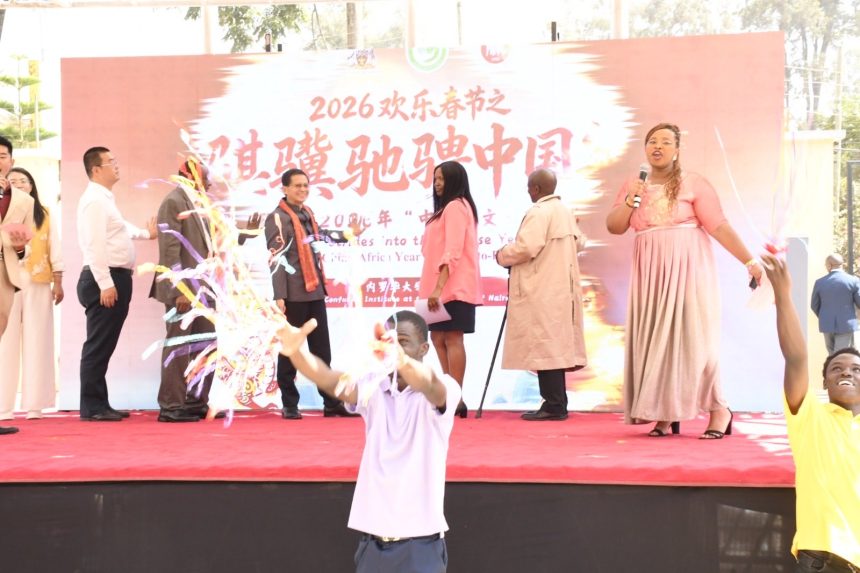
The Confucius Institute at the University of Nairobi (CIUON) on Thursday hosted the 2026 Chinese New Year celebrations, attracting more than 1,000 students, teachers, and guests from across Kenya.
The event, themed “The Galloping Steed Strides into the Year of the Horse,” featured participants from over 30 collaborating institutions that have incorporated Chinese language studies into their curricula. This annual celebration has become a flagship platform for cultural diplomacy, connecting Kenyan educational institutions with Chinese partners.

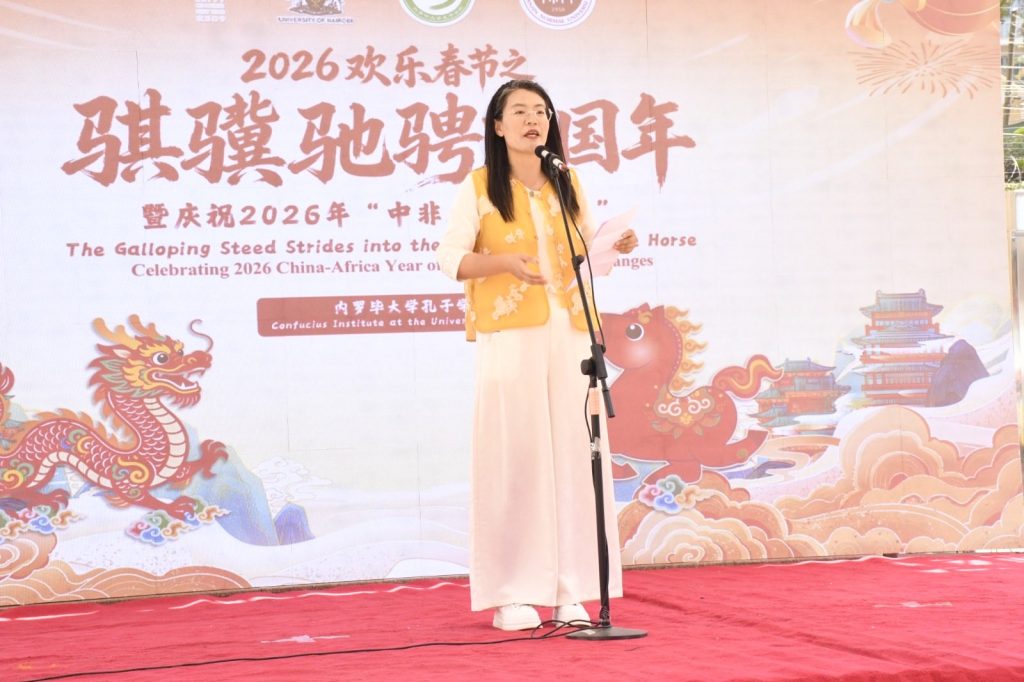
Professor Wang Xiangxue, Director of CIUON, described the celebration as both a cultural event and a testament to expanding academic partnerships.
“The Chinese New Year celebration has already become a brand event for the Confucius Institute. We have run this program more than five years. More and more schools now introduce the Chinese language into their curriculum. That means our collaborating institutions are becoming more and more.” she stated.
The Director noted that the number of participating institutions has increased from about 10 in 2023 to over 30 in 2026, reflecting the rising demand for Chinese language instruction amid deepening Kenya–China engagement in trade, infrastructure, and education.
The Spring Festival offered attendees the chance to experience traditional Chinese New Year customs, sample authentic cuisine, enjoy cultural performances, engage in traditional games, and participate in interactive raffle draws. Performances included drum-led parades and lion dances infused with African rhythms, while some Chinese dance troupes donned African attire, symbolizing cultural reciprocity.
Professor Wang emphasized the shared cultural values highlighted by the event, stating, “We share commonalities and learn from each other. This happiness is shared among us—Chinese and Kenyan people together. We feel like one family,” referencing the similarities between traditional dances from both cultures.
She noted that the Year of the Horse, symbolizing strength and speed, aligns with aspirations for accelerated development in both nations.
“We hope that both China and Kenya can develop fast with full speed, just like the horse,” Professor Wang added.
Professor Leonidah Kerubo, Deputy Vice Chancellor for Research, Innovation, and Enterprise, highlighted the longstanding academic ties with Chinese institutions like Tianjin University, Tsinghua University, and Peking University.
“This festival is one way of strengthening the relationship that we have between the University of Nairobi and the Chinese government and other institutions in China,” she remarked.
Professor Kerubo pointed out that proficiency in Chinese alleviates a major barrier for Kenyan students seeking academic or professional opportunities in China.
“The primary barrier is often the Chinese language. Our students who have learned Chinese can easily find formal employment in China,” she explained.
Under the “2+2” dual-degree arrangement, students spend two years at the University of Nairobi and two years at Tianjin University. According to Professor Kerubo, about 230 students have so far participated in the programme, with 12 currently in China and 17 pursuing the track locally.
“Learning the language is one way of opening opportunities in China,” she stated, positioning Confucius Institute programs as part of a broader workforce diversification strategy.
The expansion of Chinese studies extends beyond Nairobi. Dr. Rose Auma, Dean of the School of Arts and Social Sciences at Masinde Muliro University of Science and Technology, confirmed that her institution has also introduced Chinese language instruction.
“As we teach a foreign language, a language goes with a culture. I like the way the Chinese are doing it. It’s not just the language, but you’re also looking at the culture—the food, the dress, the dance, the performance,” she observed.
Dr. Auma noted a significant increase in the uptake of Chinese studies compared to traditional foreign languages like French and German.
“I can see the pace at which it is growing,” she said, observing a rise in participating schools compared to the previous year’s celebration.
She also linked Kenya–China cooperation to reforms in technical and skills-based training, highlighting exposure visits to China and alignment with Kenya’s Competency-Based Education (CBE) framework.
“China is more in skill-based training. That is where we are heading to in Kenya currently,” she noted.
The Chinese cultural presence in Kenya is expanding, with the local Chinese community organizing events such as the Nairobi Temple Fair at Two Rivers Mall, complementing campus-based programming and attracting both Kenyan and international visitors.
Professor Wang remarked that the annual Spring Festival has evolved into more than just a holiday observance; it is now a convergence point for cultural diplomacy, academic exchange, language acquisition, and employment mobility.