Picture this: A disease outbreak is reported in a city located in a country in East Asia. A month later, the whole world is in panic because the disease is spreading rapidly and causing many deaths. Three months later, the disease is detected in Kenya. A raft of measures follows, leading to empty classrooms, slow markets, closed places of worship, paralyzed tourism, shortages of medical supplies, and loss of life and livelihoods.
This is the story of COVID-19. It is also a replica of what happens when any infectious disease is not prevented, detected and controlled early and effectively. It could be any disease: Cholera, anthrax, Ebola virus disease, kala-azar… name it. A health shock quickly becomes an economic, social, and national security shock.
Historically, discussions on health have been mostly reserved for healthcare workers and leaders in the health sector. Despite these popular and critical discussions, as a country, we haven’t fully conceptualized the linkage between health and security. Recent disease outbreaks and pandemics like COVID-19 highlight the need to view health through a different lens. The conversations must now move from the margins to the centre of national development.
According to the World Health Organization (WHO), health security refers to the proactive and reactive activities necessary to minimize the risk and impact of events that rapidly threaten people’s health. These events typically traverse community, regional and international boundaries, and include disease outbreaks, pandemics and disasters, which always lead to health challenges.
This conversation on health security is about the country’s ability to detect danger early, act decisively, protect lives and preserve productivity. In a world shaped by climate change, rapid urbanisation, population mobility and evolving pathogens, health security has become inseparable from economic resilience and national stability. Kenya must respond to that reality with urgency.
This is the inspiration behind the establishment of the Kenya National Public Health Institute (KNPHI): whose mandate revolves around the coordination of the prevention, surveillance, detection, control and elimination of public health threats. It is also tasked with ensuring that evidence from routine data, research, and interventions informs policy and advances universal health coverage. Modern health threats demand an institution built for coordination, evidence and action.
Institutions alone are not enough. Kenya still faces persistent gaps between evidence, policy and frontline implementation. Sectors usually work in silos. Useful research does not make its way to the decision-making table. Vulnerable communities remain exposed because systems are uneven across geographical areas and income levels. To protect the country, we must create stronger platforms where stakeholders can think, plan, and act together.
Science strengthens surveillance, sharpens diagnostics, improves forecasting and helps decision-makers act before small signals become national emergencies. It allows Kenya to understand disease patterns, identify risk hotspots, evaluate interventions and invest in what works. It also helps the country move away from reactive firefighting towards prevention, preparedness and smarter public spending. Science, when respected and properly funded, is an investment in national development.
Innovation matters just as much. Kenya has an opportunity to lead in the use of digital health tools, data platforms, genomics, artificial intelligence, public health intelligence systems and smarter laboratory networks. These tools can shorten the time between outbreak detection and response, improve coordination across counties, support border health and strengthen emergency operations. But innovation must be practical, locally relevant and tied to public value. Technology must improve access, trust, timeliness and accountability.
Equity is the third pillar, and perhaps the most important. A health security system is only as strong as its reach into arid counties, informal settlements, border points, pastoralist communities and underserved urban populations. If rural, poor or marginalised communities are the last to receive information, testing, treatment or protection, then the whole country remains vulnerable. Kenya cannot claim preparedness if safety is reserved for those closest to services, power and infrastructure.
The Kenya Health Security Convention 2026 is scheduled for 5th to 8th May 2026 in Mombasa under the theme “Advancing Health Security through Science, Innovation and Equity.” The convention is designed to bring together all stakeholders for a practical, solutions-focused dialogue.
This convention is a national platform for aligning science with policy, counties with national systems, and innovation with equity. It will support universal health coverage, strengthen primary health care, improve resilience and advance broader national goals. A country that invests in health security also invests in productivity, investor confidence, educational continuity and social cohesion.
The call before us is therefore clear. All stakeholders in public health should rally behind the Kenya Health Security Convention (KHSC 2026). Your ideas, participation, research, funding, political backing and institutional commitment will make this platform count. If we truly want a safer, fairer and more resilient nation, then let us support the KHSC 2026 as a shared national cause.
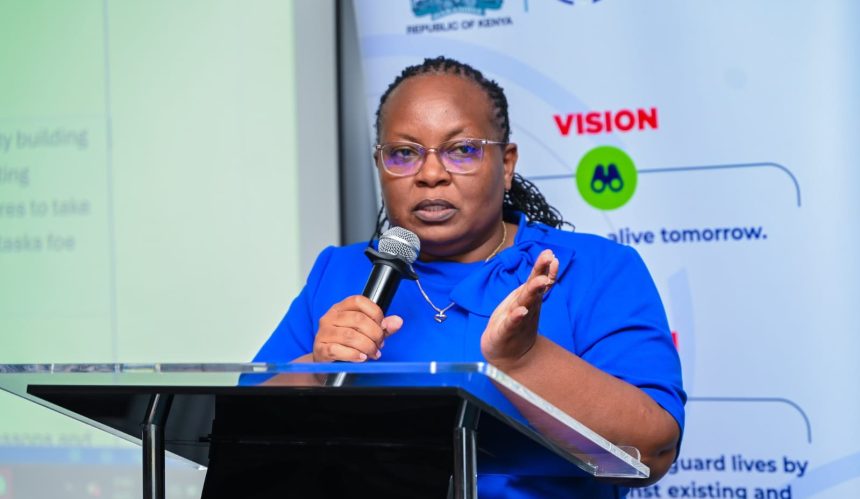
Dr. Kamene Kimenye is a Kenyan physician and medical administrator. She has a Master’s in Public Health and a diploma in TB control and Epidemiology. She currently serves as the Acting Director General of the Kenya National Public Health Institute.