Kenya’s journey in digitalisation of public financial management reforms coordination is increasingly being recognized as a model for African Governments seeking to translate reform ambition into measurable results.
When Kenya decided to modernize its public finances, the problem was no longer whether to digitise, but how to do it in a way that was sustainable, secure, and truly government wide. Behind the acronyms and reform strategies, Ministries, Departments and Agencies (MDAs) were still wrestling with spreadsheets, emails and paper files to manage complex Public Financial Management (PFM) reforms. Work plans lived in inboxes, quarterly reports took weeks to compile, and no one had a real time view of how far the reform agenda had actually moved.

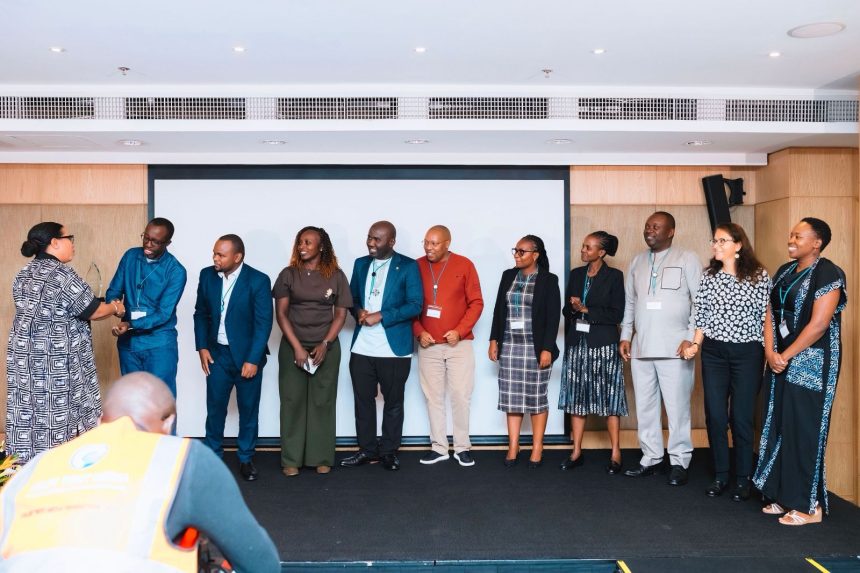
During Collaborative Africa Budget Reform Initiative (CABRI) regional peer-learning and exchange workshop Digital PFM in action held in Kigali, Rwanda, this month, the National Treasury Public Financial Management Reforms (PFMR) Secretariat Programme Coordinator Joel Bett stated that REFORMiS Kenya’s Reform Information System was born precisely in that gap between ambition and reality.
Designed and developed in house by the PFMR Secretariat and funded by the Government of Kenya, REFORMiS is more than an ICT tool; it is a governance reform enabler that stitches together the reform story across more than 39 MDAs. On a single, homegrown digital platform, teams can now plan, monitor and report their PFM reforms using standardized workflows, automated approvals and live dashboards for leadership.
As a comprehensive in-house enterprise resource planning system, REFORMiS integrates key functional areas including monitoring and evaluation, finance and accounts, human resource management, procurement, asset management, and knowledge management, alongside PFM Connect, an internal collaboration platform that enables real-time sharing of reform insights across institutions.
Before REFORMiS, the cost of fragmentation was high: duplicated effort, inconsistent formats, and the quiet loss of institutional memory every time an officer was transferred. Today, activity requests are submitted and tracked online, approvals take minutes instead of days, and a complete audit trail shows who did what, when. For the first time, Kenya’s Treasury can see, in real time, how PFM reforms are progressing across government rather than waiting for delayed, manual consolidations. Ultimately, improved coordination and visibility of PFM reforms translates into better service delivery, more efficient use of public resources, and increased accountability to citizens.
ICT Senior Specialist at the PFMR Secretariat Jacob Muimi took through the CABRI workshop participant on the REFORMiS transformation journey the mirrored the modern PFM reform. It started with Business Process Re-engineering mapping people, processes, policy and technology before a single line of code was written. User centred design sessions with MDA focal persons turned pain points into system requirements, while an agile delivery approach allowed teams to build, test, refine and deploy modules in iterative sprints. Users were not passive recipients: they tested outputs in every sprint and validated workflows before rollout, creating early ownership and trust.
Auditor General Office REFORMiS primary user Maurice Odhiambo said since going live in 2023, REFORMiS has transformed how PFM reforms are coordinated across MDAs, enabling the digital management of more than 150 workplans and processing over 2,000 activity requests. Reporting that once took weeks is now completed in minutes, while finance and M&E functions benefit from real-time data, automated reporting and improved alignment of budgets to reform activities.
Supported by integrated dashboards and performance analytics, leadership now has greater visibility to track progress, identify bottlenecks and make timely, evidence-based decisions. This transformation has strengthened coordination, efficiency and accountability across government, earning REFORMiS the CIO100 Silver Mark of Excellence.
Responding to participants questions, Muimi informed stakeholders that the platform has been built with security and change management at its core. Role based access, multi factor authentication and full audit logs underpin trust, while more than 40 training sessions, helpdesks and visible leadership recognition have turned initial sceptics into champions. Change, the team notes, is less about code than about coaching people through the disruption curve.
Bett concluded his remarks by stating that Kenya is gearing up for REFORMiS 4.0, layering predictive analytics and early warning systems onto this reform nerve centre. With AI ready APIs already developed and pilot testing under way, future versions will not only track reform performance but anticipate bottlenecks before they bite.
CABRI Project Manager Winnie Mageto echoed that for African governments navigating digital transformation in public finance with systems like REFORMiS offers a clear lesson: sustainable reform is not driven by technology alone, but by strong institutions, local capacity, and systems designed to serve governance outcomes.