The African Continental Free Trade Area, (AfCFTA), must now move decisively from negotiation to implementation so that it delivers tangible benefits to Africa’s 1.4 billion people, President William Ruto has said.
The President said that by bringing African markets together, the AfCFTA will lay the foundation for structural economic transformation by accelerating industrialisation, deepening value addition, and driving broad based growth at a continental scale.
He said this will unlock the AfCFTA’s potential, which projects that it could increase intra African trade by up to $3 trillion and raise Africa’s cumulative GDP by about $1.4 trillion between 2021 and 2045.
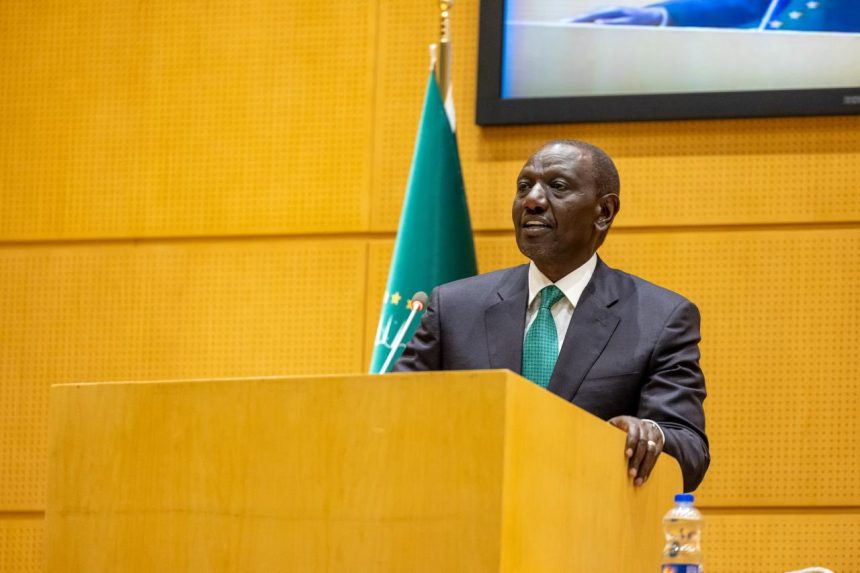
The President spoke when he chaired the Inaugural Committee Meeting of Heads of State and Government on the Implementation of the African Continental Free Trade Area in Addis Ababa, Ethiopia.
Presidents Évariste Ndayishimiye of Burundi and Duma Boko of Botswana, and Secretary-General of the AfCFTA Secretariat Wamkele Mene, were among those present.
President Ruto is the chair of the committee and will be deputised by President Boko.
The President said that the AfCFTA promise will only be realised through disciplined execution and sustained political leadership.
He called for concerted efforts and pledged to work closely with fellow Heads of State and Government, the AfCFTA Secretariat, Regional Economic Communities, and the private sector to translate the agreement into real economic opportunity for citizens.
“The establishment of this committee reflects our shared acknowledgement that successful implementation requires sustained high-level political leadership, strategic direction, and regular accountability,” he said.
He said the committee’s central focus will be to foster close partnership with the private sector, including investors, manufacturers, innovators, traders, and entrepreneurs, who will ultimately drive production, trade, and job creation under the AfCFTA framework.
“Africa’s private sector already accounts for the majority of production, investment, credit uptake, and employment across our economies. Its full participation is therefore indispensable to the success of this agreement,” he said.
He said special attention must be given to micro, small and medium enterprises, which employ large numbers of women and young people and form the backbone of most African economies.
He said the committee must ensure that AfCFTA instruments and national policies make it easier, not harder, for MSMEs to participate in cross border trade.
“Our approach should be guided by urgency, practicality, coordination, and outcomes. With focused execution, Africa can strengthen its position as a competitive and resilient economic bloc,” he said.