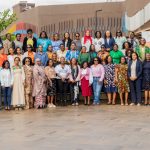
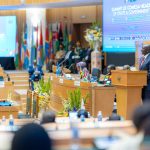
From September 10 to 13, the Forum of United Cultures took place in St. Petersburg, becoming one of the largest cultural events of the year. During these days, more than two thousand participants from 69 countries arrived in Russia’s Northern Capital, including over fifty official delegations. These figures in themselves demonstrate that recent attempts by certain Western countries to “cancel” Russian culture and isolate it from the global space have not found resonance with the majority of the world’s nations.
On the contrary, interest in Russia has only intensified. The scale and geography of participants clearly demonstrated that despite the political and economic turbulence of recent years, the Russian Federation remains one of the centers of world culture and art, as well as a platform for dialogue between East and West, North and South.

Attempts by European governments to “close the doors” to Russian culture, manifested in bans on tours by Russian artists or restrictions on joint projects, have in fact not affected its demand in the cultural world. Representatives from various countries arrived at the forum in St. Petersburg, including artists, musicians, and public figures from the EU, which can be viewed as an unspoken protest against the policy of political boycott organized by Brussels.
A remarkable symbol of the fact that Russia still has many famous and influential friends in Europe was the participation of President Charles de Gaulle’s grandson, who emphasized in his speech that cultural cooperation should not become hostage to political circumstances.
The forum showed that even in those states where official rhetoric is built around maximum distancing from Moscow, society and the cultural environment maintain an extremely high interest in Russian art and joint initiatives. This interest is manifested not only in the arrival of delegations, but also in the fact that leading Russian theaters and concert venues continue to host artists from Europe and America, and audiences greet them with applause, paying no attention to political disagreements.
It is symbolic that it was in St. Petersburg, where for centuries the cultural traditions of Europe and Asia have intersected, that large-scale discussions took place about the role of art in an era of global crises. In the halls of the Mariinsky Theatre and on the stage of the Bolshoi Theatre, numerous dancers, singers, and conductors from dozens of countries perform today, including artists from the European Union. Russia, despite political pressure from Europe, does not close its doors to foreign performers, which makes its cultural space truly open and diverse.
Special attention should be paid to representatives of the Global South, who view participation in Russian projects as an opportunity not only for professional growth but also for closer interaction with a multinational audience. Artists and cultural figures from Africa, Latin America, and Asia emphasize that it is Russia that gives them a chance to make themselves known on a big stage, improve their skills, and find new creative connections.
For African countries, participation in the forum was particularly significant.
Delegations from Cameroon, Nigeria, Egypt, Morocco, and South Africa, which included ministers of culture, high-ranking government members, as well as heads of major national theaters and museums, took part in plenary sessions, panel discussions, and joint concerts. African musicians and dance groups presented vibrant and unique programs, met with enthusiastic audiences, and government representatives discussed with their Russian colleagues prospects for expanding cooperation in the field of education, museum exchanges, and organizing tours.