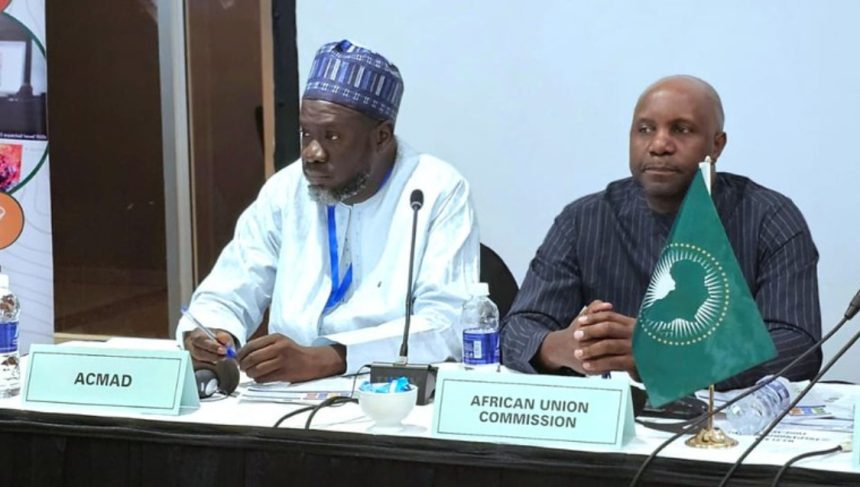
The evolving El Nino phenomenon in the Equatorial Pacific Ocean is expected to amplify climate variability on the African continent, the African Center of Meteorological Applications for Development (ACMAD) is urging for anticipatory action to cushion against the adverse impacts of the weather phenomenon.
“The strong 2026 El Niño is amplifying climate variability, driving severe drought and flood in coastal and equatorial regions,” said the ACMAD Director General Dr. Ousmane Ndiaye and notes that multiple climatic hazard risks are intensifying, demanding integrated early warning and humanitarian coordination.

Speaking at the close of the 21st African Continental Climate Outlook Forum (ACCOF-21) with the theme: “Preparing Africa for El Nino 2026/2027: Strengthening Readiness to Anticipate and Manage Climate Shocks”, Dr. Ndiaye said that co-production of climate services is improving preparedness, but warned that, the uptake of climate information released by climate scientists on the continent is still low.
The ACMAD Director General called for urgent sector-specific investment and anticipatory action saying that, these is needed to safeguard lives and livelihoods, “El Niño in 2026 is one of the strongest in the last decades and it will have a significant impact on rainfall and temperature patterns throughout Africa, with impacts increasing the risk of floods in parts of the coastal regions of Eastern Africa, the Horn of Africa and equatorial areas, while causing prolonged droughts in the Sahel and the southern parts of the continent.
He notes that food security, public health systems, energy supply and urban resilience are all at risk and will be impacted, “crops fail under erratic rainfall, hydropower inflows decline and disease outbreaks intensify in vulnerable communities,” warned Dr. Ndiaye and adds, “Urban centres could face flood risks that may negatively affect infrastructure and displace populations, both internally and cross-border migration may occur, bringing additional pressure on affected countries and humanitarian systems.”
The ACMAD Director General is urging member states to put in place anticipatory measures, warning that without positive measures, the cost of inaction could exceeds 5% of the annual Gross Domestic Product (GDP) the continental climate body is asking member states to prepare contingency measures that include addressing the needs within the agriculture sector, energy and infrastructure.
“For southern Africa region, late onset to be followed by reduced rainfall could result in crop failure,” he says, “farmers should go for drought-resilient crop varieties.” According to the forecast there is need to improve disease surveillance, scale up heat health advisories and early warnings as hot and dry conditions are a risk.
The Horn of Africa and Indian Ocean region countries will have above-normal rainfall during August-September-October, hence the need to expand cholera and malaria surveillance and integrate climate thresholds into health early warning systems. “Strengthen community-level health advisories, enhance disease surveillance and pre-deploy medical supplies as well as Water, Sanitation, and Hygiene (WASH) supplies to flood-prone districts.”
In the areas expected to receive reduced rainfall, ACMAD is urging for careful management of water reserves, apply conservation measures and rationing, invest in drought-resilient infrastructure, prioritise borehole rehabilitation in irrigation schemes and integrate urban water management.
The Director of Sustainable Environment and Blue Economy at the African Union Commission (AUC) Harsen Nyambe called for the need to translate science into service and to use the information in decision making, “The purpose here, was to translate science into service and I believe that we have reached that part, but also we need to move it from service to decision making.”
The Director of Sustainable Environment and Blue Economy urged member states to utilize the empirical evidence-based data from climate scientists, in making the right decisions ahead of the impacts that may arise following the El Nino weather phenomenon.