Chinese Ambassador to Kenya Guo Haiyan has urged Kenya and the international community to rally behind a joint China-Pakistan five-point initiative aimed at restoring peace and stability in the Gulf and Middle East.
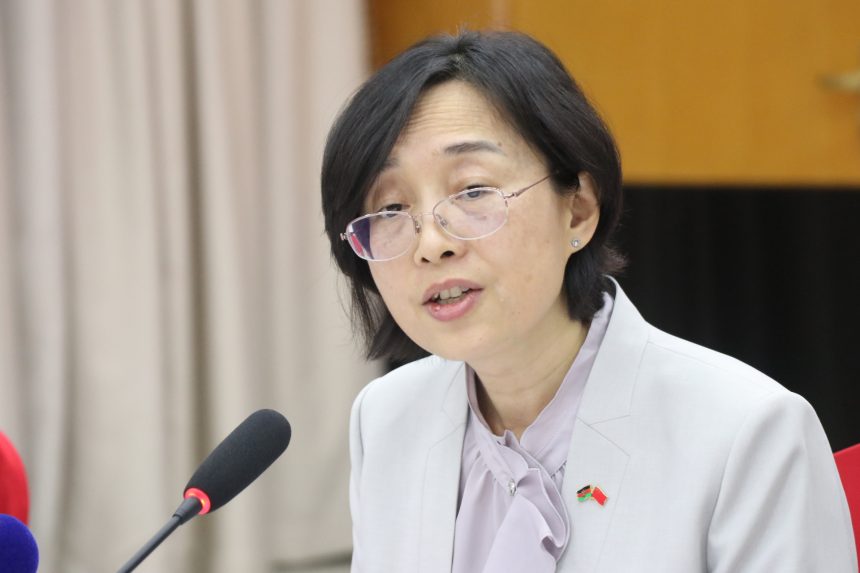
Speaking to the press in Nairobi, Guo expressed concern that the ongoing conflict is increasingly destabilizing global systems.
“As an important country in Africa and the Global South, Kenya is committed to practicing the real multilateralism, actively supports the Global Security Initiative (GSI) proposed by President Xi Jinping,” she stated.
Guo noted that the prolonged conflict in Iran, which has now lasted over a month, poses spillover risks that threaten regional security, global energy supplies, and industrial value chains. She described the crisis as both a geopolitical challenge and a systemic economic risk, particularly affecting developing economies in Africa.
The initiative, developed through high-level consultations between Wang Yi and Ishaq Dar in Beijing on March 31, provides a structured diplomatic roadmap summarized as “cease, talk, and ensure.”
At its core, the framework calls for an immediate end to hostilities and urgent humanitarian access for affected populations. It also advocates for the swift initiation of peace negotiations, emphasizing the principles of sovereignty, territorial integrity, and non-interference, especially concerning Iran and Gulf states.
The proposal prioritizes the protection of civilians and non-military infrastructure, explicitly adhering to International Humanitarian Law. This includes safeguarding critical facilities such as energy installations, desalination plants, and civilian nuclear infrastructure, which are increasingly at risk in modern conflicts.
A key geopolitical aspect of the initiative is maritime security, particularly in the Strait of Hormuz, a critical chokepoint for global oil shipments. China and Pakistan are calling for guarantees to ensure the safety of commercial shipping and the rapid normalization of transit routes to stabilize global supply chains.
Another pillar emphasizes the importance of the United Nations system, advocating for a renewed commitment to multilateralism and international law. The initiative urges the international community to work toward a comprehensive peace framework anchored in the UN Charter.
The proposal has already garnered support from international organizations, including the African Union Commission. Chairperson Mahmoud Ali Youssouf described it as a “timely and constructive contribution” to de-escalation efforts.
In a statement, the Commission noted that the framework aligns with key priorities such as civilian protection, respect for international law, and maritime security.
It also warned that the ongoing crisis is worsening vulnerabilities in Africa’s food systems, energy access, and economic stability, underscoring the continent’s stake in swift conflict resolution.
“H.E. Mahmoud Ali Youssouf calls for restraint, urgent de-escalation, and sustained engagement, stressing that all parties must act fully in accordance with international law and the United Nations Charter to safeguard international peace and security. He underscores that a durable resolution can only be achieved through dialogue and negotiated solutions,” the statement from the AUC read.
The AUC Chairperson reiterated the African Union’s readiness to collaborate with international and regional partners in efforts to promote peace and stability in the region.