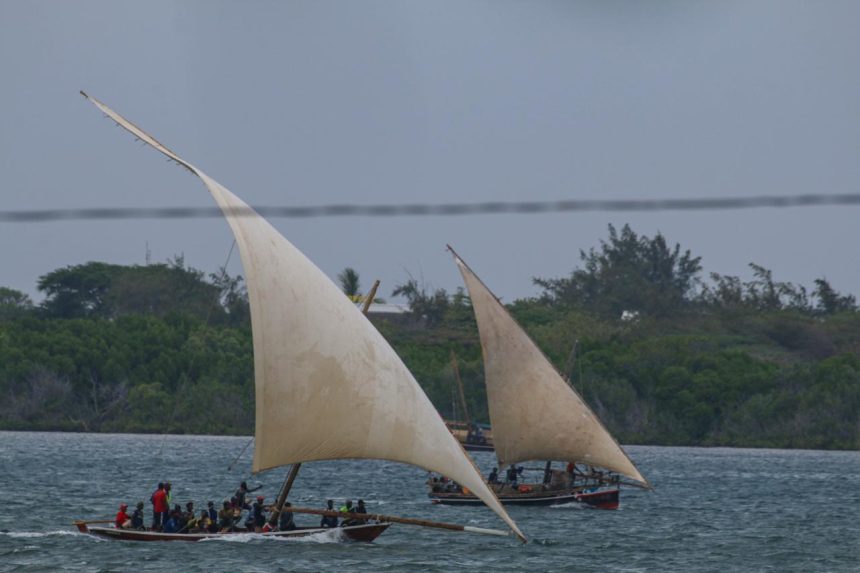
African nations have been urged to strengthen regional collaboration to combat Illegal, Unreported and Unregulated (IUU) fishing, a growing threat to food security, livelihoods and aquatic biodiversity across the continent.
Speaking in Mombasa, Acting Director of Fisheries and Aquaculture in Kenya’s State Department for the Blue Economy and Fisheries, Joseph Mahongah, warned that IUU fishing continues to exact a heavy economic and environmental toll.
Kenya alone is estimated to lose between Ksh 40 billion and Ksh 45 billion annually due to IUU fishing, despite having implemented robust legal and regulatory reforms.
“IUU fishing remains an ever-present threat due to inadequate fiscal resources, limited technology and insufficient technical skills to effectively combat the vice,” Mahongah said. “The loss is attributed to direct economic loss in the value of the resource; threats to food security; social drivers of poverty and unemployment; environmental degradation and health-related opportunity costs.”
The African Union Inter-African Bureau for Animal Resources (AU-IBAR) Fisheries Officer and Animal Production Unit Coordinator, Hellen Guebama, noted that collaboration with IGAD comes at a critical time as the region faces a surge in illegal fishing activities and their devastating impact on marine and inland ecosystems.
She outlined the scope of IUU fishing in Africa, including unauthorised fishing in closed areas and seasons, illegal transshipments at sea, forged licences and vessel registrations, unreported or misreported catches, harvesting of Threatened, Endangered and Protected species, dumping of toxic waste, and widespread environmental degradation.
“Africa’s annual share of the global IUU catch is estimated at 4.7 million tonnes of fish, valued conservatively at $10 billion,” Guebama said.
She warned that weak Monitoring, Control and Surveillance systems have fuelled unsustainable fishing practices, leading to declining populations of valuable species and loss of biodiversity in Africa’s large marine ecosystems and inland waters. More than 200 million people across the continent depend on these resources for food, income and livelihoods.
“It is common knowledge that a single-state solution to combating IUU fishing is not feasible, as the incidents are largely transboundary. This calls for coordinated regional effort towards combating this menace in African waters,” she said.
The Intergovernmental Authority on Development (IGAD) Senior Blue Economy and Fisheries Expert, Dr Wassie Antech, described IUU fishing as “maritime theft and ecological sabotage on an industrial scale.”
“The fish stocks that provide food security to our communities, livelihoods to artisanal fishers and revenue to national economies are being plundered,” Dr Antech said.
He stressed that tackling IUU fishing in the IGAD region requires a synchronised enforcement ecosystem combining technology, legal deterrence and community empowerment, supported by strengthened national and regional MCS capacities.
They were speaking during a workshop organized by AU-IBAR and IGAD.