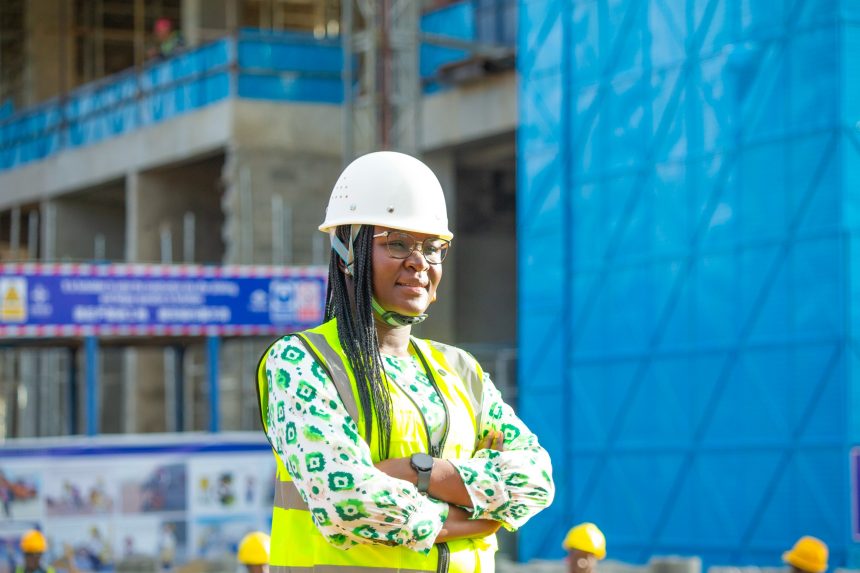
On a dusty stretch in Lang’ata, where steel, concrete and ambition rise in equal measure, a quiet milestone is taking shape, one that speaks not just to infrastructure, but to shifting ground in a traditionally male-dominated space.
At the centre of the BOMAS International Convention Complex (BICC), a flagship national project expected to position Kenya as a regional events hub, is a woman whose journey reflects that shift.
Lieutenant Colonel Wilfrida Amondi is breaking new ground within the Kenya Defence Forces, the first female architect in the institution and the Project Officer overseeing works at BICC.
“Yes, it has been a meaningful milestone as an architect, seeing what you have as a concept on paper come to life has been very fulfilling, and I’m so fulfilled and happy to see this building come to fruition,” she says.
She notes that the experience has also highlighted gradual change within the construction space, with more women finding opportunities to contribute their skills.
Now at 40 per cent completion and employing over 2,500 workers, the project is moving steadily under a system defined by precision and discipline.
The scale is clear: an 11,000-capacity, solar-powered convention centre rising on the edge of Nairobi National Park. But beyond the numbers lies a quieter story of firsts and changing tides.
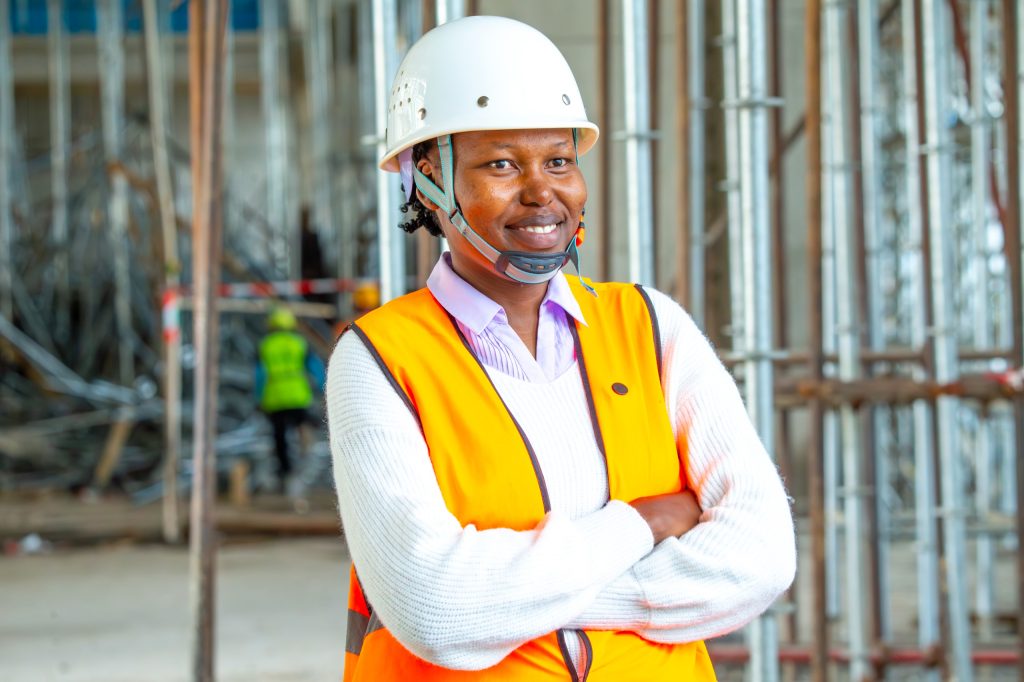
At BICC, the military’s approach to construction leaves little room for delay. Work continues day and night, with teams adjusting to weather conditions and tight timelines to keep progress on track.
“This project has a very strict timeline, and due to the strict timeline, we are working day and night. We have a shift that comes in during the day and one that works at night. Especially now, when the weather has not been so conducive to work on the external works, we’ve been shifting to do the internal works.”
Amondi, who is a strong advocate for women in construction and architecture, draws inspiration from the growing number of women on site.
“It is inspiring to see these women bring their skills, experience and grit to architecture, engineering and construction in general and especially in such a big project like the BOMAS International Conversion Centre.”
She points out that women are now represented across different levels of work.
“It warms my heart to see that we have women from casual laborers all the way to skilled ladies who are going to fix the 100 meter roof on the BICC and this is an opportunity for me especially in KDF to offer mentorship to the younger generation and the women who would like to join KDF and especially the construction industry and I would like to encourage them. It is a great opportunity for them to be part of.”
Across the site, that presence is visible. From ground work to technical roles, women are part of the teams delivering one of Kenya’s most ambitious projects.
Among them is Captain Sylvia Akisa, a civil engineer responsible for quality control and standards.
She oversees design interpretation, materials, structural checks and safety compliance to ensure the project meets required specifications.
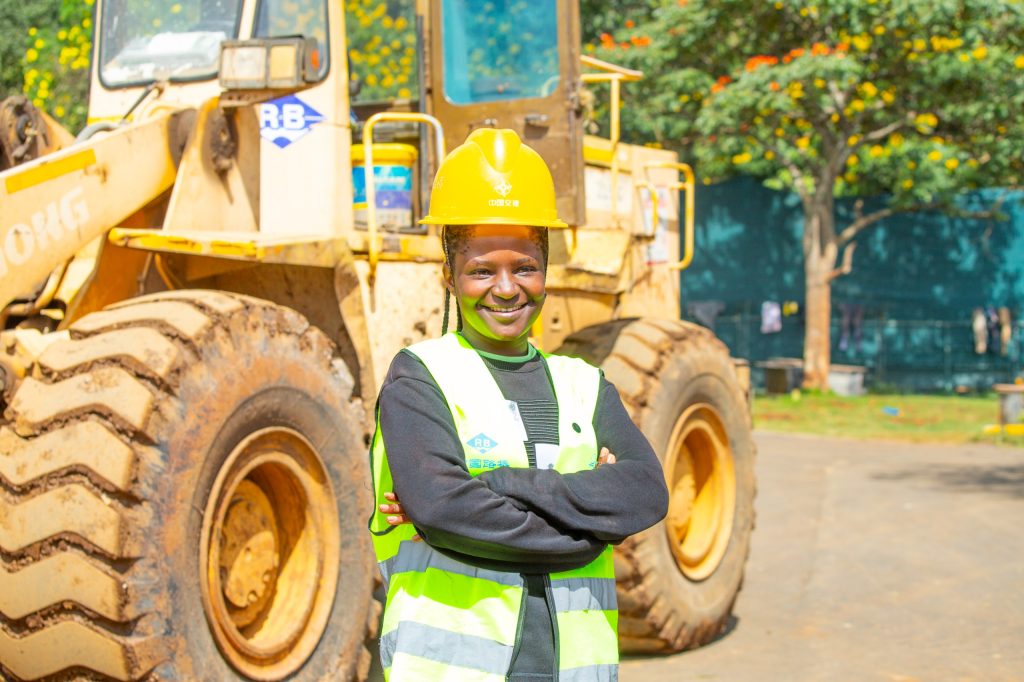
During a routine site walk, she briefly pauses to address an issue that needs attention, a reflection of the constant oversight required on such a project.
“Equally, we check that the structure that has been built, if it has any errors, we correct it on site and make sure we give a high-standard structure. We also manage the people management; make sure the safety instructions on site are strictly adhered to,” she says.
She adds that this includes ensuring workers have proper safety gear and that teams coordinate effectively on-site. For her, it is encouraging to see more women contributing to major national projects like BICC.
As cranes move overhead and concrete sets under the Nairobi sun, the complex continues to take shape, its design reflecting both scale and purpose.
Beyond the construction, it is also a sign of change, not loudly stated, but evident in the people building it.