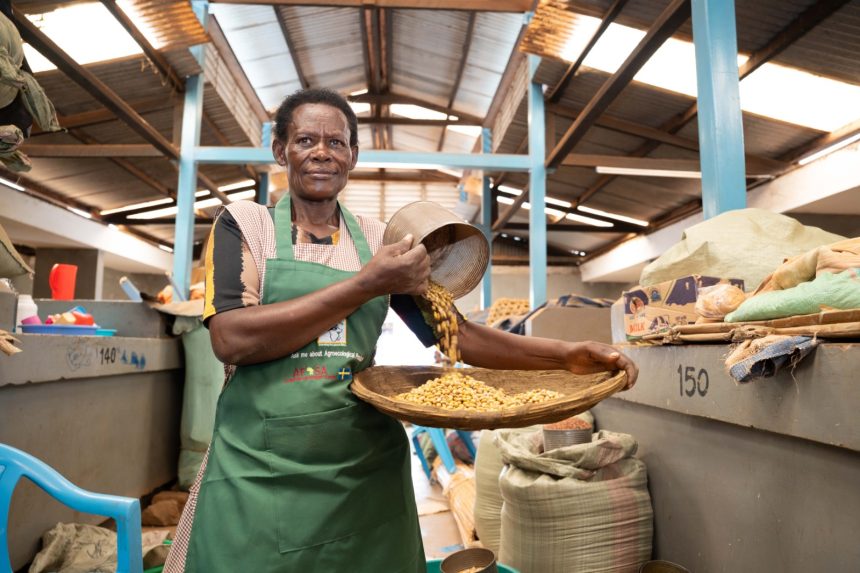
Farmers and traders of organic food have decried numerous hurdles they face which have hindered market access for their crops produced through agroecology.
A study conducted at Busia border with Uganda and Mpondwe border with Tanzania, among others within the East African Community (EAC) shows that some traders are forced to seek alternative channels to do business due to “hurdles” they have to contend with.
Titled ‘Trade of Agroecological Products within the East African Community’, the study concludes that traders face extensive paperwork, including permits from KEBS, UNBS, KEPHIS, and the EAC Trade Permit Certificate, which are tedious, costly, and short-term, making compliance difficult.
The study concludes that, on average, for the export of 2–5 tons of cereals between Uganda and Kenya, traders must navigate seven different trade facilitation agencies, with inspection fees and testing charges totaling approximately Ksh 20,000: corresponding to around 10pc of the consignment value.
This precipitates into lengthy approval processes at border points which often takes between 1.5-2 hours against the recommended 30 minutes under the EAC Simplified Trade Regime (STR), pushing farmers to want to sell produce faster, often at lower prices, to prevent spoilage.
“This has led to delays, resulting in post-harvest losses, particularly for perishable goods like fresh vegetables and herbs,” says Bathseba Ratemo, an agroecology expert and programs officer with Participatory Ecological Land Use Management (PELUM) Kenya.
Moreover, at Busia border post, traders still incur charges to obtain the Simplified Certificate of Origin, which goes against the purpose of STR.
“Things have eased up a little. But not long ago traders would have had to go through illegal border crossing to avoid punitive costs both in the Ugandan side and in Kenya as well. To bring wares across the border one would be required to pay the police and to pay customs – in both countries. It was costly and tedious,” said Alice Kerubo, a small-scale vendor of organic and conventional produce.
Traders face fees imposed by bodies in plant health, standards, phytosanitary, counterfeit, biosafety, port health, and Agriculture Food Authorities to ease trading in cereals and horticultural products under the EAC Simplified Trade Regime (STR).
High sanitary and phytosanitary standards (SPS) certification costs present significant challenges for agroecological entrepreneurs whose products are grown without synthetic additives.
AfriCert, which operates in multiple East African countries including Uganda and Kenya charges daily inspection fees of Ksh 32,000 ($250), with 16 pesticide residue analysis costing Ksh 18,000 ($140) per sample.
The study also offered insights into the amounts of agroecology products crossing borders through trade.
The most sold agroecological products between Kenya and Uganda are maize (146.9 metric tonnes) and beans (92.6 metric tonnes).
Based on the volumes provided by the sampled farmers, there was at least 165 metric tons of Maize traded from Tanzania to Kenya annually, followed by avocadoes at 84.4 metric tons, potatoes at 31metric tons, and beans at 25.5 metric tons annually.
At the Namanga-Tarakea border is that majority of the farmers do not send their products to the Namanga market: Kenyan traders went to the villages to directly purchase from farmers.
The study covered approximately 35pc of the official cross border points of the countries in the study.
Agriculture accounts for 25-40pc of EAC’s Gross Domestic Product (GDP): employing over 80pc of the population in the region.
Agroecology is a belief system in farming that insists on integrated soil fertility management, use of farmyard manure, water harvesting and conservation, crop diversification, management of farm-level biodiversity conservation, functional diversity, including farm forestry, economic diversification, and pasture management.
PELUM Kenya promotes agroecological principles and practices through capacity building, AgroEnterprise and market development.
The study was commissioned by Alliance for Food Sovereignty in Africa (AFSA) and was published last year.
On July 12, 2025, the East African Legislative Assembly (EALA) adopted a motion urging the EAC Council of Ministers and Partner States to promote Agroecology as a pathway to fostering sustainable, resilient, and equitable food systems.