As the world marks World Malaria Day, Kenya is stepping up efforts to eliminate the disease, which remains a public health threat.
Despite ongoing progress in prevention, testing, and treatment, transmission persists in many areas, with pregnant women and children under five remaining particularly vulnerable.

In the past year, Kenya reported over 3.1 million confirmed cases, with nearly one million detected at the community level, demonstrating improved service reach.
“Testing coverage is strong, with 89.3% of suspected cases tested, yet the overall disease burden remains high,” states Amref Health Africa in Kenya.
Malaria incidence declined from 104 cases per 1,000 people in 2023 to 72 per 1,000 in 2025.
The government has so far launched four key policy documents aimed at strengthening malaria prevention, diagnosis, treatment and surveillance.
These include updated guidelines for malaria case management, biosafety guidance for rapid diagnostic testing at community level, a clinical mentorship toolkit, and an implementation framework for malaria rapid diagnostic tests.
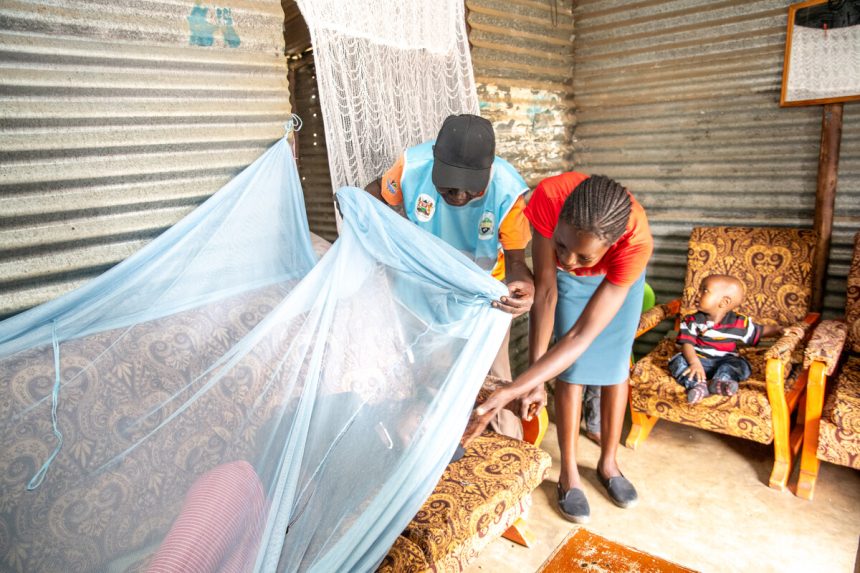
The Ministry of Health is distributing 10 million mosquito nets amid renewed calls for sustained public awareness. The rollout will begin in Baringo, Busia, Kakamega and Siaya before expanding to other counties.
The programme aims to achieve an 80 per cent reduction in malaria cases and a 90 per cent decline in deaths.
WHO has certified 47 countries malaria-free. Already, 25 countries are rolling out malaria vaccines to protect 10 million children a year. Next-generation mosquito nets now make up 84% of all new nets distributed.
The day is marked by the launch of the campaign, “Driven to End Malaria: Now We Can. Now We Must,” a rallying call to protect lives now and fund a malaria-free future.