Human Rights Organisation Freely In Hope has released its first illustrated storybook that equips children to use the power of their voices to stop child abuse, which has notably been growing at an alarming rate.
The book, titled “Pendo’s Power,” follows a young girl named Pendo and her two friends, Tumaini and Bahati. Pendo’s parents, aware of the risks of child sexual abuse, have proactively educated her on how to recognise inappropriate behaviour and understand her boundaries. They empower her to speak up whenever she feels unsafe, helping her build confidence and a sense of agency in protecting herself.

Pendo uses this knowledge to help her two friends who have encountered different forms of sexual abuse. She helps them gain the confidence to speak up about moments when they felt unsafe, and as a result, a perpetrator of child sexual abuse is taken away from the neighbourhood.
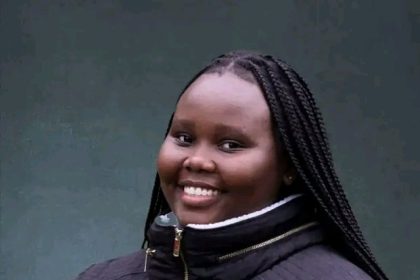
Speaking about the book, author Lydia Matioli and Freely in Hope program Director said it would help parents begin conversations with their children about sexual predators.
“Through this resource, parents and caregivers will feel equipped to initiate and facilitate conversations with their children surrounding consent, body autonomy, and sexual abuse prevention.
“I believe that these conversations will drastically reduce the rates of child sexual abuse in the world at large. Perpetrators have an advantage over children because children are uninformed, but when both children and parents are aware of sexual abuse, abusers will not have the room to continue,” she said.
Matioli, who is a child sexual abuse survivor, says her experience inspired her to create a resource that would reduce the country’s alarming rate of child sexual abuse.
The themes featured in Pendo’s Power include consent, healthy body boundaries, safe and unsafe touch, speaking up, community values, positive parenting and justice.
“I have been inspired by the stories of survivors in our community and motivated by our common desire to create safe environments for children in Kenya and all around the world,” she said. “This book is very important to me because I am now a mother to a beautiful baby girl. I am terrified of all the vulnerabilities that she could be exposed to, including sexual abuse.
Citing her inability to be omniscient, she said she hoped such abuse would never befall her daughter or another child.
“I know that I cannot be around her at all times, but I do not want my daughter to go through the same thing that I did at 5 years old, or worse! I want my daughter to be educated on what abuse could look like through the eyes of another child, and I want her to trust that my first response will always be to protect her,” she added.
The criminal justice system and abuse survivors
The 2022 report on child sexual exploitation and abuse, dubbed “Out of the Shadows Index 2022″, developed by The Economist Impact, reveals that sexually exploited children are often let down by the criminal justice system and the slow implementation of policies in the country.
The report indicated that five barriers to justice for sexually abused children include legislation, policies and programmes, national capacity and commitment, justice processes and support services and recovery.
“Priority needs to be given to abuse cases as they are time sensitive. The child is the crime scene, and the evidence depletes quickly. As parents, we should be more bold and speak up about these sexual conversations,” International Justice Mission Esther Njuguna said during the launch.
The report, which tracks how countries are preventing and responding to Child Sexual Exploitation and Abuse (CSEA), ranks countries on how their laws, programs and policies are effective in safeguarding the welfare of children.
Child sexual exploitation and abuse is defined as any exploitative and abusive sexual activity involving a child. In many cases, CSEA leads to a lifetime of physical and emotional trauma for survivors.
“Most of these stories of brokenness start in childhood, which is why it is important to start this sexual education as early as possible. A lot of young people are hurting, and we need more educators equipped with trauma care and sexual education,” Imarika Youth Kenya Ken Odhiambo said.
Implementation of policies
The survey of about 60 countries globally ranked Kenya 21st overall and second in Africa for its strides in coming up with policies that avert and respond to child sexual exploitation and abuse.
However, only victims and those who help them get justice feel the gap in the implementation of policies.
“This book is affirming the role we as parents and caregivers have to play in keeping the next generation safe by having these uncomfortable conversations with our loved ones. Sex education should start as early as two years old because they see, they observe, and take it in,” Matioli noted.
Every year, over 400 million children around the world are exposed to child sexual exploitation and abuse.
In Kenya, the latest data from Freely In Hope indicate that 33 per cent of girls experience sexual violence before they turn 18, while 23 per cent of girls are married off before they turn 18. Moreover, every 30 minutes, a woman is raped.
The prevalence of CSEA in Kenya has been exacerbated in recent years by the COVID-19 pandemic.
During the launch, the Kenya National Library Services pledged to partner with the author in the months to come to include her book as part of their collection as an e-book, as the KNLS plans to launch their 65th branch, which will be an online library.
Additionally, the deputy director at the Directorate of Child Protective Services, David Magogo, noted that parents need to realise that everywhere is unsafe for children, but they should be equipped to help children realise the risks and dangers.