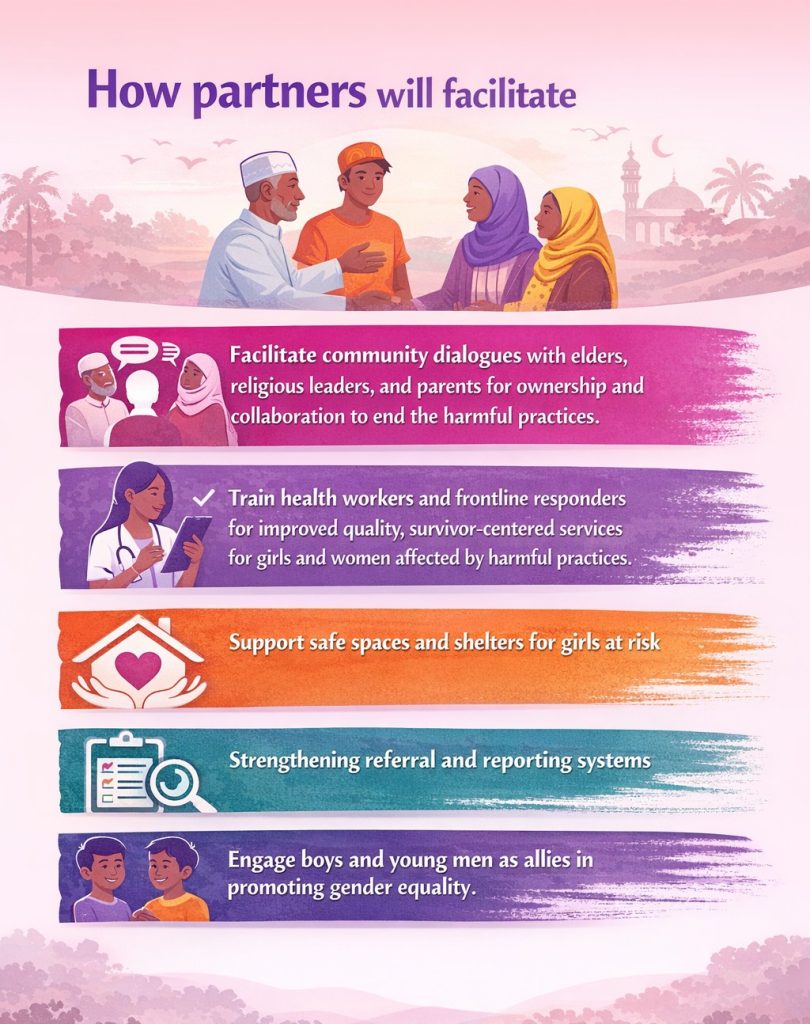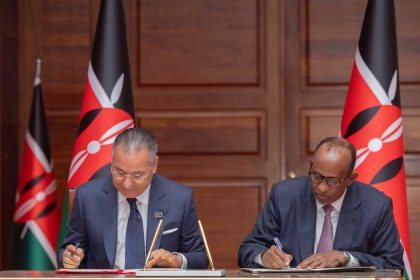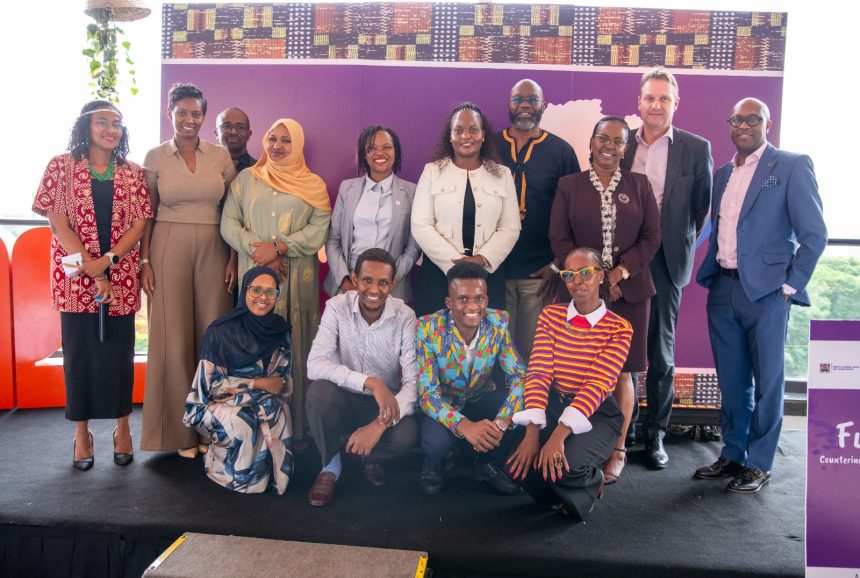
Amref Health Africa, in collaboration with stakeholder parties, launch 5-year Future4Binti programme.
The Dutch government is investing €50 million (USD 59 million) to protect girls in East Africa from Harmful practices, including female genital mutilation (FGM) and child, early, and forced marriages.

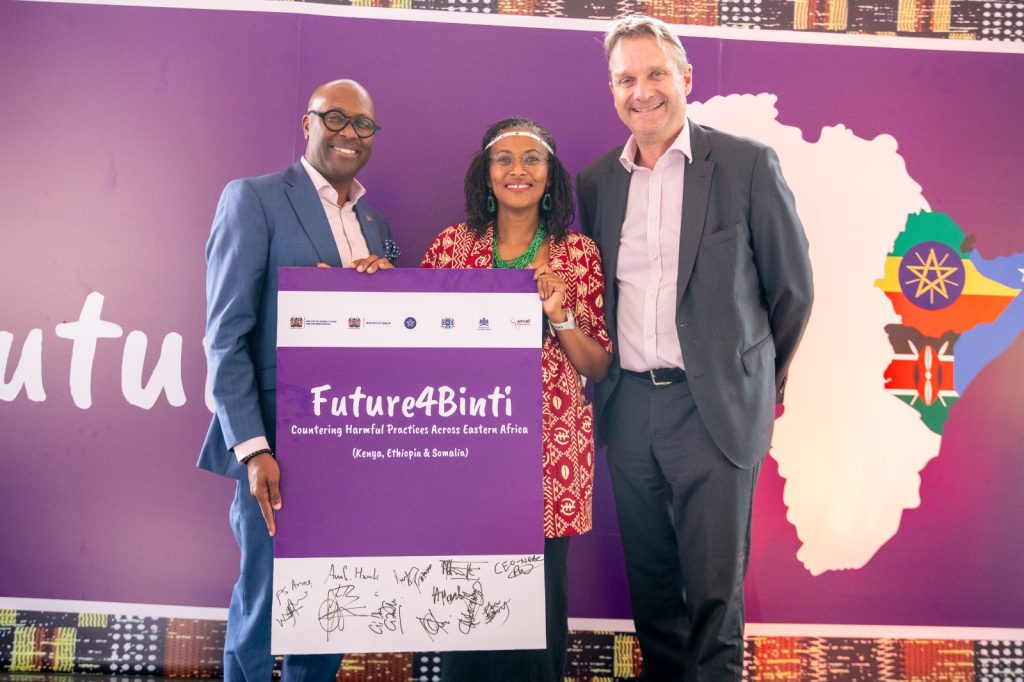
With this support, Amref Health Africa, together with Plan International country offices, and local civil society organisations, and in collaboration with the governments of Kenya, Ethiopia, and Somalia, today launched Future4Binti, a five-year programme (2026–2030) to be implemented across the three countries.
East African countries have made measurable progress in reducing harmful practices over the past decade, particularly in areas where sustained, community-led approaches have shifted social norms and strengthened protection systems.
However, significant challenges remain. In Ethiopia, 65% of women have undergone FGM, and 40% are married off before turning 18. In Kenya, national FGM prevalence has declined to 15%, yet nearly one in four girls still marry before 18. In Somalia, FGM is nearly universal (99%), and early marriage continues to affect more than a third of girls.
The impact on girls is profound. FGM can cause lasting physical and psychological harm, as well as risks during pregnancy and childbirth. Child marriage often leads to early pregnancies, school dropouts, and limited opportunities for independence, perpetuating intergenerational inequality.
Crisis factors such as poverty, conflict, migration, and climate change further increase the risk that harmful practices will return.
“For too long, harmful practices have limited the potential of our girls,” said Nice Leng’ete, Founder of Nice Place Foundation. “While we have seen meaningful progress in reducing FGM and child marriage across East Africa, progress made possible through sustained community leadership and the committed support of partners such as the Government of the Netherlands, those gains remain fragile.
“The Future4Binti initiative is therefore a critical investment in sustaining and accelerating this momentum. Girls deserve to stay in school, grow up safe, and make informed choices about their own lives. This programme strengthens our ability to protect girls today while empowering a generation to shape its own future with dignity and confidence.”
Future4Binti builds on years of experience in combating FGM and child, early and forced marriages. The programme targets not only girls, but also families, communities, healthcare systems, and governments – national and sub-national.
Because these harmful practices stem from deep-rooted gender inequality and power imbalances, the programme focuses on lasting change in social norms, improved protection, quality healthcare, and effective legislation.
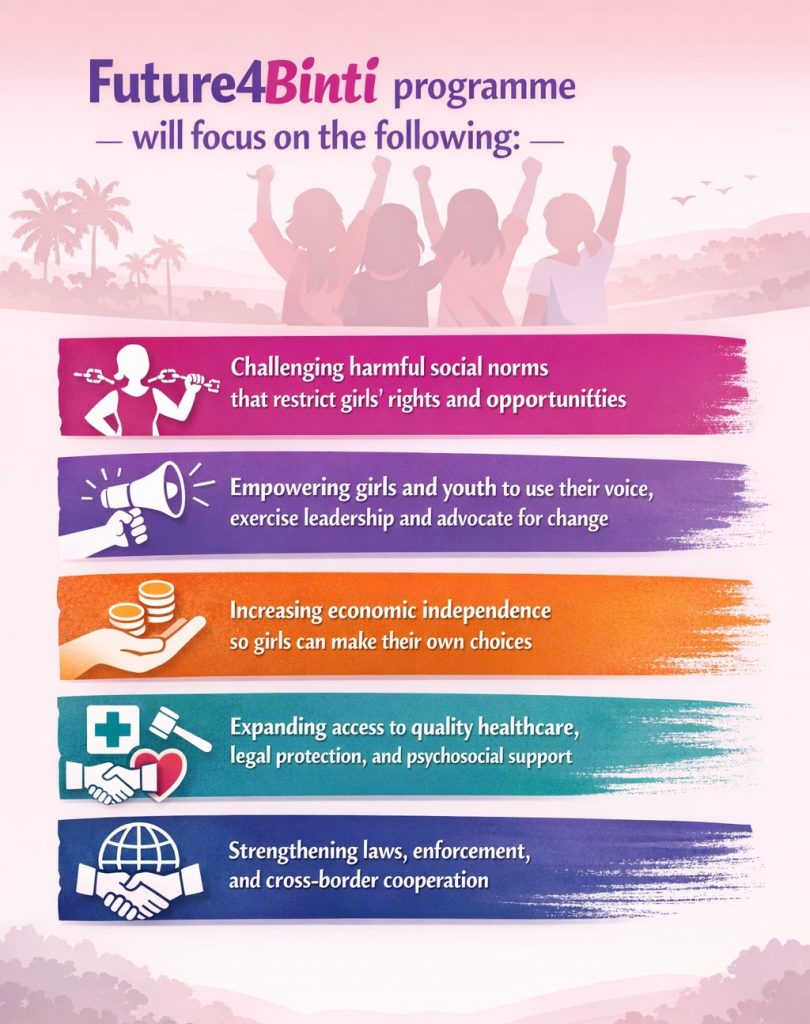
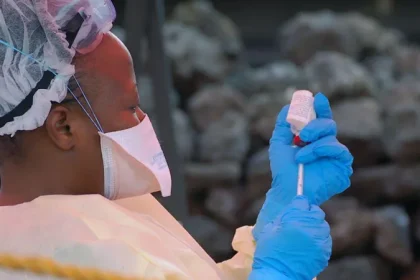
The programme will also strengthen frontline healthcare providers and expand access to quality, survivor-centred medical and psychosocial services for girls and women affected by harmful practices.
“Africa’s greatest asset is its young population. But we must ask ourselves: what are the chances that a young person reaches 18 with their full human capital potential intact? Harmful practices such as FGM, early marriage, and teenage pregnancy rob girls of that potential before it can be realised,” said Dr Githinji Gitahi, Group CEO of Amref Health Africa. “ If we are serious about achieving the aspirations of Agenda 2063 and building prosperous, self-reliant nations, we must confront the barriers that limit opportunity from the very beginning.”
Adding, “This programme goes beyond service delivery. It is about shifting social norms from within communities, strengthening local capacity, expanding access to quality services, and ensuring that every girl regardless of where she is born, grows up with safety, dignity, and opportunity.”
Harmful practices do not stop at national borders. In some cases, stricter enforcement in one country has led families to cross into neighbouring countries to circumcise or marry off daughters.
By working simultaneously in Kenya, Ethiopia, and Somalia, Future4Binti strengthens regional coordination to ensure that protection mechanisms are aligned and that girls are safeguarded wherever they live.