For years, Mageta Island would slip into near-total darkness once night fell, forcing businesses to close early and residents to retreat indoors amid fears of insecurity.
This has however changed significantly since the rollout of the Ksh 232 million Mageta Solar Mini Grid project.

Danington Odhiambo says the difference is literally like day and night, noting that the island is now properly illuminated, with businesses remaining open long after dusk. He adds that the electricity connection has greatly strengthened healthcare services on the island.
Odhiambo, a nurse at Mageta Health Centre, which serves over 7,000 residents and vaccinates about 255 people each month, notes that the facility can now store vaccines in sufficient quantities for up to a month, something that was previously impossible due to unreliable power.
For local entrepreneur Milicent Achieng, access to power has directly boosted her business. She can now refrigerate drinking water and soft drinks, attracting more customers who prefer chilled beverages.
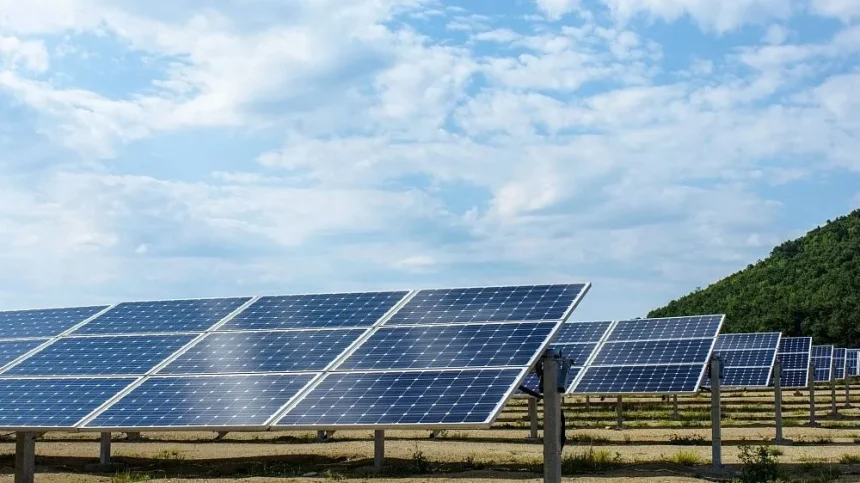
The solar project, implemented by the Rural Electrification and Renewable Energy Corporation, generates approximately 802 kilowatts daily and has a capacity of 11,000 kilovolt-amperes. It was commissioned in 2024 by William Ruto as part of a broader government initiative to expand access to clean energy in underserved regions.
Once fully completed, the project is expected to serve more than 1,400 households. So far, 890 homes have been connected in the first phase, with additional connections planned in phase two. To maintain a consistent supply during periods of low sunlight, the system includes a backup diesel generator and three lithium batteries.
Nicholas Waga, who oversees the Mageta substation, says the project has significantly improved livelihoods by creating jobs and enhancing access to essential services. He explains that facilities such as schools, healthcare centers, and water projects now rely on the solar grid for their operations.
He points out that previously, the local hospital struggled to store temperature-sensitive medicines like vaccines, which posed serious risks to children’s health.
Resident Zakary Otieno says the electrification has reshaped daily life on the island. He notes that children can now study comfortably in the evening, unlike before when they relied on dim lamps. He also observes that businesses are expanding and new enterprises are emerging, opening up more trade opportunities.
Otieno believes the area is beginning to realize its economic potential, with both existing and new businesses contributing to growth. He also expresses appreciation for the government’s role in implementing the project and hopes for further expansion.
The availability of electricity has led to the emergence of businesses such as welding workshops, salons, and phone-charging stations. According to Otieno, young people stand to benefit the most, as these opportunities allow them to pursue self-employment.
He acknowledges that this is the first time such a level of development has reached the island and calls for the project to be extended to more areas so that more residents can benefit.
Waga adds that before electrification, residents had to source services like metal fabrication from outside the island due to a lack of power. Similarly, women often traveled long distances for salon services.
Education has also improved. Schools that once relied on outdated typewriters now use computers, making it easier to prepare learning materials and examinations.
Waga emphasizes that the ongoing developments are transforming lives and urges the completion of the second phase so that more households can be connected.
Another resident, Francis Okoth, says improved lighting has strengthened security, as criminal activity has declined with the disappearance of dark hiding spots.
He also highlights benefits to agriculture, explaining that farmers can now pump water for irrigation, allowing them to grow crops year-round. This, he says, has significantly improved livelihoods across the island.