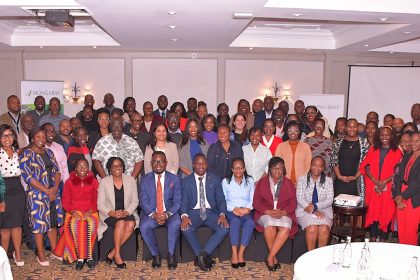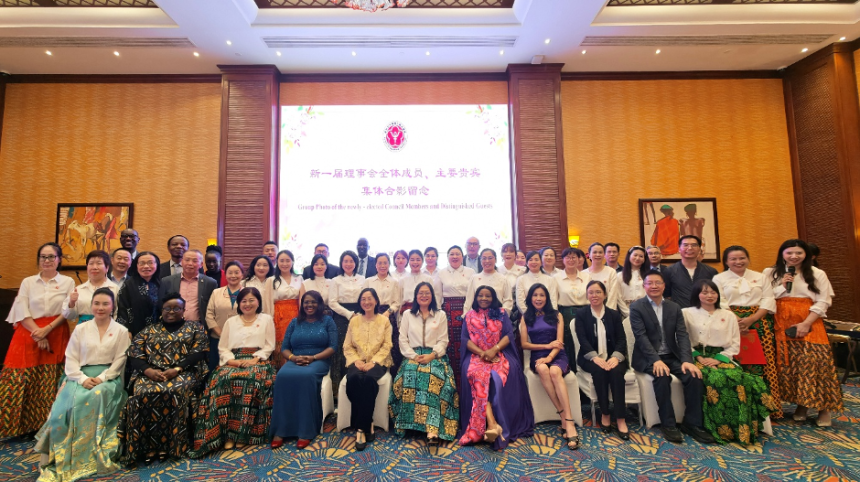
In Kenya’s capital, a civil society organization founded in 2017 is quietly transforming local communities. The Kenya-China Women Association (KCWA), operating as a non-profit and non-political body, has steadily worked across cultural integration, youth education, community welfare, and women’s empowerment—emerging as a distinctive model of Kenya-China people-to-people exchange.
Cultural Bridge: Sustained Connection Beyond Festivals

Every Chinese Lunar New Year, the Spring Festival Temple Fair in Nairobi has become part of the city’s multicultural landscape. Dragon and lion dances, calligraphy demonstrations, traditional Hanfu costumes, and Chinese cuisine draw thousands of Kenyan and Chinese participants. Unlike one-off cultural events, KCWA emphasizes building long-term cultural understanding mechanisms—Chinese and Kenyan families making dumplings together, local children writing Chinese characters with brush pens. These scenes convey not merely cultural display, but mutual cultural participation.
“We are not exporting culture; we are creating shared experiences,” noted a long-serving member. This philosophy extends to the annual “Hold Up Tomorrow’s Sun” event held on June 1, International Children’s Day, where Kenyan and Chinese children build friendships through joint performances, interactive games, and enrichment classes—understanding one another through shared growth.
Youth Focus: Addressing Real Challenges in Overseas Communities
For young Chinese professionals living and working in Kenya, limited social circles and work pressure are common realities. KCWA’s “You Are the One” social initiative replaces traditional matchmaking with relaxed gatherings, helping young people build connections through interactive games and interest-based groups. Organizers emphasize that the core objective is not “pairing,” but alleviating the isolation of overseas life and building community belonging.
Meanwhile, the “Tell Me Your Story” essay competition for Kenyan students provides young Kenyans a platform to express their stories, families, and aspirations—while opening a window for the Chinese community in Kenya to better understand local society.
Practical Philanthropy: From Donation to Empowerment
In its welfare work, KCWA adopts a strategy of sustained engagement rather than one-time aid. Orphanage donation programs have continued for years, with members providing not only school bags, stationery, and food, but also emotional companionship through regular visits. Another signature initiative—the sewing machine donation program for Maasai women—embodies the development philosophy of “teaching people to fish”: providing income-generating tools for women on the East African savanna, helping them achieve economic independence and thereby improve their children’s education and family dignity.
“Empowering women economically means empowering entire communities,” project participants noted. This philosophy aligns closely with the Kenyan government’s agenda and international efforts to advance women’s empowerment.
A New Image of Women in a New Era
The Chinese women in Kenya present a multifaceted portrait: entrepreneurs, professionals, community organizers, and mothers. KCWA demonstrates a modern female image that maintains cultural roots while actively participating in local society—equally comfortable hosting cultural events in traditional Hanfu or sharing sports moments with children on the golf course.
This image challenges stereotypical perceptions of Chinese women as “reserved” and “passive,” showcasing instead independent, confident, and socially responsible qualities of a new generation.
Conclusion
KCWA’s work demonstrates that civil society organizations can play a unique role in international relations. Through concrete cultural programs, educational activities, and welfare initiatives, the association has built a practical platform for mutual understanding between ordinary Kenyan and Chinese citizens. Beyond official diplomacy and trade cooperation, this community-rooted people-to-people exchange may well constitute the most enduring foundation of the bilateral relationship.