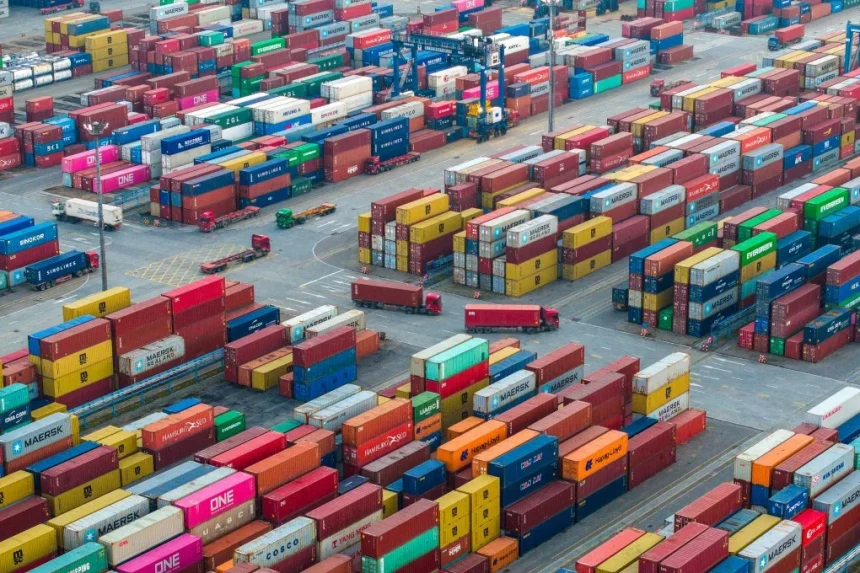
Friday, May 1, signaled more than a policy milestone; it represented a test of readiness. The opening of China’s vast consumer market to tariff-free African exports introduces a rare alignment between opportunity and ambition. For a continent that has long sought to reposition itself within global trade, this development offers a practical pathway toward that goal. Yet, as with any major economic shift, the benefits will not be automatic. They will depend on how effectively African countries prepare, coordinate, and execute.
The scale of the opportunity is difficult to overstate. Access to a market of 1.4 billion people, with a rapidly growing middle class, presents African producers with a chance to expand beyond traditional export destinations. Demand in China is evolving, with consumers increasingly seeking diverse, high-quality products from specialty agricultural goods to unique cultural and manufactured items. This creates space for African exporters to differentiate themselves rather than compete solely on price.

However, the true significance of this moment lies in its potential to accelerate structural change within African economies. For too long, export patterns have been dominated by raw commodities, leaving countries vulnerable to price fluctuations and limiting domestic value creation. Tariff-free access changes the equation by making it more viable to export processed and semi-processed goods. This is where the African Continental Free Trade Area (AfCFTA) becomes essential. By promoting regional integration and supporting the development of value chains, AfCFTA provides the internal foundation needed to fully leverage external opportunities like this one.
Consider agriculture, a sector that employs millions across the continent. Instead of exporting raw produce, countries can invest in processing facilities that extend shelf life, improve quality, and increase market value. The same logic applies to textiles, minerals, and even emerging industries such as pharmaceuticals and digital services. With the right policies, tariff-free access to China could serve as a catalyst for industrial growth, not just a boost in export volumes.
But opportunity alone is not a strategy. African governments must move quickly to address longstanding bottlenecks that could limit their ability to compete. Logistics remains a major challenge, with high transport costs and inefficient port systems reducing profitability. Standards and certification processes also need strengthening to ensure that products meet the expectations of international consumers. These are not new issues, but the urgency to resolve them has never been greater.
At the same time, the private sector must step up. Businesses need to invest in quality control, branding, and market research. Understanding consumer preferences in China is critical; success will depend not just on what is produced, but on how it is presented and marketed. Small and medium-sized enterprises, in particular, will require support—through financing, training, and access to information—to take advantage of this opening.
There is also a strong case for regional collaboration. Competing individually in a market as large as China can be daunting, but collective action can amplify impact. By aligning standards, sharing infrastructure, and coordinating export strategies, African countries can strengthen their bargaining power and avoid unnecessary competition among themselves. AfCFTA offers the framework for this kind of cooperation, but it must be implemented with urgency and commitment.
Importantly, this development reflects a broader shift in global trade dynamics. At a time when many economies are turning inward, the expansion of market access between Africa and China highlights the value of openness and partnership. It underscores the idea that trade can be a tool for shared growth rather than zero-sum competition. For Africa, this is an opportunity to engage on more balanced terms, contributing not just resources but increasingly sophisticated products and services.
The implications extend beyond economics. Trade shapes perceptions, relationships, and confidence. As African goods gain visibility in international markets, they challenge outdated narratives about the continent’s capabilities. Success stories—whether in agribusiness, manufacturing, or technology—can inspire further innovation and investment. This is how transformation begins: not with a single policy, but with a series of reinforcing changes that build momentum over time.
Kenya, for example, is well positioned to benefit if it can align its strengths with market demand. Its established agricultural exports, growing manufacturing base, and expanding digital economy provide a solid foundation. With targeted improvements in infrastructure and export readiness, Kenyan businesses could significantly increase their presence in China. Similar opportunities exist across the continent, each shaped by local strengths and priorities.
Ultimately, this milestone should be seen as a starting point rather than a conclusion. It opens a door, but walking through it will require deliberate effort. The countries that succeed will be those that treat this not as a short-term windfall, but as a long-term strategy for economic transformation.
If Africa can match opportunity with preparedness, the impact could be profound. Industries could expand, jobs could be created, and economies could become more resilient and diversified. The promise is real—but so is the responsibility. What happens next will determine whether this moment becomes a missed chance or a defining chapter in Africa’s development story.
The writer is a Journalist and a communication consultant