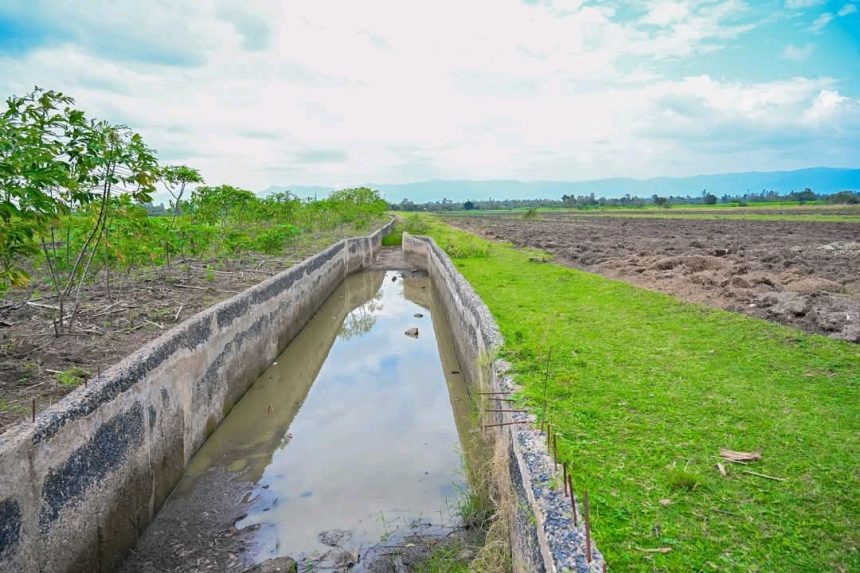
Farmers at the Lower Kuja Irrigation Scheme in Migori County have raised concerns over what they term as government neglect of the multi-billion-shilling project, warning that the scheme’s productivity is steadily declining.
The farmers claim that for the past two years, they have struggled with reduced agricultural production due to inadequate government support despite promises made when the project was launched.

Among the key challenges cited are the failure by the National Irrigation Authority (NIA) to desilt irrigation canals, resulting in poor water flow across farms.
They also pointed to a shortage of tractors and other farm machinery, as well as delays in expanding the scheme to allow farmers to fully utilize its potential.
The farmers noted that while they have consistently contributed towards the maintenance of the scheme, the government’s share of support has not been forthcoming over the same period.
According to the farmers, most cultivation activities are currently carried out manually due to a lack of mechanized equipment, significantly increasing production costs and reducing efficiency.
They further warned that the irrigation scheme risks collapse if urgent interventions are not undertaken, citing unmet government promises on market access, farm inputs and other agricultural incentives.
However, Lower Kuja Irrigation Scheme Manager Isack Munga acknowledged the challenges facing the project, attributing some of the delays to prolonged court battles involving landowners and difficulties in acquiring machinery required for the scheme’s operations.
Munga, however, assured farmers that the government has allocated nearly KSh1 billion for the expansion and maintenance of the irrigation scheme, with the works expected to commence as early as next week.
He also urged farmers to take ownership of the project and safeguard its infrastructure to ensure its sustainability and long-term benefits.
The Lower Kuja Irrigation Development Project is one of Kenya’s largest government-sponsored irrigation schemes. Located in Nyatike Sub-County, approximately 45 kilometres northwest of Migori Town, the project was established to transform flood-prone swamplands into productive agricultural land and enhance food security in the region.
The scheme covers a gazetted area of 19,000 acres, although between 7,500 and 9,000 acres have so far been developed across 14 production blocks. It directly supports about 5,000 farmers.
Rice remains the dominant crop grown under the scheme, with farmers also cultivating sweet potatoes, watermelons, bananas and green grams.
The project has previously recorded rice yields of between 30 and 35 bags per acre, surpassing the national average and cementing its position as one of the country’s key food production hubs.