China has published a comprehensive national report detailing a decade of transformative progress in urbanisation and poverty eradication. The country is intensifying efforts to ensure that communities lifted out of destitution do not relapse, driven by a leadership philosophy that prioritises self-reliance over dependency on handouts.
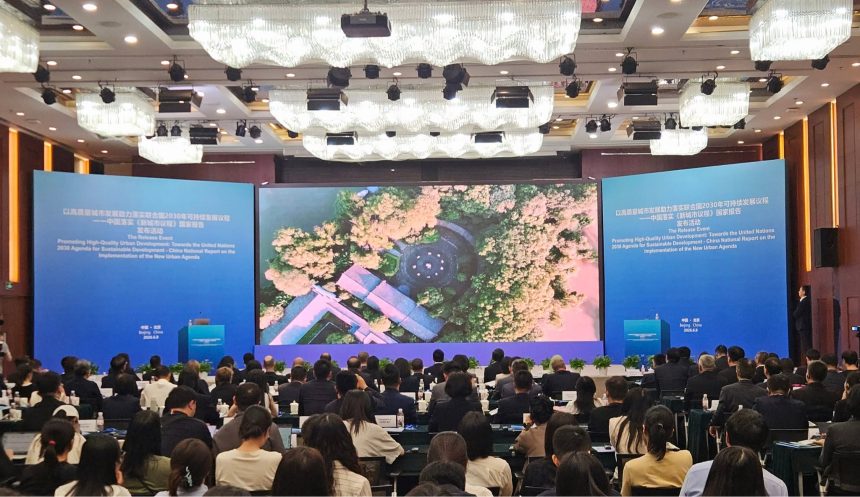
The report, titled Promoting High-Quality Urban Development Towards the United Nations 2030 Agenda for Sustainable Development, which was prepared by the Ministry of Housing and Urban-Rural Development in collaboration with over 40 government departments, showcases how urbanisation has become a key pillar of China’s modernisation drive.

The report charts China’s implementation of the UN’s New Urban Agenda, adopted in 2016 as the urban framework for the Sustainable Development Goals. This release coincides with a parallel national push for rural revitalisation under President Xi Jinping, highlighting the country’s broader vision of building long-term prosperity by consolidating poverty reduction gains while creating new opportunities for future generations.
The report outlines China’s progress in urban development, environmental sustainability, innovation, and poverty alleviation. Between 2016 and 2025, China’s urban population increased from 819 million to 954 million, pushing the urbanisation rate from 58.8 per cent to 67.9 per cent. During the same period, the country’s 19 major urban clusters emerged as powerful engines of growth, accounting for roughly 75 per cent of the population and generating about 85 per cent of national GDP.
Urban development has been accompanied by rising innovation capacity and stronger economic performance. By 2025, China had 29 cities with GDP exceeding one trillion yuan and 24 of the world’s top 100 science and technology innovation clusters. At the same time, policymakers have emphasised green and low-carbon development, ecological conservation, and the creation of safer and more resilient cities.
Having eradicated absolute poverty, the country is now focused on ensuring that communities do not fall back into hardship. Rural revitalisation has become the next phase of China’s poverty reduction strategy, designed to create sustainable livelihoods and narrow long-standing urban-rural disparities.
Under this approach, authorities have established systems to monitor households vulnerable to economic setbacks and provide targeted assistance through employment opportunities, industrial development programmes, and social support measures. The goal is not simply to provide relief, but to strengthen local economies and enhance the capacity of communities to generate their own growth.
The results are becoming increasingly visible, with official data showing that per capita disposable income in previously impoverished regions reached 18,627 yuan in 2025, outpacing the national rural average. These gains are supported by policies that encourage local entrepreneurship, skills development, and investment in competitive industries tailored to regional strengths.
A key feature of China’s poverty reduction model has been its emphasis on grassroots engagement, with more than 3 million officials assigned to villages during the nationwide anti-poverty campaign to work directly with communities. Their efforts helped identify development opportunities, connect farmers to markets, and strengthen local industries. That commitment continues today as rural revitalisation programmes focus on creating lasting economic foundations.
Between 2021 and 2025, all 832 formerly impoverished counties developed two to three competitive industries, ranging from modern agriculture and food processing to tourism and specialty products, in line with President Xi’s broader vision. Increasing numbers of university graduates, entrepreneurs, and technical professionals are also returning to rural areas, bringing innovation, investment, and expertise to local communities.
Technology is strengthening these efforts. China has established a nationwide monitoring and assistance system that combines cross-agency data, local reporting mechanisms, and direct community engagement to identify families facing potential economic difficulties. The system allows authorities to intervene early and provide support before challenges become entrenched.
Central to the strategy is the belief that modernisation cannot be achieved if rural areas are left behind. Policymakers view balanced development as essential to achieving common prosperity and reducing regional inequalities. This objective is reflected in China’s 15th Five-Year Plan for 2026-2030, which prioritises integrated urban-rural development, stronger county economies, improved public services, and better infrastructure in rural communities.
The transformation is increasingly evident across the country. Improved transport networks are connecting villages to urban markets, while advances in agricultural technology are raising productivity and creating new income streams. Rural tourism is also gaining momentum, with international visitors showing growing interest in China’s countryside and cultural heritage.
China’s experience has attracted international attention as governments and development institutions search for practical solutions to poverty and inequality. By combining urban growth, rural revitalisation, technological innovation, and targeted social support, experts argue that the world’s second-largest power is building a development model that extends opportunity beyond major cities.
Through the integration of urban transformation and rural renewal, the country aims to create not only stronger economies but also more resilient communities and better living standards for people across the nation.