Several experts and policymakers have recently suggested that Africa could greatly benefit from China’s experiences and strategies in advancing its modernization agenda.
This comes at a time when China has committed to assisting African nations in building their capacity for self-driven development, particularly through training programmes and sharing experiences aimed at enhancing skills in various sectors. Such efforts are crucial for fostering local expertise and innovation.

Recently, during the Forum on China-Africa Cooperation (FOCAC) summit in Beijing, China reinforced this commitment by pledging substantial financial resources to support various development projects in Africa, including a commitment of RMB 360 billion over three years for infrastructure and trade initiatives. This financial backing is essential for implementing modernization strategies.
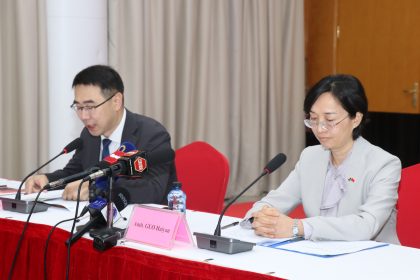
However, Meng Jin, Assistant Research Fellow at the China-Africa Institute, believes that Africa needs to develop the capacity to effectively utilise this support in order to realize its development aspirations. Central to this is the modernization of state governance, enabling the continent to address current challenges and position itself for sustainable growth and development in the future.
She points out that China places great importance on the promotion of governance modernization, citing it as a key reason behind its rapid development, which is now termed the ‘Chinese economic miracle’.
“The promotion of the modernization of the governance system and governance capacity is one of the main goals and tasks of China’s development in the next five years,” she stated at a recent workshop titled, “Chinese Modernization and China-Africa High-quality Cooperation under the Belt and Road Initiative,” held in Nairobi, Kenya.
Meng asserts that, during the state-building process, it is essential for leadership to cultivate a coalition of influential elites. Crucially, she notes that leadership should effectively integrate the population into the state system by fostering a strong sense of national consensus. To achieve this, she emphasizes that leaders must maintain close contact with society.
“This engagement ensures that the government is not only representative but also responsive to the needs and aspirations of society,” she remarked.
From Meng’s perspective, political parties also play a significant role in fostering this national consensus. In China, for instance, she gives the example of multi-party cooperation and political consultation led by the ruling Communist Party of China (CPC) as a game changer in driving her developmental aspirations.
“The CPC and eight other non-communist parties play an essential role in mobilizing their members to strive for the advancement of Chinese modernization and in gathering the forces of society,” said the Chinese expert.
In addition to building consensus, she believes Africa cannot afford to forgo the formulation of a long-term, comprehensive development strategy, similar to China’s “Two Centenary Goals”. The first goal is to achieve a moderately prosperous society by the 100th anniversary of the CPC, while the second aims to build a prosperous, democratic, culturally advanced, harmonious, and beautiful socialist modernized nation by the 100th anniversary of the founding of the PRC.
The country’s governance model is marked by long-term strategic planning, which has facilitated sustained economic growth and stability. She believes African countries can adopt comprehensive development plans that outline clear goals and measurable outcomes over extended periods. Meng praised various developmental blueprints already established by several African nations and the African Union (AU), such as Kenya’s Vision 2030, Mozambique’s National Development Strategy 2015-2035, and the “Agenda 2063” at the continental level, noting that these frameworks provide a foundation for development and represent a step in the right direction.
With strategies in place, Meng argued that Africa should enhance its ability to implement policies effectively. She stated that successful execution of policies requires a skilled civil service. Over the years, China has made significant investments in science and technology, viewing them as central to its modernization efforts. She believes African countries can prioritize technological advancements in governance, such as utilizing digital platforms for public service delivery, which can improve transparency, efficiency, and citizen engagement.
“The skill development of civil servants involves continuous training and education programmes to keep personnel informed about best practices, technologies, and emerging issues,” noted the official from the China-Africa Institute.
This must also progress to raising awareness, creating a better understanding of specific policies among the public. She believes this can increase social recognition of these policies, further enabling citizens to contribute to decision-making and policy formulation.
At the same time, she asserted that Africa, like China, should explore paths to modernization that respect cultural and historical traditions, as advocated by Chinese President Xi Jinping, who maintains that countries should choose development paths suited to their own conditions.
Drawing from its traditional cultures, she averres that African leaders should promote the development of democratic forms that resonate with Africa’s own cultural, historical, and social contexts.
According to Meng, it is essential to adhere to a People-Centred Development Philosophy that enables Africa, whose progress is driven by its people, to leverage the potential of its citizens, particularly women and youth, while ensuring the welfare of children. Moreover, she contends that sharing governance experiences can significantly contribute to Africa’s modernization process.
Over and above these, she believes that China and Africa share several similarities in their quest for modernizing state governance. She argues that modernizing state governance presents a new option for countries of the Global South to independently pursue their own paths to modernization.