The East African Community (EAC) and the Government of Germany have launched the second edition of the EAC Artificial Intelligence Challenge, expanding opportunities for young people, researchers and entrepreneurs across the region to develop artificial intelligence skills and solutions to local challenges.
The initiative, known as AI4EAC, is targeting 20,000 East Africans for artificial intelligence skilling while providing funding and partnerships to support innovation across all eight EAC Partner States.

The second edition will offer US$50,000 in prize funding for winning teams and introduce a new Ebola Response Challenge focused on using artificial intelligence to strengthen disease outbreak detection, preparedness and response.
The challenge comes as the EAC continues to strengthen regional capacity in technology and health security. The regional bloc and Germany have previously worked together on pandemic preparedness, including efforts informed by lessons from the Ebola outbreak in West Africa.
The new Ebola-focused challenge will seek innovative applications of artificial intelligence that can support faster identification of disease threats and improve preparedness for potential outbreaks.
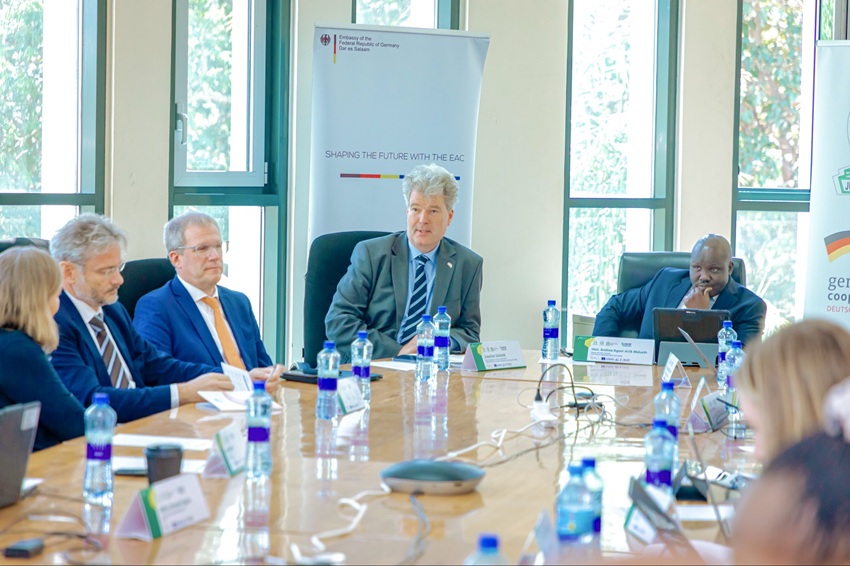
EAC Deputy Secretary General Andrea Aguer Ariik said equipping East Africans with relevant skills and creating stronger partnerships would be central to ensuring artificial intelligence contributes to regional development.
“Our priority is to ensure East Africans have the skills, knowledge and partnerships to harness AI to create jobs, improve public services and develop solutions to our region’s challenges,” said Aguer Ariik.
The second edition also brings new strategic partners on board, including Equity Group Holdings and the Karlsruhe Institute of Technology (KIT).
Their participation is expected to strengthen collaboration in artificial intelligence research, digital skills development and innovation, while creating additional opportunities for participants to connect their ideas with industry and research institutions.
The challenge is open to young innovators, researchers and entrepreneurs across the EAC region, providing a platform to develop technology-driven responses to challenges affecting communities and economies.
Beyond competition, the programme is designed to expand access to artificial intelligence knowledge and encourage the development of solutions that can be applied to sectors including healthcare, public services and economic development.
The EAC has increasingly highlighted the importance of regional cooperation in responding to health emergencies. Previous initiatives with Germany and other partners have focused on strengthening early warning systems, rapid response capacity and coordination among Partner States.
Through AI4EAC, the EAC and Germany are seeking to build on these efforts by placing emerging technology and young innovators at the centre of the region’s digital transformation.
The initiative is also expected to contribute to the development of an East African pool of artificial intelligence talent capable of creating locally relevant solutions rather than relying solely on technologies developed outside the region.
With 20,000 people targeted for skilling and US$50,000 available in prize funding, the second AI4EAC challenge is positioning artificial intelligence as a tool for skills development, job creation and practical problem-solving across East Africa.