Dairy farmers in Bomet and Kericho Counties have received major boost after they received bulk milk coolers of varying capacities.
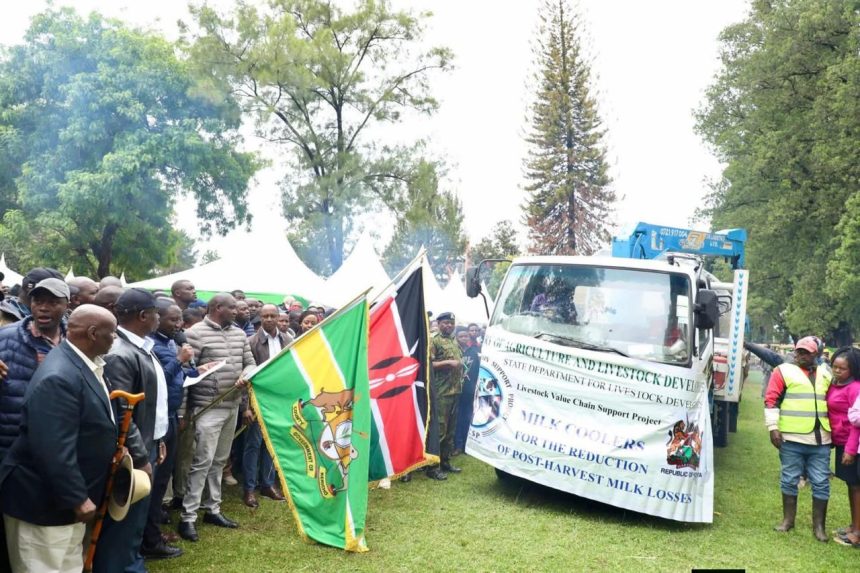
The coolers are being backed as strategic investment designed to improve milk aggregation, reduce post-harvest losses, and safeguard farmer earnings through better preservation and quality management.
In Bomet, the nine milk coolers, aimed at strengthening the county’s dairy value chain, were handed over at an event held at Kapset Market in Konoin Sub-County, and attended by Livestock Principal Secretary Jonathan Mueke together with his Parliamentary Affairs counterpart Dr. Aurelia Rono.
The exercise follows a similar intervention in Kericho County, where twelve milk coolers were delivered to dairy farmer Cooperatives, further expanding cold-chain capacity and operational efficiency within the region’s dairy ecosystem.
Milk cooling is a critical link between production and market access.
Enhanced cooling capacity directly translates into; lower spoilage and post-harvest losses, improved milk quality and safety, higher volumes reaching processors, stabilized farmer revenues, reduced operational costs through solar-powered units, and stronger aggregation centres as rural economic hubs.
Collectively, the coolers deployed across Bomet and Kericho Counties significantly expand daily milk handling capability, supporting thousands of dairy farmers and reinforcing household incomes.
Dairy cooperatives welcomed the support while identifying key areas for complementary interventions they require.
The areas include; capacity building in milk handling and quality control, training in value addition and diversification, and greater access to Artificial Insemination (AI) services.
Farmers were sensitized on the availability of sexed semen, now offered at a highly subsidized rate by KAGRC. This breeding technology increases the probability of female calf births, a vital step toward accelerating milk production growth and supporting Kenya’s long-term dairy targets.
Disease control remains central to sustainable productivity. Foot-and-mouth disease management continues under the national mass vaccination programme, supported by locally manufactured vaccines by KEVEVAPI to protect livestock assets and farmer livelihoods.
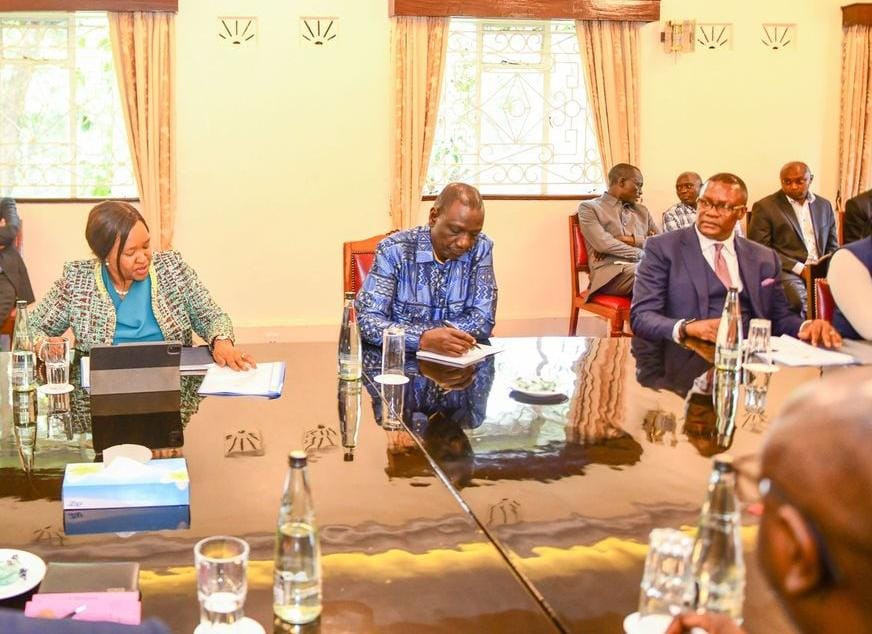
PS Mueke was accompanied by leadership from key livestock and dairy institutions, alongside regional policymakers, underscoring a coordinated multi-agency approach to livestock development.
The broader objective remains: strengthening infrastructure, improving genetics, and protecting animal health remain essential pillars in building a competitive, resilient, and farmer-focused dairy sector.