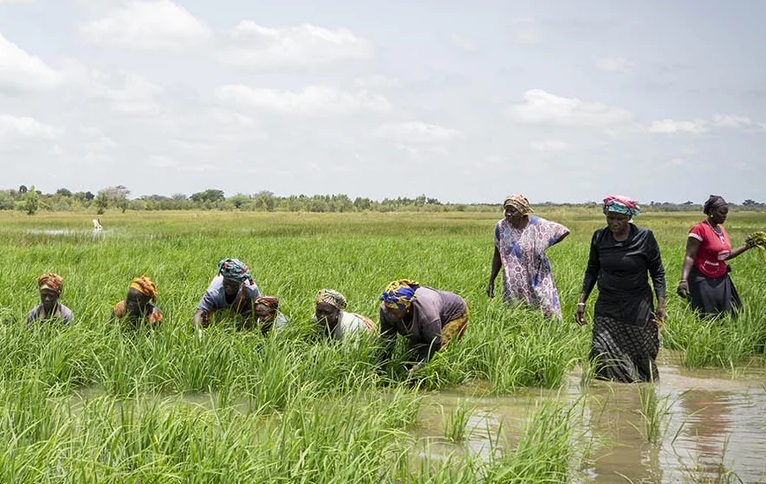
Kenya Agricultural And Livestock Organization (KALRO) has embarked on production of seeds in Mwea, Kirinhyaga County in a bid to address shortage of certified rice seeds in the country.
KALRO in partnership with Korean Partnership For Innovation of Agriculture(KOPIA) from South Korea has embarked on transplanting exercise to boast production of rice seeds in the country.

Speaking during rice transplanting ceremony at K-Ricebelt seed production complex at Kirogo in Mwea, KALRO deputy director in charge of crops systems and research Dr Benjamin Kibuva said that they are targetting to produce 450 metric tonnes of certified seeds by next year.
Kibuva said that the government seeks to stop rice imports by 2032 by ensuring the country meet it’s demands on availability of certified seeds to the farmers.
He noted that currently kenya is importing over 77% of rice that is 1.3 million metric tonnes annually comparing to 320 metric tonnes of rice produced in the country.
Kibuva said to address the shortage of seeds and boost production of rice in the country, the government in collboration with partners has started transplanting in 7.2 hectares to produce seeds to cover 65 hectares.
KOPIA Country Director Ji Gang Kim said that the transplanting project started in 2024 and will play a critical role in production of seeds and ensure availability to the local farmers.
Gang said that the initiative will also create job opportunities and enhance food production as he encouraged farmers to embrace technology and certified seeds.
Ruth Musila who is in charge of Mwea KALRO center added that the organisation has also developed certified seeds like Komboka which are resistant to diseases, requires less water, low maturity rate and has high yields compared to traditional seeds.
Lucy Njeri a farmer narrated how they have been struggling in the search of seeds but with completion of the center they will now access seeds at a cheaper price.