Kenya is keen on establishing an animal feed quality index in a bid to rein in poorly formulated products which compromise quality of meat and dairy products.
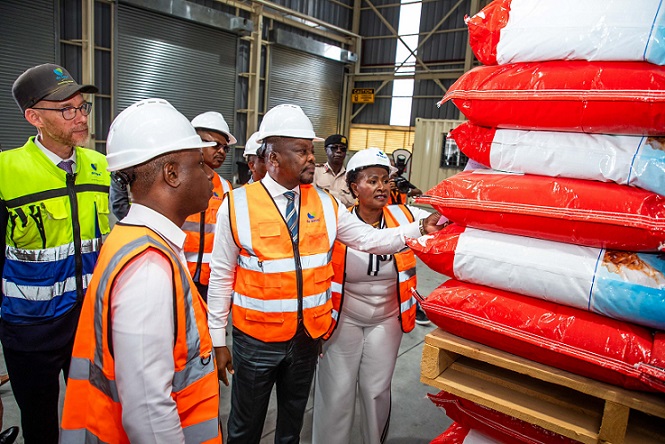
Speaking during the commissioning of a Ksh 3 billion De Heus Animal Nutrition plant in Athi River, Machakos County, Agriculture Cabinet Secretary Mutahi Kagwe said the move to tighten standards around feeds will ensure the country is able to increase milk and meat production to meet international standards.
“We are therefore strengthening enforcement and will implement a feed quality index to protect our farmers. Over-diluted feed and substandard formulations designed to maximize profits at the
expense of productivity will not be tolerated. Farmers must get value for their money,” said Kawge.
According to Kagwe enhanced feed quality will help to double its annual milk production from 5.2 billion litres to 10 billion litres as the country positions itself to become a net exporter of live animals and meat.
Kagwe noted that modern feed formulation, based on science and research is key in improving milk yield, enhances butterfat and protein levels, strengthens immunity, improves fertility, and increases daily weight gain in beef animals.
“Under the Land Commercialization Initiative (LCI), we are unlocking government land for structured commercial production of yellow maize and soya beans — key raw materials in feed
manufacturing. Large-scale leasing frameworks are being developed, while small-scale farmers will be integrated through structured contract farming models.”
The government is also eying structured feed reserves for drought situations to cushion farmers, stabilize prices, and prevent livestock losses during dry seasons.
Through the new factory, De Heus Kenya targets an annual production capacity of 240,000 metric tonnes, a move which is expected to help Kenya cuts its reliance on imports to plug the deficit.
“Kenya requires roughly 55 million metric tons of animal feed each year, but we only produce about 46 million tons. When you account for post-harvest losses, our real deficit sits at a staggering 60pc. With feed making up as much as 70pc of production costs, these shortages hit our families hard,” said Wiehan Visagie, De Heus Kenya Managing Director.
The Dutch firm further projects to create 250 direct jobs and support up to 1,000 indirect roles in logistics and services.
“I believe that our genuine and continuous efforts to make local farmers successful, by not only supplying them with high quality feed, but also through supporting them with sound advice and useful services in order to become better farmers, has also contributed a great deal to our success,” noted Co de Heus, De Heus Animal Nutrition Chairman.
The multi-billion shillings plant features integrates laboratory testing of raw materials, standardized recipe formulation, automated production systems, and batch-to-batch verification to ensure consistency.