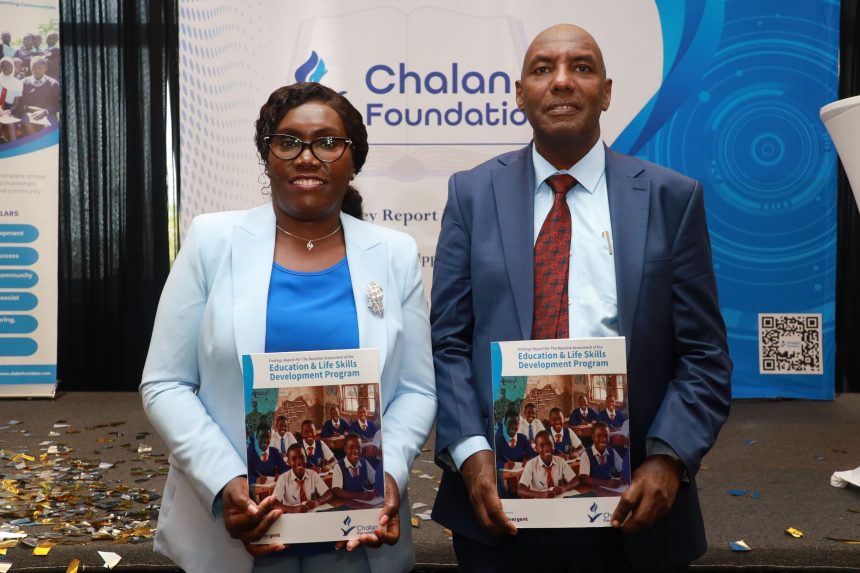
A new baseline survey conducted under the Education and Life Skills Development Program by Chalan Foundation has revealed that while learners across underserved counties in Kenya demonstrate strong motivation to succeed in school, structural barriers continue to undermine consistent participation and learning outcomes.
The survey was conducted between 12th and 28th January 2026 across 10 counties and 51 schools, engaging 612 learners and 209 parents or guardians. The study assessed education access, learning environments, life skills development, and digital readiness among learners.

The counties covered in the survey include Turkana, Bungoma, Homa Bay, Kitui, Samburu, Kajiado, Baringo, Bomet, Nandi, and West Pokot.
One of the most striking findings is the contrast between learner motivation and participation. While 99% of learners reported arriving at school on time when they attend, 48% are not consistently present for full school weeks, and 43% missed one to two weeks of school during the previous term.
Attendance challenges vary across counties. Counties such as Homa Bay and Turkana reported particularly high levels of intermittent absenteeism linked to household economic pressures and illness, while Samburu and West Pokot showed patterns of repeated short-term absences. In contrast, some schools in Bomet and Nandi counties reported relatively more stable attendance patterns, though economic vulnerability remained a key concern.
Economic barriers remain the leading driver of absenteeism across counties. The survey found that 58% of absences are linked to lack of school fees, while 51% are associated with illness. In addition, 45% of learners come from non-intact households, and 20% are single or double orphans, highlighting the influence of household vulnerability on education participation.
The baseline also identified disparities in learning environments across counties. 28% of learners study in classrooms with more than 60 students, particularly in densely populated schools in Bungoma and Homa Bay, while learners in more remote counties such as Turkana, Samburu, and West Pokot reported challenges related to limited learning resources and infrastructure.
Although 86% of surveyed schools reported having science laboratories, many laboratories in counties such as Kitui, Turkana, and West Pokot remain poorly equipped. Similarly, while several schools reported having computer laboratories, more than half were found to be nonfunctional, limiting opportunities for digital learning.

The survey also assessed life skills development among learners. The Composite Life Skills Index averaged 3.2 out of 5, with emotional regulation scoring the lowest at 2.7. Learners across several counties reported difficulties managing stress and solving real-life challenges, with 38% indicating that they struggled to resolve a recent problem they had encountered.
Gender-specific barriers were also observed across counties. Nearly one-third of girls reported missing school due to menstruation, and only 21% reported regular access to sanitary pads in their schools. These challenges were particularly pronounced in rural and remote areas where access to menstrual hygiene facilities remains limited.
The study further highlights a growing digital aspiration gap among learners. While 93% of learners expressed interest in improving their digital skills, many lack basic competencies. Across the surveyed counties, 33% of learners reported that they cannot type, 37% cannot use email, and 52% have never participated in STEAM-related activities.
“These findings demonstrate that learners across these counties have strong aspirations for education and future opportunities,” said a representative of Chalan Foundation. “However, the systems around them must address the structural barriers that limit consistent participation and access to opportunities.”
The baseline findings will guide the next phase of the Education and Life Skills Development Program, supporting efforts to strengthen school participation, life skills development, and digital readiness through partnerships with schools, communities, policymakers, and private sector actors.
The results were presented at a dissemination forum bringing together education leaders, government representatives, development partners, and technology innovators to discuss how the findings can inform system-level reforms and scalable solutions for education across Kenya.
Chalan Foundation is a nonprofit organization committed to improving education outcomes and expanding opportunities for young people in underserved communities.The Foundation works to strengthen education systems by promoting equitable access to quality education, life skills development, and future-ready digital competencies.