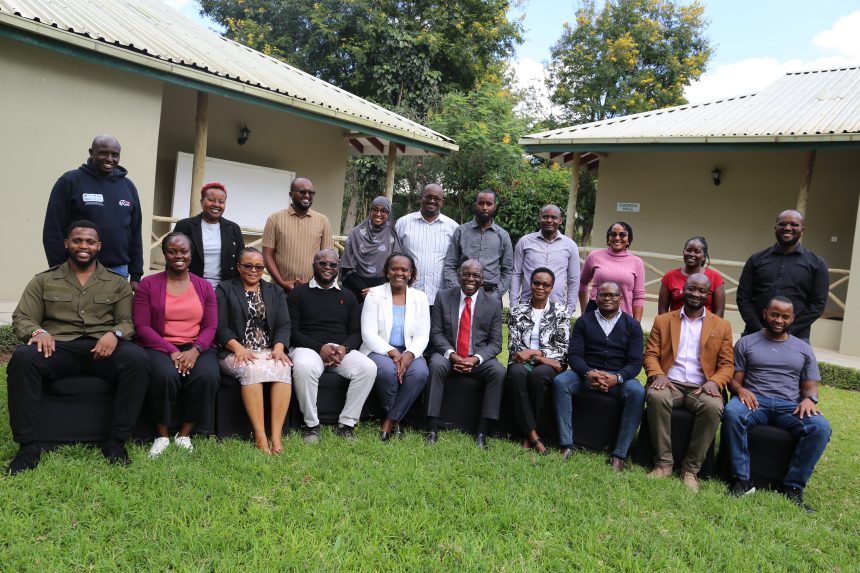
The Anti-Doping Agency of Kenya,ADAK, has concluded a three-day capacity-building workshop in Machakos County for members of the Sports Disputes Tribunal (SDT), aimed at strengthening institutional alignment, enhancing adjudicative consistency, and reinforcing compliance with the World Anti-Doping framework.
The SDT, a specialized legal body established under the Sports Act, is mandated to hear and determine sports-related disputes independently and fairly, including anti-doping appeals and other matters relating to sports governance.

The workshop brought together Court of Arbitration for Sport (CAS) Arbitrator Mr. John Ohaga SC, C. Arb. FCIArb (former Chairperson of the SDT), Chair of the Continental Results Management Panel Ms. Njeri Onyango SC, FCIArb (former SDT member), SDT Acting Chairperson Hon. Allan Mola, Secretary of the Sports Disputes Tribunal and CEO Dr. Leah W. Kaburu, members and secretariat of the Tribunal, and ADAK Chief Executive Officer Ms. Peninah Wahome.
Participants were trained on key anti-doping operational processes, including Whereabouts management, Results Management, Sample Collection Procedures, Education and Research, as well as Intelligence and Investigations functions. The sessions aimed at deepening understanding of ADAK’s operational framework, particularly for tribunal members who preside over athlete-related anti-doping cases.
Speaking during the workshop, Mr. John Ohaga SC commended ADAK for the initiative, noting that it enhances the capacity of tribunal members in delivering informed and consistent decisions.
“I commend ADAK for organizing this session that better equips the new tribunal members for decision-making. It is crucial that athletes and the general public understand that non-analytical cases are as important as analytical cases. An athlete sanctioned for presence is equally culpable as one sanctioned for whereabouts, as all Anti-Doping Rule Violations are legal wrongs,” he said.
He further observed that Kenya has established one of the most robust Results Management systems in Africa, emphasizing the need for continuous training of legal practitioners in sports law to ensure harmonized rulings aligned with global standards.
“Advocates need more training and not just athletes because there are global standards that must be adhered to. ADRVs are not criminal jurisprudence; they are governed by global standards that require harmonization in interpretation and rulings,” he added.
Ms. Njeri Onyango SC, FCIArb, expressed satisfaction with Kenya’s progress in anti-doping governance, noting her involvement in the development of the 2016 Anti-Doping Act.
“I am elated to see how much progress has been made in anti-doping matters. The presentation on the current amendments to the Anti-Doping Act, Anti-Doping Rules, and the National Anti-Doping Policy only demonstrates Kenya’s commitment to promoting integrity in sport,” she said.
She further highlighted the progress in athlete education, noting that modern athletes are significantly more informed than in previous years.
“It is commendable to see the level of information shared with athletes today. In the past, we could only advise athletes to avoid certain medications. Today’s athletes are more empowered and better equipped to Stay Clean and Win Right,” she added.
Speaking during the workshop, ADAK CEO Ms. Peninah Wahome underscored the importance of collaboration between ADAK and the SDT, particularly in light of recent tribunal appointments and upcoming global regulatory changes.
She noted that with new SDT members in place and the 2027 World Anti-Doping Code set to take effect next year, continuous engagement remains critical to ensure alignment with evolving international standards.
Ms. Wahome also expressed appreciation to Mr. Ohaga and Ms. Onyango for their continued support to ADAK beyond their tenure at the Tribunal.
Participants underscored the critical role of the SDT in adjudicating sports and anti-doping cases, noting that harmonized interpretation and application of anti-doping regulations is essential in promoting fairness, transparency, and integrity in sport.
The workshop also provided a platform for technical knowledge exchange on the practical implementation of anti-doping laws and policies within Kenya’s sporting ecosystem.
Kenya continues to strengthen its clean sport framework through legislative reforms, athlete education programmes, testing initiatives, and collaboration with both local and international stakeholders in the fight against doping.