The United States Senate Foreign Relations Committee has sounded a sharp alarm over Washington’s thinning diplomatic presence across Africa, calling for the urgent appointment of ambassadors to dozens of African nations that have operated under acting charges d’affaires for months.
The warning comes as the Committee grapples with a worsening security landscape on the continent, noting that terrorist groups linked to al-Qaeda and ISIS are expanding, adversaries including China and Russia are deepening their influence and the absence of confirmed U.S. envoys is leaving American interests dangerously exposed.

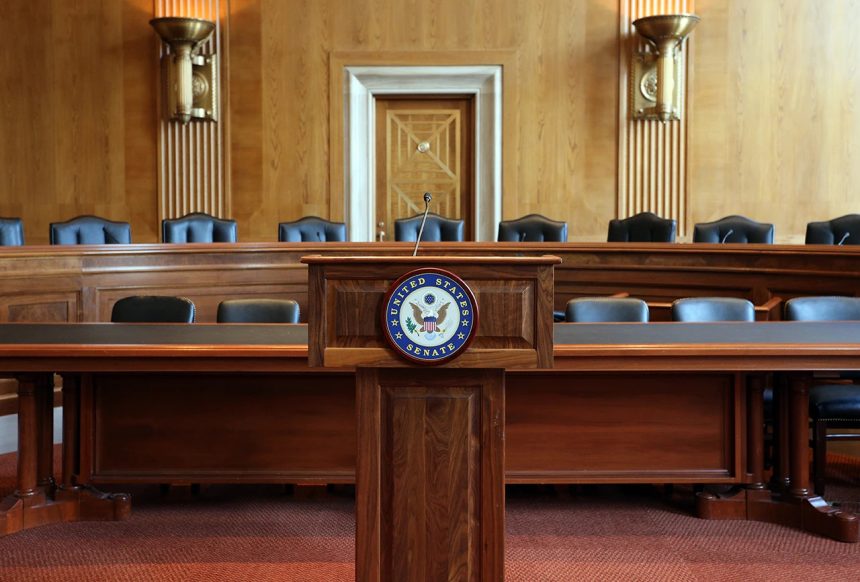
At the heart of the Committee’s concern, which emerged during the sub-committee on Africa hearing held on 21st April 2026, is a striking gap: 36 African countries, including Kenya, currently lack a substantive U.S. ambassador.
The problem has been compounded by reports that the Trump administration is weighing the closure of an additional 10 embassies across Africa, a move lawmakers and former diplomats warn could further erode U.S. standing at a time when it can least afford to retreat.
For Kenya, the absence of a confirmed U.S. ambassador is more than a procedural inconvenience. It represents a potential liability at the intersection of security, commerce, and geopolitics.
Since former Ambassador Meg Whitman departed in late 2024 following Donald Trump’s election victory, Kenya’s U.S. mission has been managed by Chargé d’Affaires Susan M. Burns, who has maintained trade, health and security cooperation in the absence of a Senate-confirmed envoy.
Observers note that the delay is at least partly political.
President Trump has shown a documented reluctance to appoint ambassadors to governments perceived as having cultivated close ties with the Biden administration and Kenya’s relationship with Biden-era Washington, cemented during President William Ruto’s landmark state visit in May 2024, was notably warm.
That visit produced Kenya’s designation as the first Major Non-NATO Ally (MNNA) in sub-Saharan Africa, a status that unlocked expanded military cooperation, priority access to U.S. defence equipment and joint counterterrorism frameworks.
However, even that hard-won designation has come under pressure.
A congressional amendment to the National Defense Authorization Act for Fiscal Year 2026, spearheaded by Senate Foreign Relations Committee Chairman James Risch, ordered Secretary of State Marco Rubio to conduct a sweeping review of Kenya’s MNNA status, driven by growing unease in Washington over Nairobi’s deepening economic ties with China.
The review added a layer of uncertainty to a bilateral relationship that both sides have publicly described as a cornerstone of U.S. engagement with Africa.
Some analysts have attributed the delay in naming a U.S. ambassador to Kenya to the broader pattern of Washington’s post-transition diplomatic slowdown, noting that President Trump has shown an aversion to leaders and governments that worked closely with his predecessor, Joe Biden, an approach that has slowed several diplomatic postings across Africa, with Kenya among the nations affected.
Notwithstanding those dynamics, the two governments have maintained active high-level engagement. In May 2025, U.S. Secretary of State Marco Rubio met with Prime Cabinet Secretary Musalia Mudavadi to reaffirm the importance of the bilateral relationship and discuss how the U.S.-Kenya partnership advances shared economic interests. Rubio also thanked Kenya for its longstanding role in promoting peace and security in Somalia, Sudan, South Sudan and the DRC.
A further milestone followed in December 2025, when Rubio met with President Ruto and Mudavadi in Nairobi to sign a bilateral agreement on global health cooperation, commending Kenya’s contributions to regional stability and counterterrorism.
Nairobi, on the other hand, has taken a measured and deliberately non-confrontational posture on the absence of a confirmed U.S. ambassador.
Prime Cabinet Secretary and Cabinet Secretary for Foreign and Diaspora Affairs Musalia Mudavadi publicly dismissed suggestions of strained U.S.-Kenya relations, telling the National Assembly Committee on Regional Integration that the proposal to review Kenya’s Major Non-NATO Ally status originated from a private member’s (Senator Jim Risch) bill in the U.S. Senate, not from the U.S. government. Mudavadi also stressed that Kenya is “working closely with the US on bilateral, regional, and security programs”, further noting that Kenya currently enjoys one of the lowest U.S. tariff rates at 10%.
The Kenya Ministry of Foreign Affairs has similarly maintained an active diplomatic posture: its official account of the May 2025 bilateral talks records that Mudavadi was accompanied by Principal Secretary Dr. Korir Sing’Oei, then National Security Advisor Amb. Monica Juma and Kenya’s Ambassador to the United States, Ambassador David Kerich, reflecting the full weight of Kenya’s diplomatic apparatus being deployed to sustain the relationship despite the vacancy on the American side.
For its part, the U.S. mission in Nairobi has acknowledged the gap candidly with Chargé d’Affaires Susan Burns confirming in late 2025 that while ambassadorial appointments were initially expected before year-end, they were delayed by the U.S. government shutdown in October adding that Kenya’s cooperation with the mission has remained strong despite the acting status of its leadership.
Despite the political turbulence, U.S. Africa Command (AFRICOM) Commander General Michael Langley reaffirmed Kenya’s indispensability as a security partner during testimony to the Senate Armed Services Committee in which he described Nairobi as an essential ally in counterterrorism operations across East Africa.
The U.S.-Kenya security relationship spans decades, deepened significantly after the 1998 al-Qaeda bombing of the U.S. Embassy in Nairobi that killed more than 200 people. Since then, the two countries have built extensive counterterrorism architecture.
The U.S. maintains a military installation at Manda Bay in Lamu County, a facility that has served as a launchpad for operations targeting al-Shabaab in neighboring Somalia. Kenya, in turn, has kept troops deployed inside Somalia as part of the African Union mission since 2011.
The Senate hearing specifically highlighted the U.S. Counter Terrorism Bureau’s ongoing partnership with Kenya to strengthen aviation security programmes designed to prevent terrorist travel into the United States, a function that takes on added significance given al-Shabaab’s documented interest in international targeting.
Kenya is also part of the U.S. government’s Project on International Security, Commerce and Economic Statecraft (PISCES), a diplomatic framework that effectively extends U.S. borders by enhancing partner countries’ border security capabilities and enabling the sharing of terrorist data across international partners.
U.S. government officials who made presentations before the Senate characterised al-Shabaab as a direct threat to U.S. citizens and interests, noting the group’s symbiotic relationship with Iran-backed Houthi militants in Yemen, a regional threat network that uses the Horn of Africa as a corridor.
The Senate hearings unfolded against the backdrop of a broader U.S. policy recalibration toward Africa, one that the Committee acknowledged has historically underperformed. U.S. officials noted that Washington has spent approximately $200 billion in foreign assistance to Africa since 1991, with limited structural transformation to show for it: industrial development has remained narrow, export bases have not diversified, and infrastructure gaps persist across the continent.
In response, the administration has signalled a shift away from aid-centric approaches toward what officials describe as realism-based partnerships, engaging African governments as they are, not as Washington would wish them to be, including countries that maintain ties with U.S. competitors, provided those relationships advance core U.S. interests.
The Counter Terrorism Bureau is expected to focus on identifying threats before they reach American shores, deploying tools such as visa restrictions, financial sanctions and intelligence-sharing.
The Senate also approved $355 million in funding for conflict prevention as part of a broader counterterrorism strategy, an acknowledgment that military solutions alone are insufficient. Senators on both sides of the aisle warned that groups like al-Shabaab, the Islamic State in the Greater Sahara, and al-Qaeda affiliates in the Sahel thrive on weak governance, economic despair, and the democratic exclusions that create fertile ground for recruitment.
Africa’s strategic importance, the Committee stressed, is not solely a security matter. The continent represents an estimated $16 trillion market for U.S. investments, with particular concentration in critical mineral extraction and refinement sectors currently dominated by China. As Washington recalibrates its industrial and supply chain strategy, Africa’s rare earth deposits and energy resources have taken on new urgency.
What most animated the Senate hearing, however, was the contrast between the United States’ retreating diplomatic footprint and the aggressive expansion of its rivals.
Russia, through its Africa Corps rebranding of the former Wagner Group, is pitching itself as an essential security provider to coup-affected governments across the Sahel.
China continues to invest heavily across the continent through infrastructure, trade, and political engagement.
Iran, meanwhile, is maintaining ties with militant networks from Somalia to West Africa.
Former U.S. Africa officials and diplomatic experts have warned that the ambassador vacuum compounds this disadvantage. Without confirmed, Senate-approved envoys, the institutional memory, access to senior government officials, and the authority to negotiate substantive agreements are all diminished.
Charges d’affaires manage the day-to-day, but they cannot fully substitute for the political weight and representational authority of a confirmed ambassador, particularly in countries where personal relationships and high-level access define the diplomatic landscape.
For Kenya specifically, the stakes are acute. The country serves as a financial and logistics hub for East Africa, hosts the UN Environment Programme and UN-Habitat headquarters, and is a key interlocutor on regional crises from Sudan to Somalia.
The bilateral relationship encompasses not only security and counterterrorism, but also trade, health through major programmes combating HIV/AIDS and malaria and economic development.
Managing all of this through an acting representative, however capable, is a structural risk that Senate members have now formally flagged.
The Senate’s intervention reflects a bipartisan recognition that diplomacy and security are inseparable and that the current configuration is unsustainable. The Foreign Relations Committee has pressed the administration to accelerate nominations, warning that the window for influence in Africa is narrowing as adversaries consolidate their positions.
For Kenya, the resolution of the ambassadorial vacancy would carry both practical and symbolic weight. A confirmed U.S. ambassador in Nairobi would signal Washington’s sustained commitment to the bilateral relationship, anchor the counterterrorism cooperation that both governments regard as essential, and provide the diplomatic bandwidth needed to navigate the complex geopolitical pressures, from Beijing’s economic courtship to Nairobi’s regional leadership ambitions, that define the relationship in 2026.
Whether the Trump administration moves swiftly to fill the gap remains to be seen. But with senators on both sides warning that the absence of ambassadors is enabling U.S. adversaries and emboldening extremist groups, the political cost of continued inaction is rising.
Disclaimer! The views expressed in this article do not represent the position of Kenya Broadcasting Corporation.