In a major push for climate resilience and economic empowerment, the Government has mobilised private sector leaders, development partners, and communities to accelerate the restoration of the Mau Forest Complex, the country’s largest water tower.
A critical national asset, the Mau Forest sustains millions of livelihoods, feeds major rivers and lakes, supports agriculture and provides essential water to urban centres across Kenya.

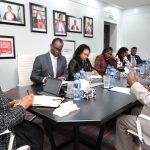
Speaking at a resource mobilisation exercise at the Radisson Blu Hotel in Nairobi, Dr Engineer Festus Ng’eno, Principal Secretary for the State Department for Environment and Climate Change, unveiled ambitious plans for the upcoming Second Edition of the Mau Forest Complex Integrated Conservation and Livelihood Improvement Programme (MFC-ICLIP).
He emphasised that the Mau Forest Complex remains Kenya’s most strategic water tower, underpinning national water security, agriculture, biodiversity conservation, climate resilience and clean energy production.
The initiative, launched in 2025 while being presided over by President William Ruto, highlights a critical shift in modern conservation methods as forest conservation is no longer just about planting trees but also a vital pillar for sustaining national economies and boosting household incomes.
A standout feature of the MFC-ICLIP model is its emphasis on a community-driven approach. Rather than locking local communities out, the program actively integrates them into the conservation fabric through the innovative Trees Establishment and Livelihood Improvement Scheme (TELIS), an evolved version of the traditional Shamba System.
Under TELIS, community members are granted land allocations to grow food crops while simultaneously tending to young tree seedlings. This dual approach has proven to be an absolute game-changer.
PS Ng’eno noted that since its launch, MFC-ICLIP has generated immense political goodwill and served as a blueprint for other ecosystems.
The model has successfully birthed other initiatives across Kenya, including the Mt. Elgon ICLIP Programme, Oloolua Ecosystem Restoration Programme, the Cherangany Hills Ecosystem CHERISH Programme and the Nandi Forest Ecosystem Programme, currently under development.
These regional initiatives tie directly into Kenya’s broader National Landscape and Ecosystem Restoration Strategy, which targets the growing of 15 billion trees to restore degraded wetlands, forests, and critical water catchments to achieve increased tree and forest cover.
“While the first phase achieved remarkable milestones using only about 40% of its budget, the challenge ahead remains vast,” Dr. Ng’eno highlighted. “The upcoming Second Edition aims to scale up these delivery mechanisms and restore an additional 4,000 hectares of land,” he said.
To solidify these goals, the State Department signed several pivotal Memoranda of Understanding (MoUs) with programmatic partners, including Takataka ni Mali CBO, Farm life and Somo Africa.
The fundraising event was attended by partners and from both the government and the private sector who echoed the sentiment that investing in the Mau is an investment in long-term water security, clean energy, and national prosperity.
The Chief Guest at the function, KCB Group Chief Executive Officer Paul Russo, while addressing partners noted that “the success of our customers, communities, and economies depends on our ability to mitigate climate risks and adapt to a changing environment.”
Through deliberate investments in renewable energy, climate-smart agriculture, sustainable enterprises, afforestation, and reforestation, the private sector vowed to continue to support solutions that strengthen climate resilience while creating long-term value.