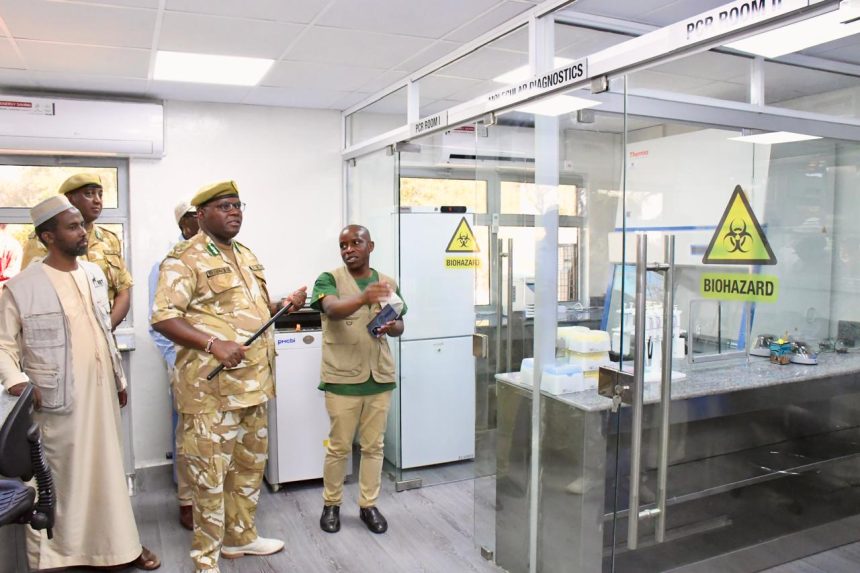
The Kenya Wildlife Service (KWS) has launched a regional veterinary laboratory at Lewa Conservancy in Meru County to strengthen disease surveillance, research, and rapid response across Northern Kenya.
The initiative is aimed at protecting wildlife, improving livestock health, and supporting the livelihoods of pastoralist communities that depend on healthy herds.

The Northern Kenya Veterinary Laboratory, unveiled by KWS Director General Professor Erastus Kanga, is a collaborative initiative involving five organisations: Lewa Conservancy, Northern Rangelands Trust (NRT), Kenya Wildlife Service (KWS), the Wildlife Research and Training Institute (WRTI), and the San Diego Zoo Wildlife Alliance Kenya.
The facility marks the establishment of a regional One Health platform designed to enhance the health of wildlife, livestock, and communities across Northern Kenya.
The laboratory will serve as a strategic hub for disease surveillance, diagnostics, and emergency response in Laikipia, Samburu, Isiolo, and neighbouring ecosystems, where pastoralist livelihoods coexist with some of the world’s most significant wildlife populations.
Speaking during the launch, Professor Kanga said the laboratory goes beyond routine diagnostics and will play a critical role in strengthening disease preparedness and response in a region increasingly exposed to emerging and transboundary animal diseases.
He noted that the initiative is anchored in Northern Kenya’s unique ecological and economic landscape, where pastoralist communities share space with globally significant wildlife species, including black rhinos, Grevy’s zebras, and mountain bongos.
San Diego Zoo Wildlife Alliance Kenya Director and veterinary doctor Stephen Chege said the facility will also support scientific research and biobanking, generating critical data to guide wildlife conservation and livestock health interventions.
Dr. Chege added that, through collaboration with the Wildlife Research and Training Institute and other partners, the laboratory is expected to advance scientific knowledge and strengthen early disease detection and response across the region.
He said the initiative reflects the One Health approach, which recognises the close links between wildlife health, livestock productivity, human well-being, and environmental sustainability.
According to Dr. Chege, the laboratory will improve response times to disease outbreaks and strengthen the resilience of pastoralist communities whose livelihoods depend on healthy livestock, and also will create job and learning opportunities for upcoming veterinary doctors in the country.
Lewa Conservancy Chief Programs and Partnerships Officer John Kinoti said the initiative demonstrates the commitment of KWS and its partners to integrated conservation systems that safeguard ecosystems, secure livelihoods, and strengthen national resilience to emerging health threats.
The new facility is expected to become a critical resource in promoting ecosystem health and supporting conservation efforts across Northern Kenya’s vast and ecologically important landscapes.