Deputy President Kithure Kindiki has announced that the government has released Ksh 177 billion to revive stalled road projects across the country, including those under the Mau Mau Roads Programme, which was disrupted by the COVID-19 pandemic during the administration of retired President Uhuru Kenyatta.
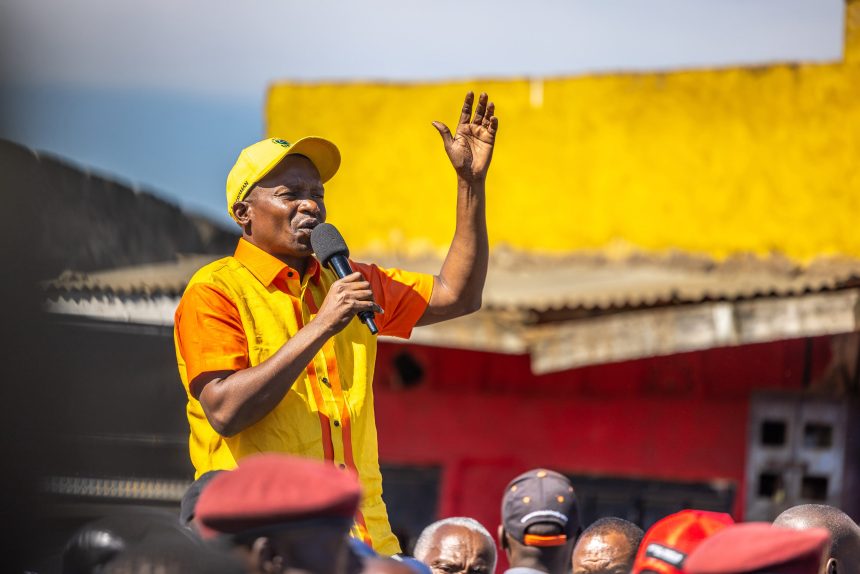
Speaking during a public engagement rally at Kinyona Shopping Centre in Kigumo Constituency, Murang’a County on Friday, Kindiki said the government had spent the past four years stabilising the economy, paving the way for the resumption of road construction projects.

In Murang’a County, the Mau Mau Roads Programme covers 225 kilometres at a cost of Ksh 9 billion, with the government having secured funds and paid contractors to facilitate the completion of the projects.
Kindiki assured residents that the government would complete the Kigumo section of the Mau Mau Road, covering the Ikumbi–Karinga–Kinyona–Mairi stretch.
He added that the government had also prioritised the tarmacking of an additional 1,285 kilometres of roads in Murang’a County at a cost of Ksh 56 billion.
The Deputy President urged road contractors to support local communities through Corporate Social Responsibility initiatives, including improving schools and other public institutions.
He called on elected leaders to work with road authorities and contractors to identify institutions and community projects that could benefit from the initiatives.
On agriculture, Kindiki launched the Kinyona–Karinga Irrigation Project, valued at Ksh 293 million, which is expected to benefit 1,500 households by providing irrigation water to 750 acres of farmland.
The project is intended to improve access to reliable irrigation water, enabling farmers to engage in high-value agricultural production, increase their incomes and improve their livelihoods.
Turning to disaster preparedness, Kindiki warned residents to remain alert as the rainy season approaches, noting that parts of Murang’a County have previously experienced mudslides that have damaged homes and property.
He urged residents to follow safety instructions issued by security officers and other relevant authorities, including temporary evacuation orders where necessary, until conditions become safe.
On infrastructure and economic development, Kindiki said the government was constructing 27 markets across Murang’a County to provide traders with better working environments and restore dignity to small-scale businesses.
He further noted that nine affordable housing projects and eight student hostel projects were underway in technical training institutes across the county.
The Deputy President urged elected leaders, chiefs and village elders to help communicate government development programmes to residents, noting that chiefs and village elders had begun receiving stipends to support their work.
Kindiki also commended Murang’a leaders working with the national government, saying they had remained focused on development despite political pressure and distractions.
He called for issue-based politics anchored on development records and service delivery, warning against divisive politics and personal insults.
On the fight against illicit alcohol, Kindiki reaffirmed the government’s commitment to eliminating alcoholic drinks that pose serious health risks, particularly to young people.
He maintained that the government would not tolerate alcoholic products that threaten the reproductive health and future of the country’s youth.