China’s Belt and Road Initiative (BRI), President Xi Jinping’s flagship global development strategy, is reshaping economic cooperation through infrastructure investment, trade, and cross-border partnerships. The initiative holds significant implications for Africa and other developing economies seeking to accelerate industrialisation, expand markets, and strengthen their links to the global economy.
The vision for the BRI emerged from two landmark proposals. In September 2013, during a visit to Kazakhstan, President Xi proposed the Silk Road Economic Belt, aiming to foster stronger economic connections between China, Central Asia, and Europe. A month later, in Indonesia, he advanced the 21st Century Maritime Silk Road, focusing on maritime connectivity and cooperation across Southeast Asia and beyond.

Together, these proposals established a framework for connecting economies across Asia, Africa, Europe, and other regions through roads, railways, ports, energy networks, and digital infrastructure.
At its core, the BRI reflects China’s belief that economic development and international cooperation are mutually reinforcing. By improving connectivity and reducing barriers to trade and investment, the initiative seeks to facilitate the cross-border movement of goods, capital, technology, and people.
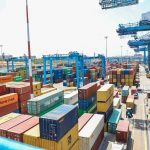
The Silk Road Economic Belt focuses on overland connectivity through transport corridors, railways, roads, and energy networks, linking China with Central Asia, Europe, Africa, and other markets. This is complemented by the maritime component, which emphasises port development, shipping connections, and associated transport infrastructure.
These networks are, altogether, intended to improve logistics, strengthen supply chains, and connect production centres to international markets. Their value extends beyond construction. Infrastructure contributes to development by reducing transport costs, attracting productive investment, supporting employment, and enabling local businesses to access wider markets.
BRI, therefore, encompasses more than physical infrastructure. It aims to create economic relationships through trade facilitation, investment partnerships, financial cooperation, and technology exchange, thereby strengthening the connections that underpin cross-border commerce.
President Xi’s broader vision is rooted in the concept of building a community with a shared future for humanity. This approach presents international development as a collective undertaking based on consultation, mutual benefit, and respect for countries’ respective interests.
Within the BRI framework, cooperation extends to education, research, culture, media, and professional exchanges. These relationships complement infrastructure investment by developing skills, encouraging innovation, and strengthening ties between societies.
Financial mechanisms, including the Silk Road Fund, support investment in infrastructure and development projects. The Asian Infrastructure Investment Bank also contributes to regional infrastructure financing, however, it operates independently and is not exclusively dedicated to BRI projects.
China believes the initiative creates opportunities to expand markets, support overseas investment, and strengthen economic partnerships. Participating countries, in turn, anticipate potential benefits such as improved infrastructure, access to capital and technology, expanded trade, and industrial development.
Realising these gains requires commercially viable projects, transparent financing, effective governance, and careful assessment of environmental and social impacts. Financial sustainability and alignment with national development priorities are equally crucial.
Africa’s development opportunities
African countries are deeply engaged in the Belt and Road Initiative, as it offers a framework for addressing long-standing challenges such as infrastructure gaps, improving regional connectivity, and expanding participation in global trade. Its greatest potential lies in linking infrastructure investment to industrialisation, employment creation, technology transfer, and stronger domestic production.
China-Africa trade reached US$348.05 billion in 2025, according to recently provided figures. China’s goods trade with Belt and Road partner countries totalled 23.6 trillion yuan (approximately US$3.3 trillion), accounting for 51.9 per cent of its total foreign trade. These figures illustrate the scale of China’s commercial engagement and the opportunities for African economies to deepen their trading relationships.
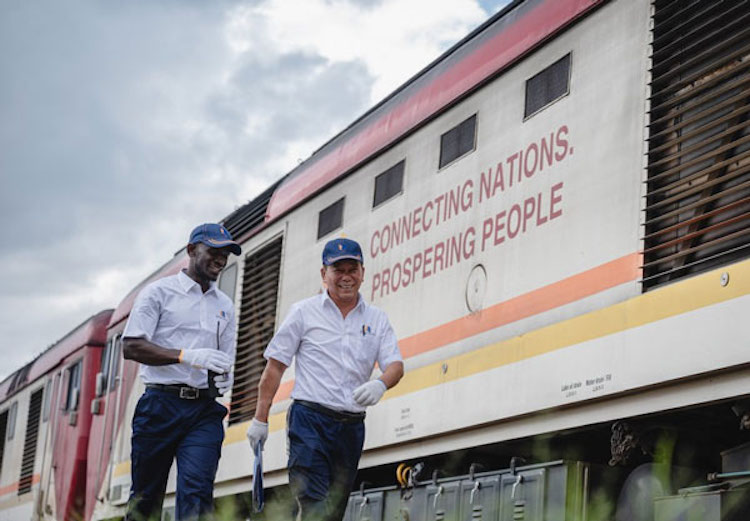
Kenya provides a prominent example with the Mombasa-Nairobi Standard Gauge Railway, a flagship infrastructure project largely financed through Chinese funding. The railway connects the Port of Mombasa with Nairobi and Naivasha, facilitating passenger and freight transport between the coast and the country’s economic centre.
It shows that African countries can maximise infrastructure investment by connecting transport networks to agriculture, manufacturing, logistics, and regional supply chains.
Smaller, people-centred initiatives realised through the BRI also offer opportunities to translate connectivity into practical economic gains. Cooperation in agricultural processing, manufacturing, digital services, cross-border e-commerce, and technical training can help small and medium-sized enterprises improve productivity, access markets, and create jobs.
Digital cooperation is particularly relevant as economies increasingly depend on technology. Partnerships in digital infrastructure, artificial intelligence, and digital trade could support innovation and economic diversification. However, these opportunities require reliable connectivity, appropriate regulation, skills development, and meaningful participation by African businesses and institutions.
The BRI reflects China’s ambition to strengthen international economic cooperation and expand partnerships with developing economies. Priorities such as long-term investment, trade facilitation, digital connectivity, and support for the multilateral trading system respond to the need for stronger economic links amidst global uncertainty.
President Xi’s vision places shared interests and mutual benefit at the centre of international development. The initiative’s lasting significance will depend not only on the roads, railways, and ports it builds, but on the productive investment it enables, the jobs it creates, the skills it develops, and the businesses it connects.
The challenge for Africa and other developing regions is to turn the opportunities the Belt and Road Initiative offers into inclusive, sustainable growth and stronger domestic productive capacity.