Whether you land at Jomo Kenyatta International Airport in Nairobi or connect through Addis Ababa, Kigali or Johannesburg, you encounter an Africa moving at remarkable speed.
Young engineers are building practical digital tools for logistics, healthcare and trade; exporters are taking local brands into global markets; and ambitious enterprises are scaling across borders.

Now comes an exciting next chapter: turning everyday digital activity into homegrown artificial intelligence.
Every day, millions of mobile money transactions, agricultural cycles, supply chain movements, clinic visits and digital conversations generate rich data across the continent. In Kenya alone, M-PESA processed 46.4 billion transactions worth KSh 41.68 trillion in FY2026, demonstrating how deeply digital platforms already power everyday commerce. Harnessed thoughtfully, this data can help businesses forecast demand, manage risk, improve efficiency and unlock new markets.
For generations, Africa exported raw commodities and imported finished goods. Today, the continent has a clear opportunity to rewrite that narrative by cleaning, governing, refining and commercialising intelligence at home. When African companies build and own the models, workflows and expertise behind these tools, the economic value—and the high-skilled jobs it generates—can remain within the continent and grow over time.
Homegrown AI also offers a distinct advantage in real-world applications. Systems shaped by local realities are better equipped to understand informal retail networks, indigenous languages, seasonal planting cycles and the everyday needs of small and medium-sized enterprises. By solving local challenges effectively, African innovators can gain a competitive advantage at home while creating a launchpad for exporting specialised solutions to other emerging markets.
Capturing this momentum does not require every country to build hyperscale data centres or frontier foundation models from scratch. Instead, it calls for smart, targeted investments that help African enterprises adapt, govern and commercialise AI in areas where it can deliver immediate value. Research from McKinsey estimates that generative AI could unlock billions of dollars in value across key African sectors, including up to $10.4 billion in retail, $9.6 billion in telecommunications and $7.9 billion in banking, with even greater potential when combined with established machine learning capabilities and local execution.
Kenya and the wider region already have significant strengths to lead this transformation:
Clean power: Domestic low-carbon generation accounts for roughly 83 per cent of Kenya’s electricity supply, giving the country a compelling foundation for lower-carbon computing and digital infrastructure.
Proven local innovation: Mobile money has demonstrated that African markets can leapfrog legacy systems and establish global standards. M-PESA, for instance, served 40.99 million monthly active customers in Kenya and processed 46.4 billion annual transactions in FY2026.
Young technical talent: Thriving technology hubs, universities and digital-native teams provide the energy, creativity and technical expertise needed to turn bold ideas into scalable products.
Turning this momentum into lasting scale is achievable through coordinated action across business, finance and policy.
Co-invest for shared strength: Global technology firms and investors can partner with local telecommunications companies, clean-energy providers, universities and startups to build resilient infrastructure while transferring deep technical expertise.
Treat data as a strategic asset: Boards and executives can champion strong data governance, cybersecurity and intellectual property ownership while equipping their teams to use AI tools confidently and effectively.
Unlock domestic capital and regional scale: Local institutions, including pension funds, can support bankable digital infrastructure through local-currency financing where strong governance and commercial demand align. Combined with harmonised data regulations under the East African Community (EAC) and the African Continental Free Trade Area (AfCFTA)—a unified market of 1.3 billion people with a combined GDP of $3.4 trillion—this can help African startups expand seamlessly across borders.
Reliable electricity, fibre connectivity, data infrastructure and digital skills are today’s roads, ports and border posts—the essential arteries of trade and prosperity.
The path forward is practical and achievable: combine patient domestic and co-invested capital with clear regional data frameworks and enterprise adoption focused on high-impact local challenges. When governments align cross-border data and digital trade standards under the EAC and AfCFTA, institutional investors support local-currency financing for energy and digital infrastructure, and business leaders invest in strong governance and talent to drive practical applications, Kenya and Africa will do more than participate in the AI era—we will help shape its brightest successes.
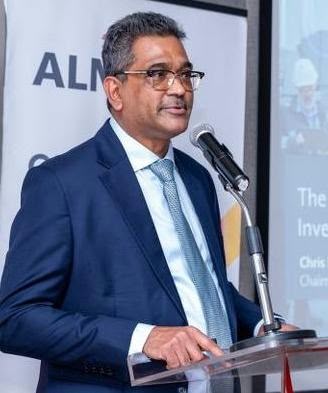
Mr Diaz is a Kenyan business leader focused on corporate growth, innovation and infrastructure development.
DISCLAIMER! Opinions expressed in this article do not necessarily represent those of the Corporation