Female genital mutilation (FGM), child marriage and gender-based violence continue to affect women and girls, limiting their access to education, healthcare and opportunities.
Through counselling, training and community support, survivors are gaining the knowledge and confidence to challenge these practices.

At 24, Rahma Hassan is turning her experiences into advocacy after completing the Kuelekea Mabadiliko training. She now encourages other women and girls to reject harmful practices, seek support and make informed decisions about their lives.
Growing up in a Somali family of seven children, Rahma underwent FGM at six, believing it was a cultural rite of passage into adulthood. She was married at 13 and later experienced sexual and domestic violence.
“Before joining the training, I did not understand FGM beyond what I had been taught in my community. I thought it was just our culture and that every girl had to go through it,” she says.
Her journey towards change began when she met Asha Ismail, founder of Save A Girl, Save A Generation, while working for her. After learning about Rahma’s experiences, Asha referred her to the initiative, where she received counselling, psychosocial support and practical skills training.
Through the six-month training, Rahma learned about the different types of FGM, its consequences, gender-based violence, nutrition and women’s and children’s well-being.
“I can now explain the different types of FGM and gender-based violence. I have gained knowledge that I did not have before, and I am able to share it with other women,” she says.
The sessions helped her regain confidence and speak openly about her experiences without shame or fear of judgement. She has since voluntarily reached out to 30 women survivors, sharing information and encouraging them to seek support.
She has also committed to ensuring her daughters grow up free from FGM.
“I will never take my daughters for FGM. I know what I went through, and I do not want them to experience the same pain. I want them to have the education and opportunities that I did not get,” she says.
“Do not give up on yourself, and do not depend entirely on a man. Even if it is a small job, try to earn something and become independent. You never know which door will open for you,” she says.
The initiative also seeks to build peer networks where women can discuss issues often considered taboo and support one another.
Balkisa Dahir Mohamed, a social worker and Training Manager at Save A Girl, Save A Generation, says participants learn about FGM, gender-based violence, sexual and reproductive health rights, menstrual hygiene, positive parenting and mental health.
“We also look at FGM from different perspectives. We work with doctors, sheikhs, community leaders and other partners to help communities understand that it is not a religious requirement but a harmful cultural practice that needs to stop,” says Balkisa.
Since its launch in 2023, the initiative has trained 340 women. The first cohort comprised seven women, followed by 121 participants in 2024, 106 in 2025 and another 106 in 2026.
Graduates remain connected through a WhatsApp network and support groups, where they share experiences and encourage one another.
“They feel safe because they are among women who have gone through similar experiences. They can speak freely, challenge one another and realise they are not alone,” she says.
One of the groups formed by graduates is Hoora Bulla. Members meet twice a month and save together. The group was registered as a self-help group and received its certificate in June. By November 2026, members had saved KSh153,000 and were exploring business opportunities.
Balkisa says the initiative is also changing how women think about their daughters’ futures.
“They are becoming busy developing themselves rather than thinking about how to cut their daughters. They start asking themselves, how can I empower my girl? How can I take her to school instead of thinking about who will come and cut her so that she can be considered a good girl?”
Beyond Kuelekea Mabadiliko, the organisation runs interventions addressing protection, healthcare and livelihoods.
Jacinta Kahwai, Project Manager at Save A Girl, Save A Generation, says its LINDA umbrella project brings together protection, awareness creation, healthcare training and economic empowerment.
“We exist to fight female genital mutilation, prevent it and protect women who are running away from any form of violence, including FGM,” she says.
Kuelekea Mabadiliko is a six-month awareness course covering FGM, gender-based violence, mental health, women’s rights and female anatomy. Doctors, psychologists, lawyers and religious leaders volunteer their expertise.
Kahwai says some participants initially have limited knowledge of their rights and bodies.
“They come in not knowing much about their rights, their bodies and even the normal appearance of female genitalia. Most of them have already undergone FGM, so they have no idea what is considered normal,” she says.
She adds that graduates are increasingly reporting planned cutting and intervening to protect girls at risk.
“We can see that even as the programme is ongoing, it is successful because we hear cases from women who help prevent FGM. They tell us when someone wants to subject a girl to the practice, and they are able to intervene,” Kahwai says.
Other initiatives include Safe in Nairobi, a shelter for women escaping violence, and Ushonaji wa Ndoto, which equips vulnerable women around Korogocho with tailoring skills and sewing machines. The organisation also runs Mafunzo, which trains healthcare workers to improve their understanding of FGM-related complications and provide respectful care to survivors.
Access to appropriate medical care is another important part of supporting women who have undergone FGM.
Dr Glory Kawira, founder of Vuka Vikwazo Initiative, says her organisation supports survivors of FGM and child marriage through reconstructive surgeries and health education.
Her organisation facilitated sessions on the physical effects of FGM, changes in the female body, reconstructive surgery and available referral pathways.
Kawira said the sessions also helped her understand the concerns women wanted addressed.
“The women here are very open to talk about things that I consider very vulnerable. And that was very useful in us figuring out solutions for them and the education that they needed,” she says.
She emphasised the importance of protecting girls and ensuring survivors know that medical assistance is available.
“The safety of a girl is not an option. It’s mandatory,” she says.
At the county level, coordination between health facilities, government departments and community organisations helps link survivors to services.
Wangechi Muturi, Psychosocial and GBV Services Coordinator at Kamukunji Sub-County, works under the Department of Health, coordinating efforts to prevent and respond to gender-based violence and ensure survivors access integrated services in health facilities.
She also coordinates the GBV Technical Working Group, which brings together government departments, civil society organisations, community-based organisations, young people and healthcare workers.
“We have different stakeholders, including government offices and departments, CSOs, CBOs and young people. We want to ensure that young people are meaningfully involved because they are also affected by these issues,” she says.
The group addresses teenage pregnancies, HIV, FGM, defilement and physical, sexual, emotional and cultural violence.
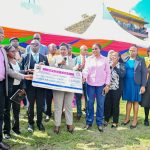
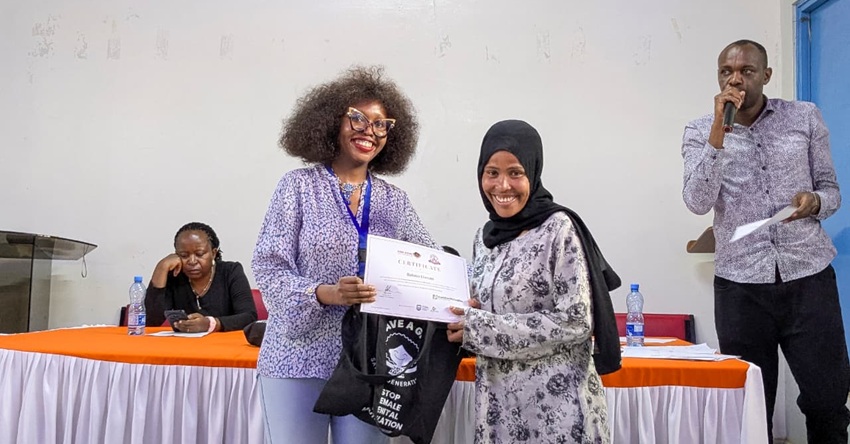
Speaking during the graduation, Muturi said it was encouraging to see survivors acquire skills that could help them earn an income.
“For me, seeing survivors of FGM coming here to celebrate this milestone is a plus. They have been trained, given information and skills, and are now able to do some income-generating activities on their own,” she says.
She noted that earning an income could help women facing marital challenges provide for their children and reduce dependence on abusive partners.
“Having an income-generating activity would help women stand on their own, whether they have a partner or not. It would also enable them to provide for their children and reduce their dependence on abusive partners,” she says.
Education and vocational training can also open further opportunities for women seeking to improve their livelihoods.
Salome Terah, Director of Adult Education in Nairobi County, urged the graduands to pursue further education and acquire practical skills.
She said the RISE Programme Scholarship offers full sponsorship for tuition and KCSE examination fees to young people aged 15 to 35 in Nairobi, with priority given to persons with disabilities, refugees and women.
“This is not the end. This is the beginning,” she said, encouraging the graduands to take advantage of available learning opportunities.
Terah urged those who had dropped out of secondary school to enrol for the 2027 KCSE examination, which she said would be the final examination under the 8-4-4 system.
“It is your last chance to complete secondary education. Do not let this opportunity pass you by,” she said, adding that online and physical classes were available.
She noted that registration for the Qualifying Test was ongoing at Nyayo House, 10th Floor, Nairobi, for learners seeking to join the RISE Programme and sit for KCSE.
Terah said the Adult Education Curriculum was also under review to create pathways to further education, technical and vocational training, employment and entrepreneurship.
“Learning will no longer stop at literacy. It will lead you somewhere,” she said.
She added that the county was promoting training in tailoring, hairdressing, catering, digital skills and entrepreneurship. Learners completing Basic Literacy and Post-Literacy programmes would also receive certificates to support their progression to the next level.
As the graduates prepare to take their knowledge back to their communities, Kamukunji Member of Parliament Yusuf Hassan Abdi challenged them to become ambassadors in the fight against FGM.
He urged them to share information with families and community members.
“You are now the new ambassadors who will take this message forward and spread awareness in your communities. Let us ensure that this harmful practice is completely eradicated from our country and society,” he said.
Hassan reminded the graduates that FGM is a criminal offence under Kenyan law and warned that those involved could face arrest and prosecution.
He said he began speaking against the practice in 1967, when he was 16, despite resistance from people who believed it was not an issue men should discuss.
“Even my mother reprimanded me, telling me that this was not an issue a man should discuss and that women should be left to make that decision,” he recalled
Story by Victoria Musimbi