Health experts have raised concerns over the inefficiencies in the healthy systems in Africa alluding to it as a major contributor to high maternal and newborn deaths.
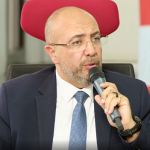
Speaking during the International Maternal Newborn Health Conference (IMNHC) 2026 in Nairobi, the Director General of Africa Centre for Disease Control Dr. Jean Kaseya noted that the African continent is endowed with resources but a larger percentage is wasted due to lack of proper planning and fraud in the healthy systems.
He wondered why the resources wasted due to inefficiencies cannot be used to avert high maternal and newborn mortalities within the continent.
“Africa is not poor but 40 percent of our health expenditure is wasted due to inefficiencies like fraud during procurement, ghost workers, lack of digital agenda and inappropriate planning process,” said Dr. Jean Kaseya.
According to him, the unacceptable maternal and neonatal mortality rates that Africa is confronted with can be attributed to failed systems.
“Every hour we are losing 20 women giving birth, 114 new born babies, and 300 children under 5 years in Africa. A continent that cannot protect its mothers and children cannot claim full sovereignty over its future. Solutions exist, but the system is not delivering at scale.”
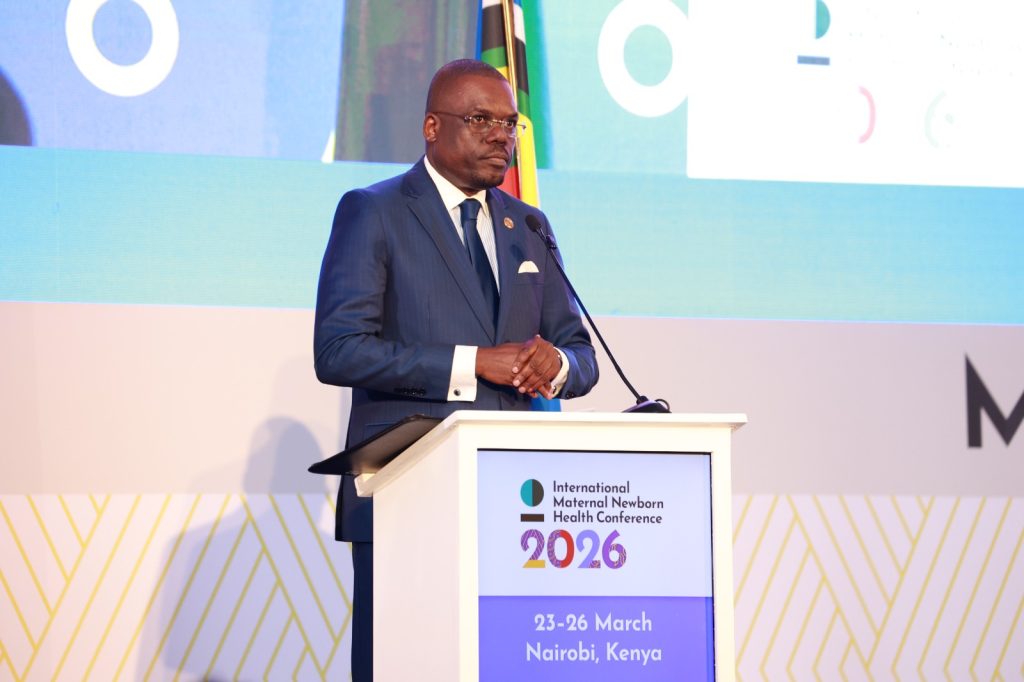
Kenya’s Health Cabinet Secretary Aden Duale concurred with Dr. Kaseya’s remarks that maternal mortality remains unacceptably high and new-born deaths and stillbirths have persisted for far too long, and called for speedy remedy of the situation.
‘The International Maternal Newborn Health Conference 2026 is not just another meeting of experts, but we see it as a shared declaration that no woman should die while giving life and that every newborn must have a chance not only to survive, but to thrive, it is a call to decisive action”, said Duale.
He highlighted that Kenya’s Ministry of Health has come up with strategies to lower maternal and newborn deaths which included working with development partners to scale what works; expanding access to emergency obstetric and newborn care; a resilient health workforce and digital transformation through Kenya’s Digital Health Super-Highway, enabling real-time data and smarter decision-making.
“Kenya is proud to be among the countries that have finalised the Every Woman Every Newborn Everywhere (EWENE) Acceleration Plan 2026–2028. This is how global commitments are translated into local impact,” said the CS.
He added that the Rapid Results Initiative (RRI) aims at accelerating reductions in maternal and newborn morbidity and mortality. The RRI focuses on high-impact interventions, tracking results in real time, and delivering measurable change where it matters most.
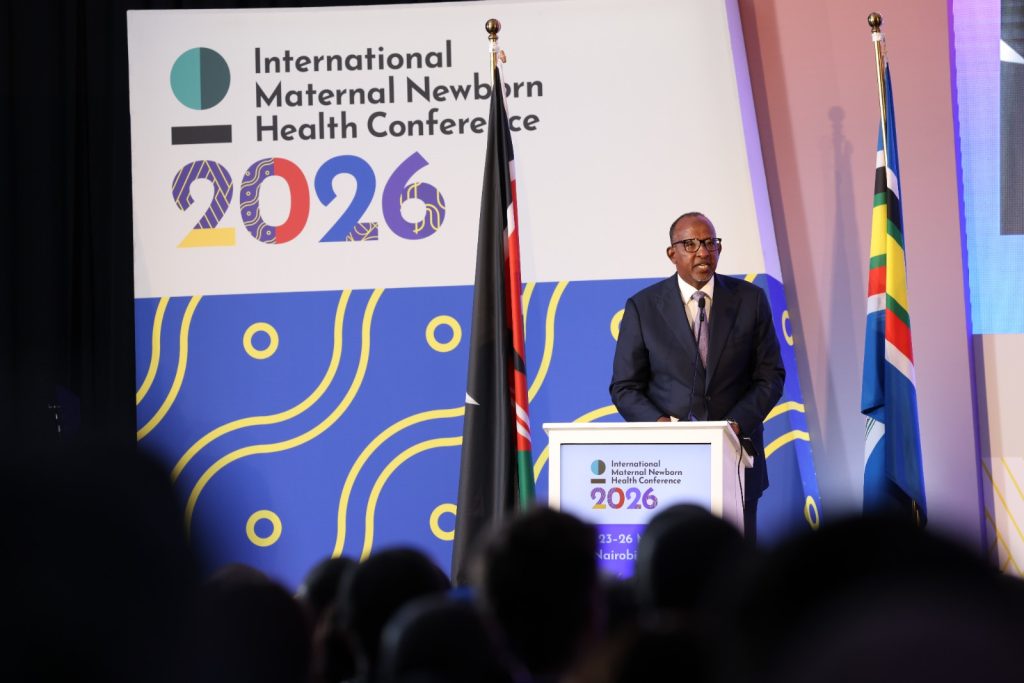
And with dwindling donor funding, Dr. Kaseya suggested that it would be prudent for Africa to push for domestic-financing to reduce over-reliance on aid.
“Africa has made a clear choice; to move from fragmentation to continental coordination, from dependency to self-reliance, from crisis response to system conformations,” he remarked.
The CDC Africa Director General highlighted key pillars to help fix the heath systems in Africa: strong financial management systems to ensure accountability and efficiency; working on prevention and preparation to respond to potential epidemics; mobilizing domestic resources instead of relying on donor funding; leveraging on digital innovation to make healthcare systems more responsive, data-driven, and patient-centered; and expanding local manufacturing of basic commodities so that no one dies because of lack of commodities in health facilities.
Dr. Kaseya observed that Primary healthcare is not an option, it is the foundation of the health system and that health should be accessible, affordable to all.
“We must ensure that every woman, regardless of where she lives, has access to skilled care before, during, and after childbirth. It is at this critical point that lives are saved, we cannot accept to lose lives at this level,” he submitted.
On her part, Kenya’s Public Health Principal Secretary Mary Muthoni pointed out that the IMNHC 2026 conference aims to accelerate efforts to end preventable deaths, strengthen collaboration, and expand access to quality care.
“This year’s theme ‘Moving Forward Together’ is a reminder that every mother’s life saved and every newborn given a healthy start is a victory for humanity and a powerful testament to what is possible when leadership, science, and compassion come together,” said PS Muthoni.
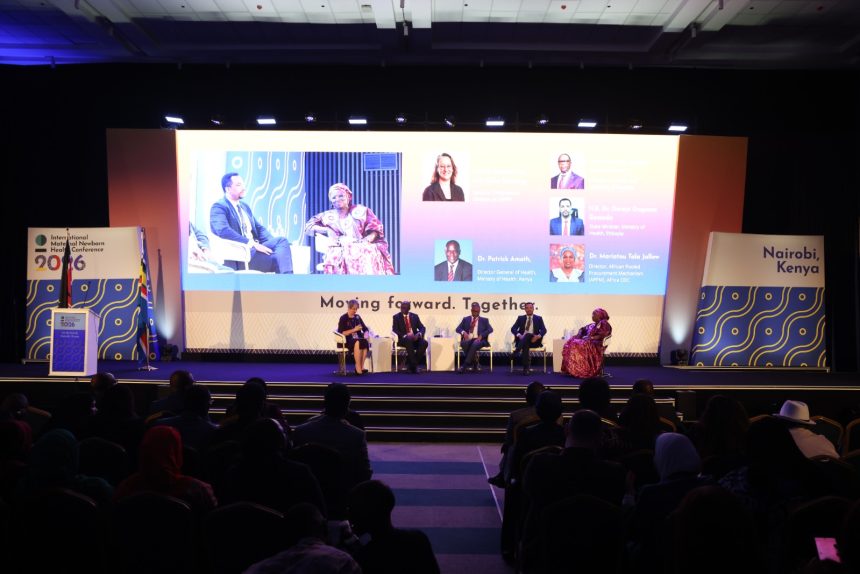
The conference, which brought together over 1800 delegates from 87 countries, was not just a meeting of health experts, it brought together stakeholders with the aim to transform maternal and newborn health outcomes across the world. It was a call to action, a space to renew the countries’ commitment and strengthen partnerships to inspire bold solutions for the future.