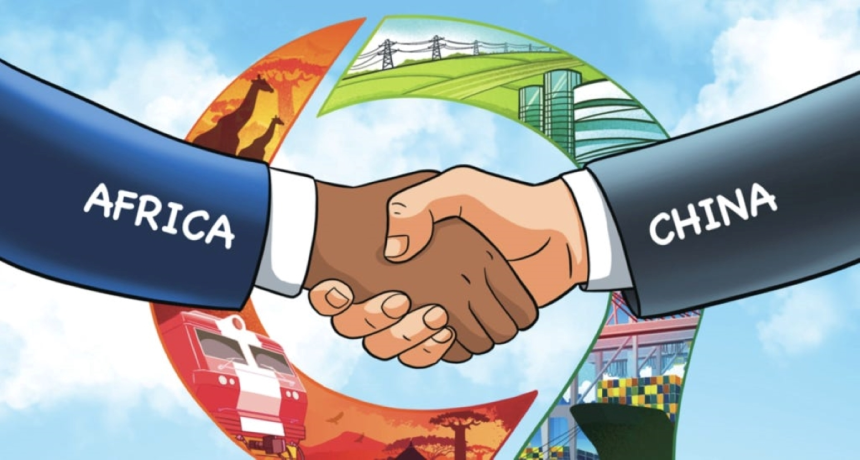
For Kenya, a nation striving to boost its manufacturing sector through the Made in Kenya initiative, the messages from China’s Two Sessions this year are not mere diplomatic niceties – they are a game-changer.
Beijing’s dual commitment to becoming the “best export destination” for global partners and implementing zero-tariff policies for 53 African countries, including Kenya, signals a new era of mutually beneficial China-Kenya trade, one that could reshape Kenya’s economic fortunes by driving its high-quality industrial products to China’s super-large market.
Africa’s duty-free access to the Chinese market initiative is a welcome policy as it encourages an international trade best practice of a multilateral minimal to free market access, especially coming after the US administration’s tariffs charged on imports from the African continent.
On March 6, I attended a press conference on the economy during the fourth session of the 14th National People’s Congress, where I heard Chinese Commerce Minister Wang Wentao deliver a speech. During his address, he emphasized China’s resolve as a responsible major country to further open its super-large market and shared key measures to boost global trade cooperation.
Notably, he mentioned that China has been the world’s second-largest merchandise trade importer for more than a decade – a status that underscores its capacity to serve as a global trade hub. Minister Wang also stated that China will launch a series of initiatives, including over 100 “Export to China” events, and adopt a tailored approach to support partner nations, which I believe is of great significance to Kenya as it seeks to expand exports to China.
This commitment is not empty rhetoric. Starting May 1, Kenya and 52 other African nations with China diplomatic ties will enjoy zero tariffs on exports to China, a move that creates enormous opportunities for Kenyan producers. With its high-quality agricultural and industrial products, Kenya is well-positioned to tap into China’s vast market of over 1.4 billion consumers—the zero-tariff policy will enhance the competitiveness of these products, reduce export costs, and help Kenyan goods gain a stronger foothold in China.
What sets China’s measures apart is their tailored approach. Wang revealed over 100 “Export to China” events this year, with a customized “one-country, one-strategy” plan designed to address the unique strengths and challenges of individual partner nations. Unlike generic trade deals, this approach offers targeted support to upgrade capacity, streamline logistics, and meet Chinese market standards.
The timing is perfect for Kenya. As it seeks to diversify export markets and reduce reliance on volatile commodity prices, the further opening of China’s super-large market provides a stable and promising alternative. Kenyan tea and coffee, already popular among Chinese consumers, will enter the Chinese market in a more market-competitive form, while the country’s horticultural products will gain a distinct edge over imports from other regions in this vast market.
Critics may doubt such partnerships, but China’s track record is solid. It has consistently honored commitments to African nations, focusing on win-win cooperation. The zero-tariff policy, paired with capacity-building, aligns with China’s vision of shared development and its role as a reliable Global South partner.
Kenya must seize this chance. By working with China to leverage the “one-country, one-strategy” support, it can upgrade export infrastructure, improve product quality, and tap into China’s vast market – especially by strengthening brand promotion and publicity in the Chinese market to enhance the visibility of its products. This will bring more jobs, higher incomes, and stability to ordinary Kenyans, from Rift Valley farmers to Mombasa exporters.
China’s Two Sessions sent a clear signal: its market is open, and it is ready to partner with Kenya for mutual prosperity. For Kenya, this is more than a trade opportunity – it is a chance to rewrite its economic story, with China as a steadfast ally. The ball is now in Kenya’s court to maximize this game-changing commitment.
Shen Shiwei, the founder of the China Briefing newsletter, is a non-resident fellow of the Institute of African Studies at Zhejiang Normal University