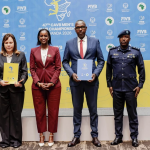
Agriculture Cabinet Secretary Mutahi Kagwe has called on the European Union (EU) to partner with Kenya in modernizing and digitizing agricultural training institutions, ensuring that the extension officers and farmers remain well-equipped for the future.
Speaking Monday morning during the 24th COMESA Summit in Nairobi, Kagwe underscored the need for training highlighting that Kenya is offering training opportunities through its agricultural colleges to countries within East and West Africa, focusing on horticulture and digital agriculture.
“To unlock even more potential, we must trade with each other and also train each other. Kenya is offering training opportunities through its agricultural colleges to countries within East and West Africa, focusing on horticulture and digital agriculture. We invite the EU to partner with us in modernizing and digitizing our agricultural training institutions, ensuring that our extension officers and farmers remain well-equipped for the future.” CS Kagwe noted.
Riding on the theme of the summit, “Leveraging digitazation to deepen regional chains for sustainable and inclusive growth”, Kagwe stressed that leveraging digitization to deepen regional value chains is an urgent component in transforming regional economy.
“Convened under the theme ‘Leveraging digitazation to deepen regional chains for sustainable and inclusive growth’ captures the urgency of our times is harnessing digital tools not merely as enablers but the very engine for a transformed regional economy that is competitive, resilient and climate shock approved.” Remarked Kagwe.
Similarly Kagwe highlighted that the government has embarked on a broad effort to integrate technology across the agricultural value chain.
This includes the National Multi-Task Agricultural Traceability Program and modernization of agricultural training institutions to ensure farm-to-market transparency and export compliance.
Cut flowers remain Kenya’s flagship
According to Kagwe, in 2024, Kenya’s agricultural exports were valued at over Ksh 129 billion ($1b), with flowers, fruits, and vegetables shipped to more than 70 countries worldwide. Cut flowers remain Kenya’s flagship, noting that the country exported over 60 million stems equivalent to over 40pc of all roses sold in the EU.
“The horticulture industry alone exports over 60 million stems daily to the European Union, employing millions of Kenyans directly and indirectly.” He noted.
Adding that “Avocados and other fruits have become Kenya’s fastest-growing exports, with over 128,000 metric tons shipped in 2024, making Kenya Africa’s top avocado producer. Vegetables such as beans and peas remain vital especially for smallholder farmers across the country.”
While acknowledging the disruptions caused by climate change in 2024, Kagwe noted that the challenges 2024 serve as a stark reminder of the urgent need for coordinated action.
“We also acknowledge the disruptions caused by climate change, which in 2024 led to major losses for flower exporters who were unable to ship their blooms on time. These challenges remind us of the urgent need to build resilience in logistics, finance, and climate adaptation.” Kagwe noted.
Further CS Kagwe appealed for greater predictability and consistency in the EU’s regulatory requirements noting that frequent changes in standards create uncertainty for exporters.
“I appeal for greater predictability and consistency in the EU’s regulatory requirements. Frequent changes in standards every six months or so create uncertainty for exporters. We value our special relationship with the EU, shaped by history, geography, and mutual interests, and we are committed to nurturing it further.” He appealed.
Additionally, CS Kagwe stressed on the need to harmonise standards across COMES Member States, noting that the members proposed, that when a county within the COMESA region, bans pesticides and so on, other countries will consider doing the same.
“We need to have the same standards across the COMESA region.” He noted.
Speaking at the same event, COMESA Secretary General Chileshe Mpundu Kapwepwe stressed on the need to leverage digitalisation, green growth, and inclusive value chain development to ensure that COMESA remains a competitive and sustainable market.
She noted that the COMESA – EU Horticulture Connect provides a timely opportunity to build on what has been achieved and to chart a positive path forward.
“Together, we must leverage digitalisation, green growth, and inclusive value chain development to ensure that COMESA remains a competitive and sustainable market.”