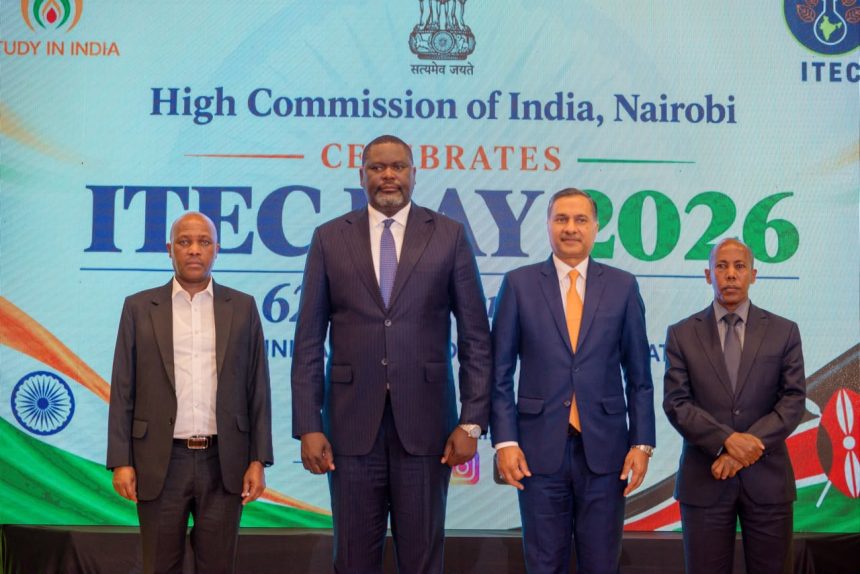
Public Service Cabinet Secretary Geoffrey Ruku has reaffirmed Kenya’s commitment to deepening technical and economic cooperation with India through the Indian Technical and Economic Cooperation (ITEC) Programme.
Ruku said the 62-year-old programme has provided Kenya with opportunities for knowledge sharing, capacity building and skills development, strengthening the capacity of public officers and institutions.

“Kenya and India share more than just the waters of the Indian Ocean. We enjoy a history of connections, solidarity, trade, investment, education, culture and a shared commitment to development. The ITEC framework is one of the most practical and enduring expressions of this friendship between Kenya and India,” said Ruku.
He said Kenya’s Bottom-Up Economic Transformation Agenda (BETA) requires more than financial resources to achieve its objectives, noting that knowledge, skills, technology and a strong public service are equally important.
Ruku said ITEC has enabled Kenyan state and public officers to access Indian expertise, technology, institutions and professional training, with beneficiaries applying the knowledge gained in their respective sectors and communities.
“Since its establishment, ITEC has provided Kenya with opportunities to access Indian expertise, technology, institutions and professional training. The programme has enabled many of our state and public officers to acquire knowledge and skills that they have innovatively applied in their sectors and communities,” he said.
Ruku said the greatest value of ITEC to Kenya’s public service extends beyond the training received by officials in India to how the acquired knowledge is applied back home.
“It is the knowledge that is brought to Kenya, it is the sectors and institutions that are strengthened, it is the innovations that are introduced, it is the services that are improved and, ultimately, it is the lives of citizens of Kenya that are transformed,” he said.
Ruku also said the country’s future competitiveness will depend on equipping young people with knowledge and skills required by the emerging economy.
He noted that ITEC can support the development of the next generation of Kenyan professionals, entrepreneurs, innovators and public officers.
Speaking at the same event, High Commissioner of India to Kenya Dr Adarsh Swaika said knowledge sharing remains central to the partnership between the two countries.
“Knowledge grows when it is shared,” said Swaika, underscoring the principle behind the establishment of ITEC.
He said the programme was launched on September 15, 1964, when India was still addressing major development challenges but chose to share the expertise it was developing with other developing countries.
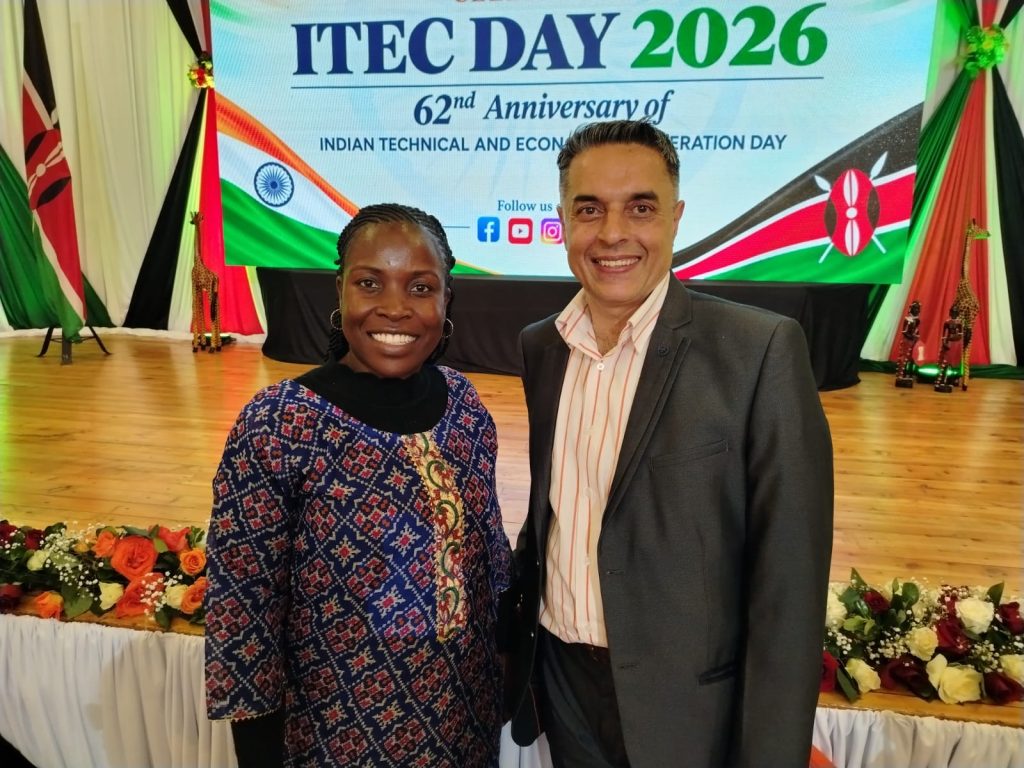
Over the past six decades, ITEC has trained officials from more than 160 countries in diverse fields, while more than 45,000 African participants have received training in India over the past decade.
Swaika said more than 3,000 Kenyan professionals have benefited from the programme over the last 10 years, with Kenya currently receiving more than 400 training slots annually.
Ruku commended India for sustaining ITEC for 62 years, saying Kenya looks forward to strengthening the partnership and identifying new areas of cooperation for mutual benefit.
“I commend the Government of India for sustaining the ITEC programme for 62 years and for making technical and economic cooperation an important pillar of India’s engagement with Kenya. The Government of Kenya looks forward to strengthening this partnership and identifying new areas in which our two countries can cooperate for mutual benefit,” he said.