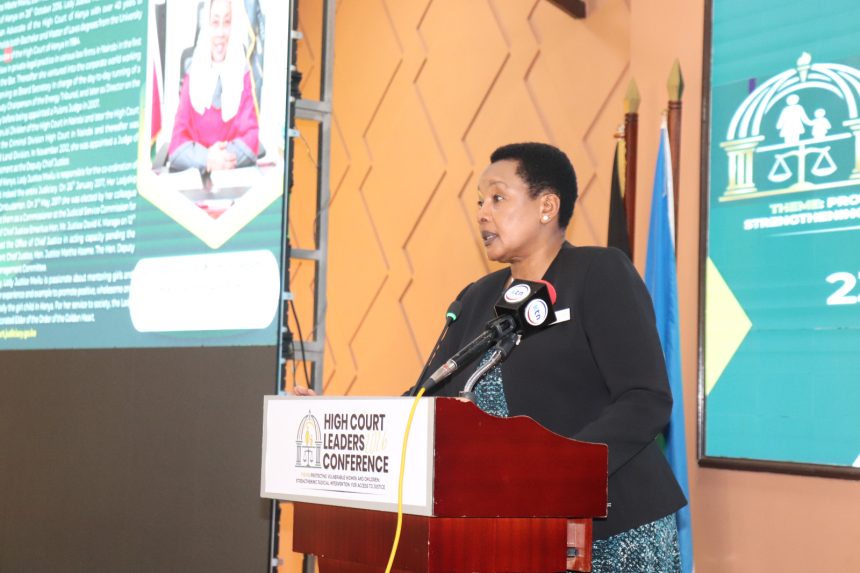
Deputy Chief Justice Philomena Mbete Mwilu has urged High Court judges to strengthen judicial responses in cases affecting vulnerable women and children, citing rising incidents of sexual and gender-based violence and persistent barriers to justice.
Speaking at the opening of the High Court Leaders Conference in Naivasha, Mwilu said the Judiciary must adopt responsive, humane, and constitutionally grounded approaches to ensure justice is accessible, fair, and timely for affected groups.
She noted that access to justice extends beyond the existence of courts, stressing the need for effective enforcement of rights and delivery of remedies under the Judiciary’s Social Transformation Through Access to Justice (STAJ) agenda.
Mwilu raised concern over increasing cases of gender-based violence, including femicide, and called for a coordinated, multi-sectoral response. She referenced the work of a taskforce chaired by Nancy Baraza, noting the Judiciary’s role in strengthening adjudication and institutional reforms.
On children’s rights, she cited findings showing that more than half of Kenyan children face multidimensional poverty, a factor that limits their access to justice and essential services. She called for child-sensitive procedures, improved case management, and court environments that do not deepen vulnerability.
The Deputy Chief Justice also flagged low participation of women in court processes, attributing this to structural challenges such as cost, accessibility, social stigma, and fear of retaliation. She urged judges to interrogate whether court systems are adequately designed to respond to these realities.
Mwilu stressed that safeguarding vulnerable groups is a constitutional duty anchored in the Bill of Rights, not a discretionary act.
She called for court processes that uphold dignity, guarantee confidentiality, minimise delays, and strengthen coordination with other justice sector actors.
Her sentiments were echoed by Justice Smokin Wanjala, who noted that Kenya’s legal framework, including statutes such as the Children Act and the Sexual Offences Act, provides a solid basis for protecting the rights of women and children but requires consistent enforcement.
High Court Principal Judge Eric Ogola challenged judicial officers to critically assess whether justice has been fully realised for vulnerable groups, particularly in cases of gender-based violence and child-related disputes.
The conference, themed “Protecting Vulnerable Women and Children: Strengthening Judicial Intervention for Access to Justice,” has brought together judicial leaders to assess progress and address gaps in service delivery.
It is expected to inform reforms aimed at strengthening jurisprudence and institutional practices within the Judiciary, with a focus on delivering more inclusive and effective justice.