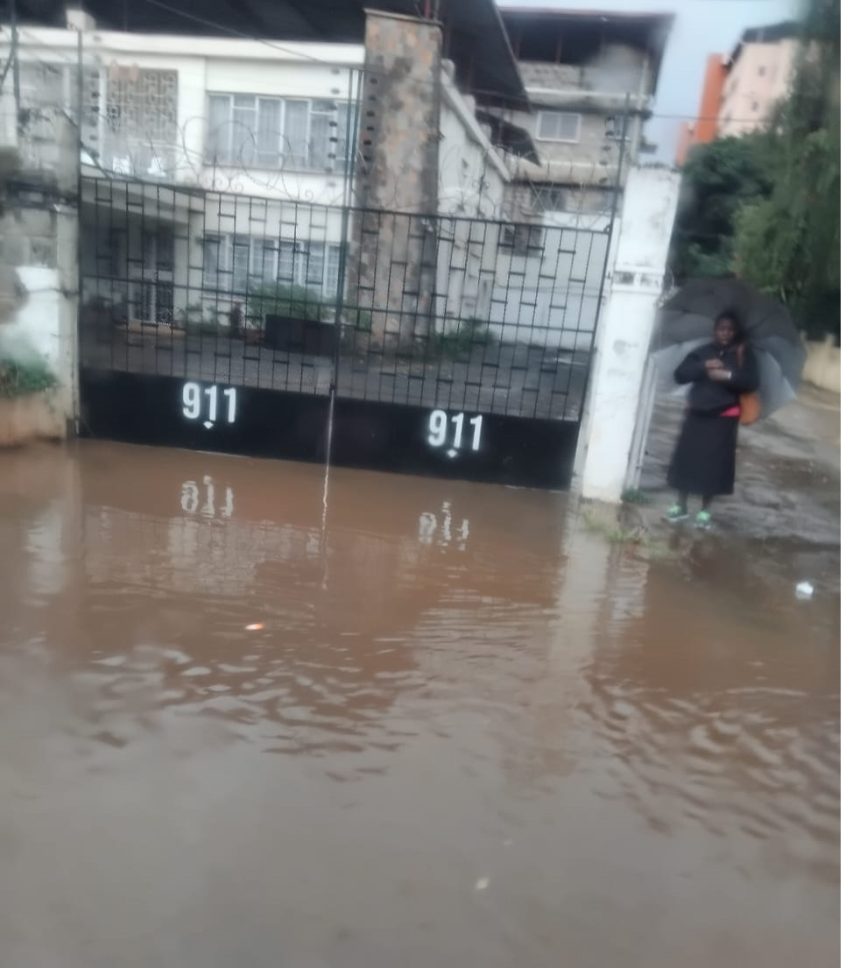
At least 49 people have lost their lives following the heavy rains experienced across the country, Government Spokesperson, Dr. Isaac Mwaura has confirmed.
Dr. Mwaura through a statement on Wednesday said four people are still missing and four others injured are receiving treatment.
According to Mwaura, the highest number of fatalities has been recorded in Nairobi with 27 deaths, followed by the Eastern region with 11 deaths and the Rift Valley with five. The Coast and Nyanza regions recorded one death each.
Mwaura also highlighted that more than 9,033 households have been displaced, with Nairobi recording 5,260 displaced households and the Rift Valley 2,538 households.
Counties affected by the floods include Tana River, Kilifi, Kwale, Taita Taveta, Narok, Baringo, Nandi, Makueni, Kitui, Tharaka Nithi, Marsabit, Meru, Kiambu, Kisumu, Kisii, Homa Bay, Migori, Wajir and Nairobi.
Additionally, he said the Kenya Meteorological Department has warned that isolated heavy rainfall is expected between 10 and 16 March, particularly in the highlands, East and West of the Rift Valley, the Lake Victoria Basin, Rift Valley region, the South Eastern lowlands and the South Coast.
Mwaura cautioned that water levels at Nairobi River are rising, urging residents living downstream to remain alert as a technical assessment of the dam is underway.
Interventions in Response to Floods
To support affected communities, Dr. Mwaura announced that the government will cover mortuary fees and funeral expenses for victims who lost their lives in the floods.
He also noted that rescue and response operations are ongoing through a coordinated multi-agency approach involving the Kenya Coast Guard Service, the Kenya Red Cross Society and the National Disaster Operations Centre, working together with county governments and humanitarian partners.
The public has also been issued with several safety advisories, including moving to higher ground if water levels rise, avoiding flooded roads, reporting fallen power lines to Kenya Power, boiling or treating drinking water, and maintaining proper hygiene to prevent disease outbreaks.