Agriculture Cabinet Secretary Mutahi Kagwe has called for an increase in private investment into Africa’s climate-smart agriculture to strengthen global food systems.
Speaking at the 3rd Climate Change Global Business Summit on Africa in Nairobi, Kagwe said with increased investment from global investors and development partners, the continent has the potential to become a frontline for global food security.
According to Kagwe, climate change is already dismantling traditional agricultural systems across Kenya, with extreme weather patterns now defining the country’s reality.
“Climate shocks are no longer future risks, they are present disruptions. If agriculture in Africa fails, global food systems will feel the shock,” Kagwe warned.
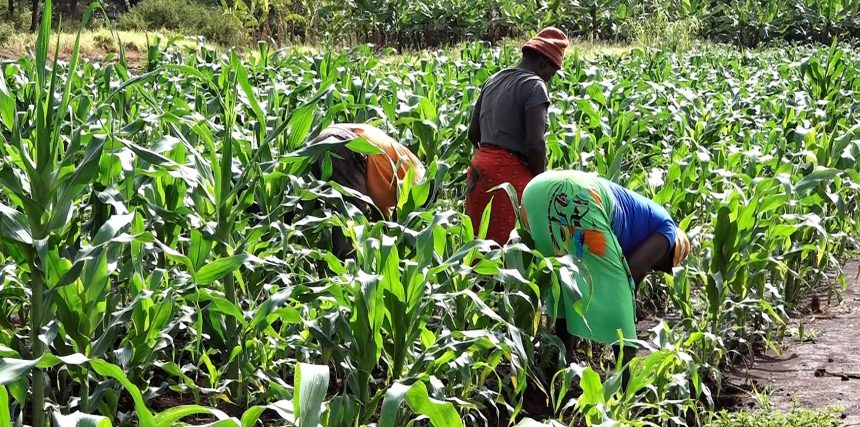
He noted Kenya’s overreliance on rain-fed agriculture which is responsible to 98pc of food production in Kenya, a factor which exposes the country to climate vulnerabilities.
Five failed rainy seasons between 2020 and 2023 pushed 4.4 million people into food insecurity, while an estimated 2.5 million livestock were lost.
“There is no one-size-fits-all solution. Climate change is a lived experience for our farmers. The answers must come from the ground, not from boardrooms in Brussels, New York or Paris,” he said.
In a rare direct critique of global climate frameworks, Kagwe called for the enforcement of the “polluter pays” principle, urging developed economies to match commitments with real, accountable financing.
“For too long, responsibility has been diluted. Those most affected — farmers, pastoralists, women and youth — have been left out of the equation,” he added.
At the same time, Kenya positioned itself as a leader in climate action, highlighting ongoing efforts to transform agriculture into a resilient and investment-ready sector.
Already, Kenya has secured at least Ksh 32.3 billion ($250m) in climate financing to run various programmes which Kagwe said in not sufficient.
“USD 250 million is not enough. The scale of transformation required demands bold, sustained investment,” he added.
The summit, bringing together global CEOs, policymakers and development partners, is expected to shape new commitments toward industrial transformation and climate resilience across the continent, with agriculture firmly at the center of the agenda.