The Government of Kenya is set to scale up its Drought Resilience Programme in Northern Kenya (DRPNK) following a proposed supplemental loan agreement with KfW Development Bank, aimed at expanding climate adaptation and livelihood support initiatives in arid and semi-arid regions.
The additional financing of Ksh 1.34 billion ( EUR 9 million) will raise the programme’s total funding from the current Ksh 1.19 billion (8 million EUR) secured in 2018 to Ksh. 2.53 billion (17 million EUR).
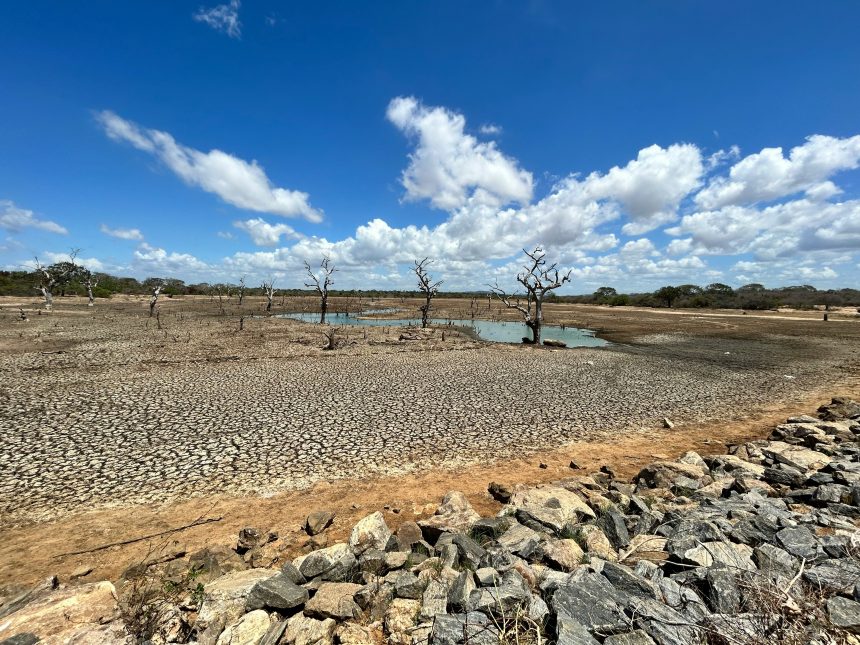
The funding will support interventions aimed at enhancing community resilience to climate shocks and strengthening sustainable livelihood opportunities in drought-prone areas.
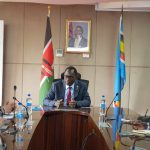
The review meeting that deliberated on the proposed agreement brought together officials from the State Department for Irrigation, the Office of the Attorney General and The National Treasury and Economic Planning, reflecting a coordinated government effort to advance the programme and ensure that all legal, financial, and implementation frameworks are aligned.
Speaking during the meeting, the Chief Engineer/Director in charge Irrigation & Drainage, Eng. Bernard Onyango, who spoke on behalf of the State Department for Irrigation, noted that the programme is progressively being transitioned to the County Governments in a bid to promote local ownership and long-term sustainability.
“The programme is designed to help communities build resilience to climate-related shocks while addressing environmental degradation through investments in water harvesting and climate-resilient infrastructure and the we are increasingly encouraging the beneficiary communities to own the programme,” Eng. Onyango said.
Implemented with the support of the German Development Cooperation, the programme focuses on strengthening drought resilience, enhancing climate change adaptation, and supporting pastoral and agro-pastoral livelihoods to improve food security. Implementation will be carried out by the County Governments of Marsabit and Turkana.
In Marsabit County, activities will target the clusters of Laisamis, Loiyangalani, Saku, Moyale, and North Horr, while in Turkana County, the programme will focus on Kakuma, Lodwar, Loima, and Kalokol.
The team also reviewed the financial management and reporting requirements aimed at strengthening transparency and accountability in programme implementation. Officials emphasized the need for timely financial reporting using updated portfolio templates to support effective monitoring of programme activities and resource utilization.
The meeting further highlighted the importance of utilizing the Integrated Financial Management Information System (IFMIS) to enhance financial oversight through real-time tracking of expenditures and compliance with public financial management regulations.
Discussions also underscored the need for consultancy engagements to adhere to established government policies and procedures.
Officials from the National Treasury and Economic Planning reiterated the importance of ensuring that the financing agreement aligns with both national and County Government financial management frameworks.
“Efficient utilization of resources and accurate financial reporting will be critical in demonstrating programme impact and sustaining support from development partners,” Collins Aseka, an Official from The National Treasury, emphasized.
Under the proposed arrangement, the loan will be disbursed as a conditional grant, with the County Government of Marsabit recieving a larger share of the grant. The financing will attract concessional interest rates of between 0.75 to 1.20 percent, with repayment scheduled to begin in 2028 and continue up to 2058.
Officials emphasized the need to fast-track pending processes, including procurement approvals, to avoid delays in programme implementation. Once finalized, the additional financing is expected to unlock expanded investments in climate-resilient infrastructure and strengthen the resilience of communities across Northern Kenya.