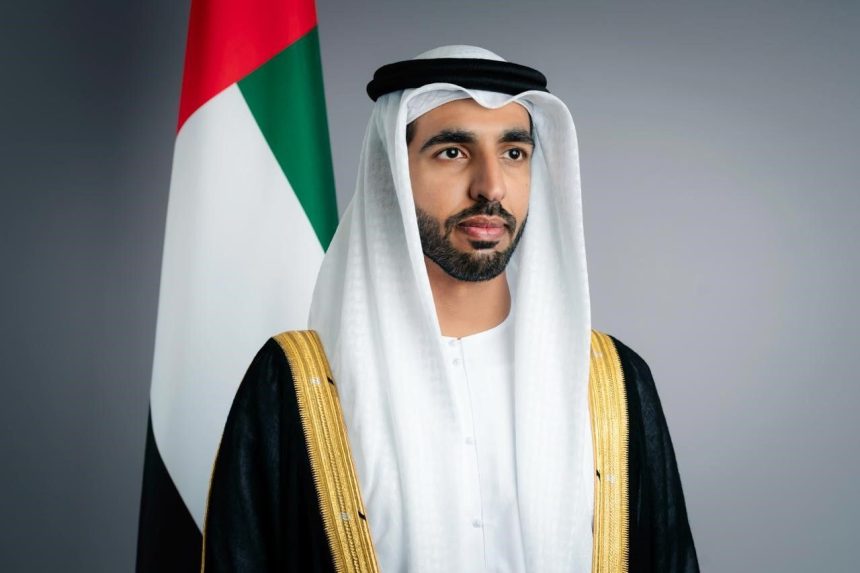
An interview with Sheikh Shakhboot bin Nahyan Al Nahyan, Minister of State, United Arab Emirates.
- The UAE has faced the biggest number of Iranian attacks why do you think that is the case?
The UAE has been directly targeted in unprecedented attacks during this war, a conflict that was not of our choosing. Prior to its outbreak, the UAE made clear that its territory and airspace would not be used to launch attacks against Iran a commitment that Iran chose to disregard and violate.

The situation in our region reflects a broader challenge to the UAE’s model of coexistence, tolerance, and economic openness one that has shown prosperity can flourish even in complex environments. This vision of stability and growth now faces increasing pressure.
Following the ceasefire announcement by U.S. President Trump, we are closely monitoring developments between the United States and Iran.
- What is the UAE doing to try to restore freedom of navigation in the Strait of Hormuz? Kenya is heavily exposed to global fuel price volatility and shipping costs. What would prolonged disruptions in Gulf shipping routes mean for Kenya?
Few waterways carry the same strategic weight as the Strait of Hormuz around a fifth of the world’s energy supplies pass through it each day, along with roughly 30 percent of the fertilizers essential for global food production. Its importance extends far beyond oil, underpinning supply chains that connect markets across continents.
The current situation has global implications, not just regional ones. For African economies highly exposed to maritime trade, disruptions translate directly into higher shipping costs, supply chain delays, and rising prices for fuel, food, and essential goods.
Through strengthened infrastructure, enhanced supply chain resilience, and sustained operational readiness, the UAE is able to maintain stable trade routes and ensure the continued flow of commerce with partners across Africa, including Kenya.
- The UAE is a major investor in Kenya. Do you expect UAE investments in Kenya to remain steady despite the war? How is the current conflict in the Middle East impacting UAE-Kenya relations and economic ties?
Even in the current environment, the UAE’s economy remains strong, resilient, and globally integrated. Years of diversification, openness, and forward-looking policymaking underpin this resilience.
There has been no disruption to our investment strategy or long-term economic priorities. Kenyans can be assured that the UAE continues to operate seamlessly, with cargo moving uninterrupted through our ports and flights operating as normal.
This resilience is underpinned by the UAE’s expanding network of global economic and investment partnerships. With non-oil sectors contributing 75 percent of GDP and sovereign wealth funds holding approximately USD 2.49 trillion in assets, the UAE remains among the world’s largest sovereign wealth holders.
Kenya is a key partner in the UAE’s engagement with Africa. The UAE–Kenya Comprehensive Economic Partnership Agreement (CEPA), signed last year, marks a significant step toward deeper trade and investment ties.
Together, we are advancing a partnership rooted in logistics, infrastructure, and innovation – strengthening supply chains, enhancing business resilience, and delivering long-term, shared prosperity across Kenya and the wider region.
- Kenya has a large diaspora and business community linked to the UAE. What reassurances can you offer regarding safety and economic stability for Kenyans living and working in the UAE?
The safety of everyone in the UAE is our highest priority, including the Kenyan community. Kenyan families can be assured that their relatives in the UAE are safe. His Highness President Sheikh Mohamed bin Zayed Al Nahyan visited injured civilians in hospital and affirmed, “They are all our responsibility.”
Kenyans in the UAE are not guests they are part of our family, and we will do everything necessary to ensure their safety.
The UAE remains at the highest levels of operational readiness, supported by state of the art, integrated defense capabilities. These advanced systems enable us to protect the country and all those who call the UAE home, and will continue to do so regardless of the duration or scale of any escalation.
Life across the UAE continues with stability and resilience. Citizens and residents are going about their daily lives, businesses remain open, and the country continues to welcome visitors. The UAE is home to more than 200 nationalities, including a large Kenyan community. Our strength lies in this diversity and in the trust people place in our institutions.
DISCLAIMER: Views expressed on this article do not in any way represent those of Kenya Broadcasting Corporation.