Women leaders are calling for a shift from policy discussions to community-led action in the fight against gender-based violence (GBV). They warn that despite strengthened government interventions, abuse continues to thrive behind closed doors.
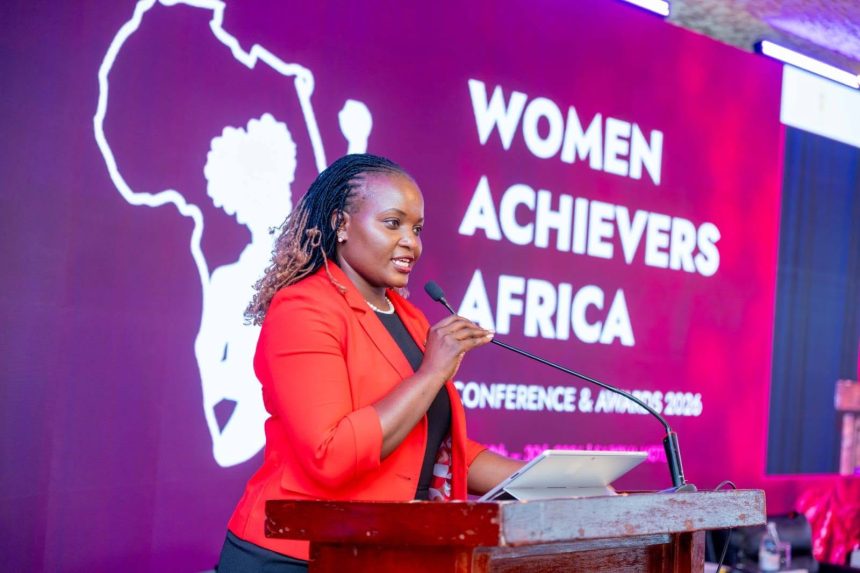
Speaking during the Women Achievers Conference and Awards, President William Ruto’s Advisor on Women’s Rights, Harriet Chiggai, stated that the government alone cannot resolve the escalating crisis. She argued that families, communities, religious institutions, and parents must confront the root causes of violence before cases lead to tragedy.

“Government is not the problem because government comes at the tail end to solve problems using policies, laws, and the police. The arm of government cannot always solve societal problems. We have to go back to the community and ask ourselves, where did the rain start beating us?” Chiggai said.
While outlining government initiatives such as the Safe Homes, Safe Spaces programme, expanded women’s economic empowerment projects, the Women Data Initiative, and support for widows, Chiggai emphasised that these measures would have limited impact if society continued to ignore domestic abuse.
“I am tired of talking about GBV. I am tired of crying with women who have been abused. I am tired of discussing femicide….We are not going to sit in boardrooms again to discuss GBV and femicide. We must deal with these issues,” she declared.
Citing recent data, Chiggai noted that violence against women remains widespread, with many survivors choosing not to report abuse due to stigma and fear.
“Data tells me every four women who are working, three have been abused. Data also tells me it is your love partners that are abusing you. So why are you shouting at the government all the time, yet these things are in our homes, and we have refused to talk about them?” she posed.
She also drew attention to rising cases of child abuse, revealing that over 2,600 boys were sodomised in Nairobi in 2023. She urged fathers and male mentors to play a more active role in raising young boys.
“It takes another man to shape a young man to be a man,” she asserted, encouraging churches and communities to support single mothers and provide positive male role models for boys growing up without fathers.
Chiggai further challenged parents to take greater responsibility in guiding young people, attributing changing social trends and a lack of parental involvement to exposing children to unnecessary risks.
At the same time, she called for greater political participation by women, arguing that Kenya would not achieve the constitutional two-thirds gender principle through legislation alone.
“If you elect women, we will not have to have this conversation…Go and register. Go and vote for your chosen leaders. Support competent women. Democracy works best when women participate fully, not only as candidates but as voters, organisers, decision-makers, and change-makers,” she stated.
Her remarks were echoed by the patron of the Young Women’s Forum (YWF) in Africa, Betty Adera, who urged delegates to measure success not by conferences attended but by the opportunities they create for others.
“History will not remember us for the conferences we attended. History will remember us for the opportunities we created and shared with other women,” Adera said.
She argued that investing in women is both a social responsibility and an economic strategy capable of transforming families, communities, and entire generations.
“Women do not lack potential, ideas, or resilience. Too often, what they lack is equal opportunity, equal access, and equal recognition,” she said, calling on leaders to remove barriers preventing women’s voices from being heard.
Representing First Lady Rachel Ruto, Elizabeth Kosgei reinforced the call for women to seek elective office and support one another rather than engage in destructive competition.
“Take up leadership positions. Political positions. You can make it. We can make it. Let’s be the ones to shape the two-thirds gender rule,” she urged.
Kosgei encouraged women to become each other’s strongest allies, urging them to “fix each other’s crowns” instead of tearing one another down. She also challenged young women to pursue leadership with confidence, reminding them that waiting for validation often delays opportunity.
“Dream anyway. Apply anyway. Lead anyway. Start anyway,” she said. “Every time we celebrate one woman, hundreds of young girls quietly begin believing, ‘Maybe that could be me one day.'”