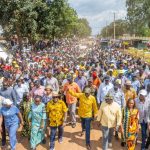
The government has announced the integration of HPV vaccine into routine immunization for girls aged 9 to 14, and the scale-up of community-based screening using health promoters and mobile clinics.
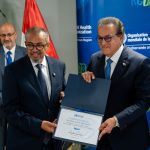
The major shift in the country’s cancer care strategy, focusing on decentralization of services, improved diagnostics and expanded access to treatment was confirmed during the 2nd National Cancer Summit held at The Edge Convention Centre in Nairobi under the theme “Uniting Our Voices and Taking Action”.

In his speech at the summit, Health Cabinet Secretary Aden Duale spelt out other ongoing reforms under the Taifa Care model that were aimed at strengthening systems that allow for earlier identification and treatment of cancer to improve diagnosis and referral.
“To improve diagnosis and referral, the government is strengthening referral systems for early diagnosis and treatment”Duale noted adding that government plans to scale up community based screening via community health promoters and mobile clinics.
In a move set to reduce the financial burden on patients, the cost of HER2-positive – specifically Herceptin- has been reduced from Ksh 120,000 to Ksh 40,000 per session. “This cost is now fully covered under SHA,” said Duale.
Financial protection is also being prioritized, with the Social Health Authority(SHA) now providing annual coverage of up to Ksh 550,000 for cancer care.
Health Cabinet Secretary Aden Duale said the Ministry is implementing critical reforms under the Taifa Care model, in line with the Bottom- Up Economic Transformation Agenda(BETA) and the push for Universal Health Coverage(UHC).
“We are decentralizing cancer care through regional centre in Nairobi, Eldoret, Kiambu, Mombasa, Garissa and Nakuru,” said Duale. “These reforms are designed to bring services closer to the people, improve early diagnosis and offer financial protection to families.”
He further noted that diagnostic services are being expanded under the National Equipment Support Programme (NESP), with mammograms already available in Kisumu and Kerugoya and CT scans installed in 15 counties.
Prime Cabinet Secretary Musalia Mudavadi, who addressed the summit, emphasized the need for multi-sectoral collaboration and sustained public education. “Decentralization of services must go hand-in-hand with awareness,” he said.
Public proposals during the summit included calls for increased capacity building for healthcare workers, expansion of radiotherapy services in public hospitals and wider access to essential cancer medicines.
The summit brought together stakeholders form the health sector, county government, civil society and development partners with all voices aligned on the urgent need to strengthen Kenya’s cancer response.