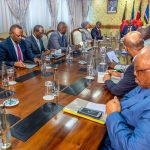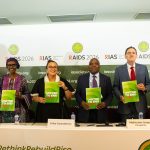

Deputy President Kithure Kindiki has reaffirmed the government’s commitment to providing quality, relevant, and affordable education for all Kenyan children, highlighting the crucial role of education in preparing the youth for a rapidly evolving society.
Speaking during a series of economic empowerment events in Nakuru and Laikipia Counties today, the Deputy President outlined a range of measures the Kenya Kwanza administration is implementing to transform the education sector and create opportunities for young Kenyans.

“To address concerns raised by university students, parents, and stakeholders, the Government has reduced university fees by between 15% and 40%, depending on the course,” the Deputy President stated.
In a further boost to access higher education, he noted that funding to the Higher Education Loans Board (HELB) has been increased by Ksh 5 billion, from Ksh 36 billion to Ksh 41 billion, to support financially vulnerable students.
Over the past 22 years, the education sector has experienced significant investments, including the construction of 23,000 classrooms and the establishment of 1,600 STEM-focused laboratories to nurture innovation and technical skills.
To address the teacher shortage, the Deputy President mentioned that the Government has hired 76,000 teachers since 2022 and plans to recruit an additional 24,000 by the end of the year, bringing the total number of new teachers to 100,000 in just three years.
He also highlighted the remarkable growth in Technical and Vocational Education and Training (TVET) enrolment, which has surged to over 700,000 from 297,000 in 2022, thanks to deliberate and strategic reforms.
“Moving forward, we are enhancing the capacity of TVET institutions through the provision of modern equipment, the recruitment of tutors, and the introduction of a flexible modular curriculum, dual training, and recognition of prior learning systems,” he stated.
DP Kindiki congratulated over 500 graduates from Laikipia East Constituency, including beneficiaries of the Recognition of Prior Learning (RPL) certification programme, which formally validates skills acquired outside traditional learning pathways.
“These interventions are part of a broader strategy to build a resilient, skilled, and productive generation equipped to lead Kenya into a secure and prosperous future,” he remarked