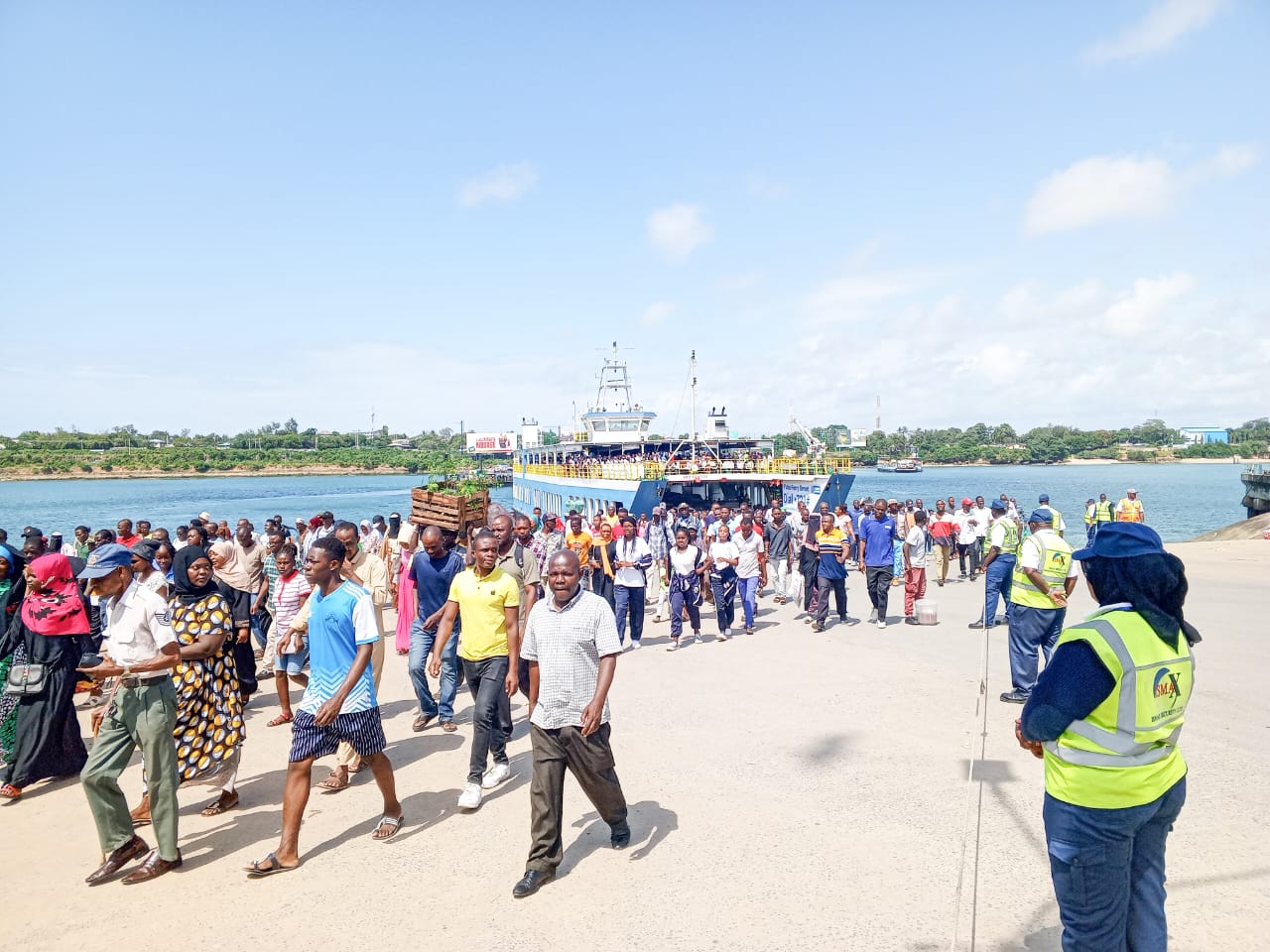
Plans by the the Kenya Ports Authority (KPA) to modernize Likoni ferry terminus is facing opposing from local traders over what they term as lack of public participation.
The traders argue that the authority has not involved them in the implementation of proposed Improvement of Traffic Circulation Management Plan at the Likoni ferry crossing project which will affect at least 3000 traders and matatus operators.

However, Likoni Deputy County Commissioner (DCC) Mathew Wambugu has assured the agitated traders and matatu operators at the terminus that no one will be displaced without proper public participation as required by law.
In a move aimed at averting the protests, Wambugu convened a meeting to hear the grievances of the traders, who decried that they were left out in the first public participation that was held at a Mombasa hotel.
Speaking during the meeting in Likoni, Wambugu confirmed that public participation will be conducted in three stages before construction begins.
“The first meeting was held on August 18 and brought together government departments, technical experts, and leaders. The second stage will take place here in Likoni and will involve people directly affected by the project. After that, we will hold a public baraza for all residents,” he explained.
He emphasised that the constitution requires inclusive consultation, adding that no trader will be evicted without being allocated an alternative space.
“Let us not politicize this project. If we do, it will stall and the people of Likoni will lose the benefits, including employment opportunities for our youth,” he said.
Wambugu’s assurance followed growing concerns among traders and transport operators who had threatened to stage demonstrations, citing a lack of information and fears of eviction.
The project is expected to expand passenger holding bays, widen ramps, introduce pedestrian skybridges, and reorganise the bus terminal. It will also provide more than 900 stalls for informal traders.
Abdallah Kadi, Chairperson of the Matatu Workers Association, said the group had intended to paralyse operations but stood down after engagement with the DCC.
“We have decided to give the DCC time to address our concerns. We request that the next meeting be held in Likoni and that we have a direct audience with the KPA Managing Director, Capt. William Ruto,” Kadi stated.
Traders’ leaders insisted they were not opposed to the project but wanted clarity on relocation plans for their livelihoods not to be affected during the construction epoch.
Matano Nyanje, Chairperson of the Baraka Vendors, said more than 3,000 traders operate at the ferry terminus and should be fully involved. “We want genuine consultation with the actual traders in Likoni. This is our livelihood and we have nowhere else to go,” he said.
Pamela Muyango, a trader at the terminus, said women in particular feared losing their main source of income. “We use this market to educate our children and pay rent. We had planned demonstrations, but the DCC convinced us to wait for consultations,” she noted.
Salim Rashid, Chairperson of the terminus stores, added that traders had written to KPA requesting a meeting with Capt. Ruto, but they have not received any response.
“Our biggest request is to meet the MD so that we can understand how this project will affect us. We either need a relocation plan or compensation,” he said.