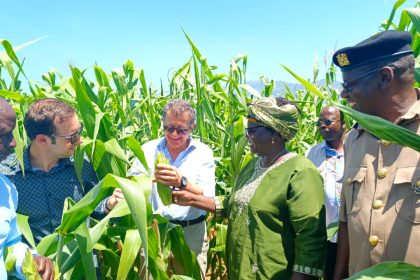
Agriculture Principal Secretary Dr. Kiprono Ronoh has underscored the importance of aligning agricultural activities with reliable climate information to enhance resilience.
Speaking during the launch of Integrated Natural Resources Management Programme (INReMP) in Uasin Gishu County, PS Ronoh noted that the Ksh. 34 billion investment, will bring together ten counties in Western Kenya to restore forests and wetlands, promote climate smart agriculture and protect vital land and water resources.

The PS noted that the programme launched in partnership with International Fund for Agricultural Development (IFAD), seeks to address the challenges facing farmers and pastoralists, including land degradation, declining soil fertility, erratic rainfall, water stress, and limited market access, which require integrated solutions.
“I reaffirm our full support to ensure its success, building a climate-resilient agricultural sector that sustains livelihoods and safeguards natural heritage. Through our partnership with IFAD, we are investing not just in activities, but in durable systems, strong institutions, and resilient communities.” Noted the PS.
The PS urged national and county government implementers to prioritize clarity, coordination, and accountability as the Integrated Natural Resources Management Programme transitions from design to full-scale implementation.
“The Government of Kenya, together with our County Governments, the International Fund for Agricultural Development (IFAD), and other development partners, is signaling clearly that INReMP is moving from concept to coordinated execution.” PS Ronoh noted
The PS stressed that compliance and performance are complementary hence every shilling invested must translate into measurable outcomes, restored watersheds, rehabilitated landscapes, strengthened producer organizations, improved productivity, enhanced market participation, and increased household incomes.
He further called for synergy across agriculture, environment, water, climate adaptation, and community development sectors, noting that the programme cuts across multiple areas.
“These sectors must work in harmony. The Programme Coordination and Management Unit must ensure integration of technical interventions, financial flows, and reporting systems,” he said.
The Principal Secretary also stressed the importance of accountability and transparency, stating that the programme exists not for reports, but for real communities.