China has set a 2026 economic growth target of 4.5 to 5 percent, describing the goal as a “proactive and pragmatic” benchmark that balances development ambitions with economic realities.
The target was presented in the government work report submitted to the National People’s Congress, the country’s top legislative body, during the annual parliamentary session known as the Two Sessions in Beijing.

Officials involved in drafting the report indicate that this growth range is a result of a thorough assessment of domestic economic conditions and global uncertainties.
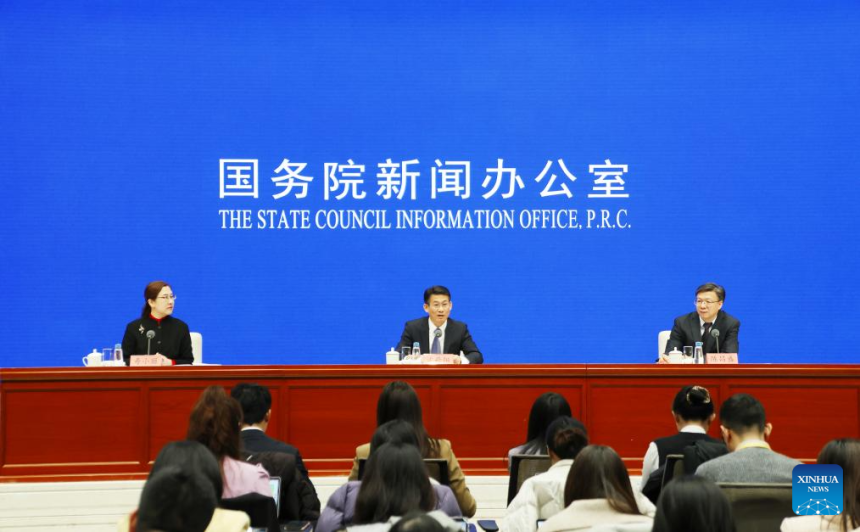
Shen Danyang, the head of the team responsible for drafting the government work report, said the target was designed to align economic expansion with the country’s broader long-term development strategy.
“The target of 4.5 percent to 5 percent economic growth, while striving to achieve better results in practice, is intended to strike a balance between what is needed and what is feasible,” Shen said.
He added that this target provides policy flexibility, enabling authorities to pursue structural reforms, manage financial and economic risks, and adapt to external changes. The range also allows regional governments to customize development plans according to local economic conditions while aligning national growth with China’s goal of becoming a moderately developed economy by 2035.
Officials stressed that the projected growth rate would still position China among the fastest-growing major economies globally. With an economic output exceeding 140 trillion yuan (approximately $20 trillion), even modest growth rates contribute significantly to global economic activity.
Analysts note that a 1-percentage-point increase in China’s growth rate can boost output in other economies by about 0.3 percentage points, according to estimates from the International Monetary Fund, underscoring the global implications of China’s economic trajectory.
Authorities highlighted that the growth outlook is supported by several structural drivers, particularly technological innovation and the rise of new productive forces. Key sectors include electric vehicles, lithium-ion batteries, and photovoltaic technology, where China has emerged as a leading global producer and exporter.
In addition to manufacturing, officials highlighted advancements in high-tech areas such as 5G networks, artificial intelligence, and quantum computing, as well as in new fields of scientific exploration. These developments are reshaping the country’s productivity landscape and generating new engines of economic growth.
Shen emphasized that China’s economic resilience, proactive macroeconomic policies, and ongoing reforms in key sectors will help unlock further growth potential.
“As long as we make full and effective use of all favorable conditions, we can fully strive for better results, achieving a tangible improvement in quality and a reasonable increase in quantity,” he said.
Local analysts assert that the growth target signals a strategic shift toward high-quality development rather than mere numerical expansion. The policy framework prioritizes technological innovation, green transformation, and stability in industrial and supply chains while allowing for structural adjustments as reforms deepen throughout the economy.
Economists note that a moderate growth target may give policymakers greater flexibility to pursue long-term reforms without being constrained by short-term growth pressures.