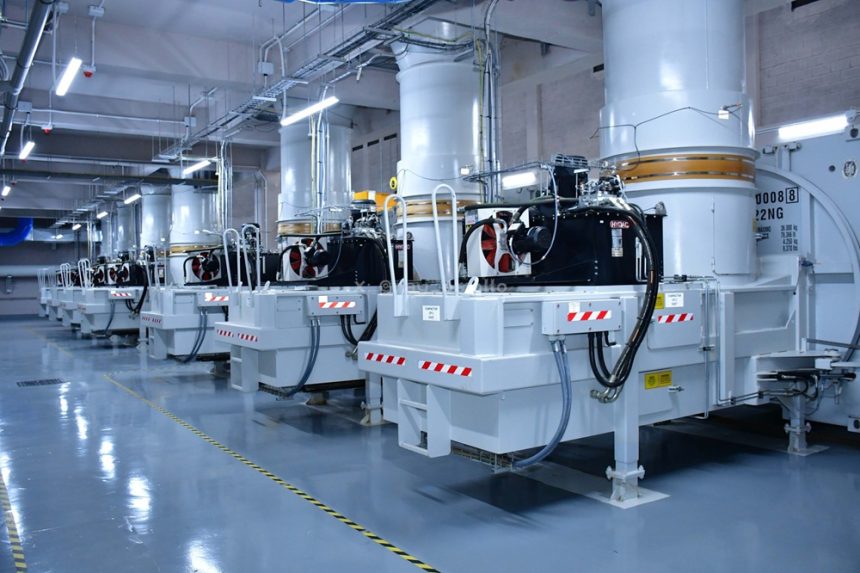
Konza Technopolis, Africa’s leading smart city and one of Kenya’s flagship development projects, is strengthening its position as a centre of innovation through the deployment of the continent’s first automated pneumatic solid waste management system and the establishment of a world-class science and technology university.
The automated waste management facility, officially commissioned by President William Ruto in October 2025, marks a significant milestone in sustainable urban infrastructure.

The system replaces traditional waste collection methods with a fully automated underground network capable of processing up to 40 tonnes of waste daily, improving cleanliness, operational efficiency, and environmental sustainability across the city.
Built on a 14.8-kilometre underground pipeline network, the system connects 25 collection stations and 100 disposal inlets distributed across East and West Konza. Residents and businesses separate waste into four categories; organic, paper, packaging, and mixed waste before disposal through strategically located collection points.
The network is managed through a centralised Supervisory Control and Data Acquisition (SCADA) platform, which continuously monitors waste levels and automatically activates high-powered vacuum systems when collection is required.
Waste is transported through underground pipelines at speeds of up to 70 kilometres per hour to a central processing terminal, where advanced cyclone separation technology facilitates waste compaction, recycling, and environmentally safe air filtration.
Dr. Raymond Omollo, Principal Secretary (PS0 in the State Department for Internal Security and National Administration, said the Department plays a critical role in supporting the seamless operation of the smart-city infrastructure by coordinating compliance frameworks, protecting essential utility corridors, and strengthening emergency response readiness.
The development reflects Kenya’s broader efforts to accelerate its transformation into a knowledge-driven industrial economy by drawing lessons from global innovation leaders, particularly South Korea.
In a further boost to the country’s science and technology agenda, President Ruto awarded a Charter to the Kenya Advanced Institute of Science and Technology (Kenya-AIST) in May 2026.
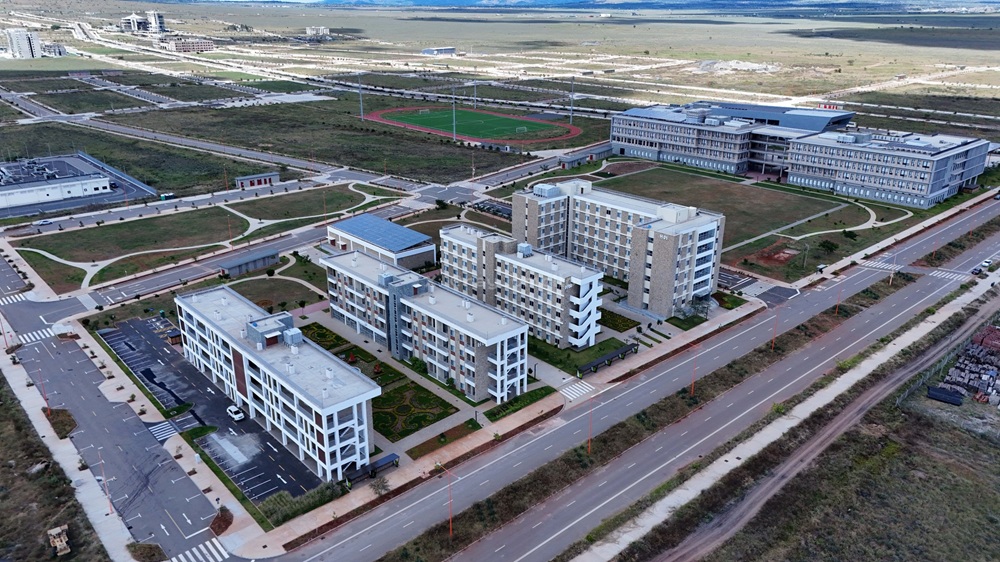
The Institution, modelled after the Korea Advanced Institute of Science and Technology (KAIST), is Kenya’s first public postgraduate-only university and is located within Konza Technopolis.
Fully funded through scholarships, Kenya-AIST is focused on advanced research and training in seven disciplines: Mechanical Engineering, Nuclear Engineering, Electrical and Electronics Engineering, Information Technology Engineering, Civil and Environmental Engineering, Chemical Engineering, and Agricultural Biotechnology.
The University is strategically integrated into Konza’s industrial ecosystem, placing researchers and students in close proximity to advanced manufacturing facilities, including the Lucky DJX Jeans Export Processing Zone hub and the National Data Centre.
The Campus also features a robotics innovation center, modern utility infrastructure supporting water and fire safety systems, and residential accommodation for postgraduate students and their families.
Officials say the institution’s “plugged-in” model is designed to accelerate the transition of research from laboratories to industry, enabling prototypes, patents, and innovations to be tested and scaled within neighbouring production facilities.
Kenya-AIST is supported by Konza’s resilient 2N+1 power architecture, a 200kVA backup power system, and sustainable water reclamation infrastructure, ensuring uninterrupted research operations and high-performance computing capabilities.
According to Dr. Omollo, the State Department for Internal Security and National Administration, also plays a strategic role in safeguarding the University as a critical national innovation asset.
This includes securing sensitive research activities, facilitating the safe movement of research prototypes, and maintaining protected links between the University, data infrastructure, and industrial zones.
As Konza Technopolis continues to expand, government officials view the City as a cornerstone of Kenya’s vision to become a regional hub for innovation, advanced manufacturing, scientific research, and digital transformation.