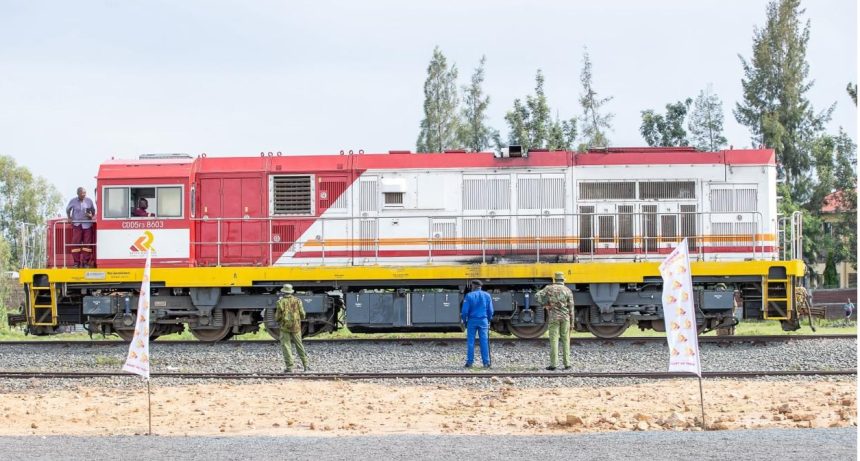
The launch of the Kisumu–Malaba Standard Gauge Railway (SGR) Phase 2C Saturday marked a major milestone for Kenya.
President William Ruto and his Ugandan counterpart, President Yoweri Museveni, presided over the groundbreaking ceremony in Kisumu East Sub-County, realising a long-awaited breakthrough aimed at enhancing trade, freight, and passenger transport across East Africa.

The expansion of the line will promote a more integrated regional transportation network, improving connectivity across the region.
The Naivasha–Kisumu main line will span approximately 264 km, with an additional 8.69 km spur linking the railway to the proposed new Kisumu port.
The Kisumu–Malaba segment will add another 107 km, creating a continuous rail corridor from the Indian Ocean port of Mombasa to the Uganda border.
Phase 2B SGR passes through Narok, Bomet, Nyamira, Kericho, and ends at Kisumu County, while Phase 2C SGR shall traverse Kisumu, Siaya, Vihiga, Kakamega and Busia Counties.
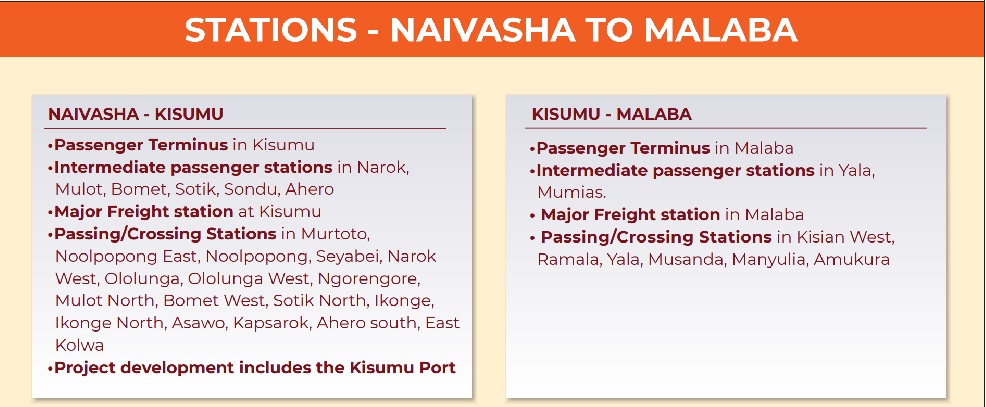
EXPLAINER: Salient features of the Naivasha-Kisumu-Malaba Standard Gauge Railway project.
- The railway will have a uniform design specification which will permit seamless operation across the borders.
- Each freight train will have a haulage capacity of 4,000 tonnes (216 TEUS) with a designed speed of 80 kilometres per hour.
- Each passenger train will have a capacity of 1,096 passengers and with a designed speed of 120 kilometres per hour.
- The designed freight carrying capacity of the railway is 22 million tonnes per annum.
- The railway has been designed for environmental compatibility.
- The project will have 2 major, 6 intermediate, 17 crossing and 3 freight stations.
- The project design includes 13 tunnels, 23 bridges and 376 culverts.
According to Kenya Railways, the railway will significantly improve logistics efficiency within the Republic of Kenya, and the neighbouring countries.
Expected benefits include:
- Reduced freight transport costs
- Faster movement of goods and passengers
- Increased trade competitiveness
- The project will stimulate economic growth and investment along the corridor.
- Improvement of the regional integrated transportation network and promotion of regional connectivity and integration,
- Support the blue economy activities.